Ezekiel Chapter 4 begins a series of dramatic symbolic acts through which God communicates His coming judgment upon Jerusalem. Rather than delivering only spoken prophecies, Ezekiel is instructed to act out the future siege of the city before the exiles in Babylon. Every action—from drawing Jerusalem on a clay tablet to lying on his side for hundreds of days and eating rationed food—serves as a vivid illustration of the consequences of Judah’s rebellion. Although the chapter contains sobering warnings of judgment, it also demonstrates God’s desire to warn His people before discipline falls, giving them every opportunity to repent.
Ezekiel Chapter 4 Summary
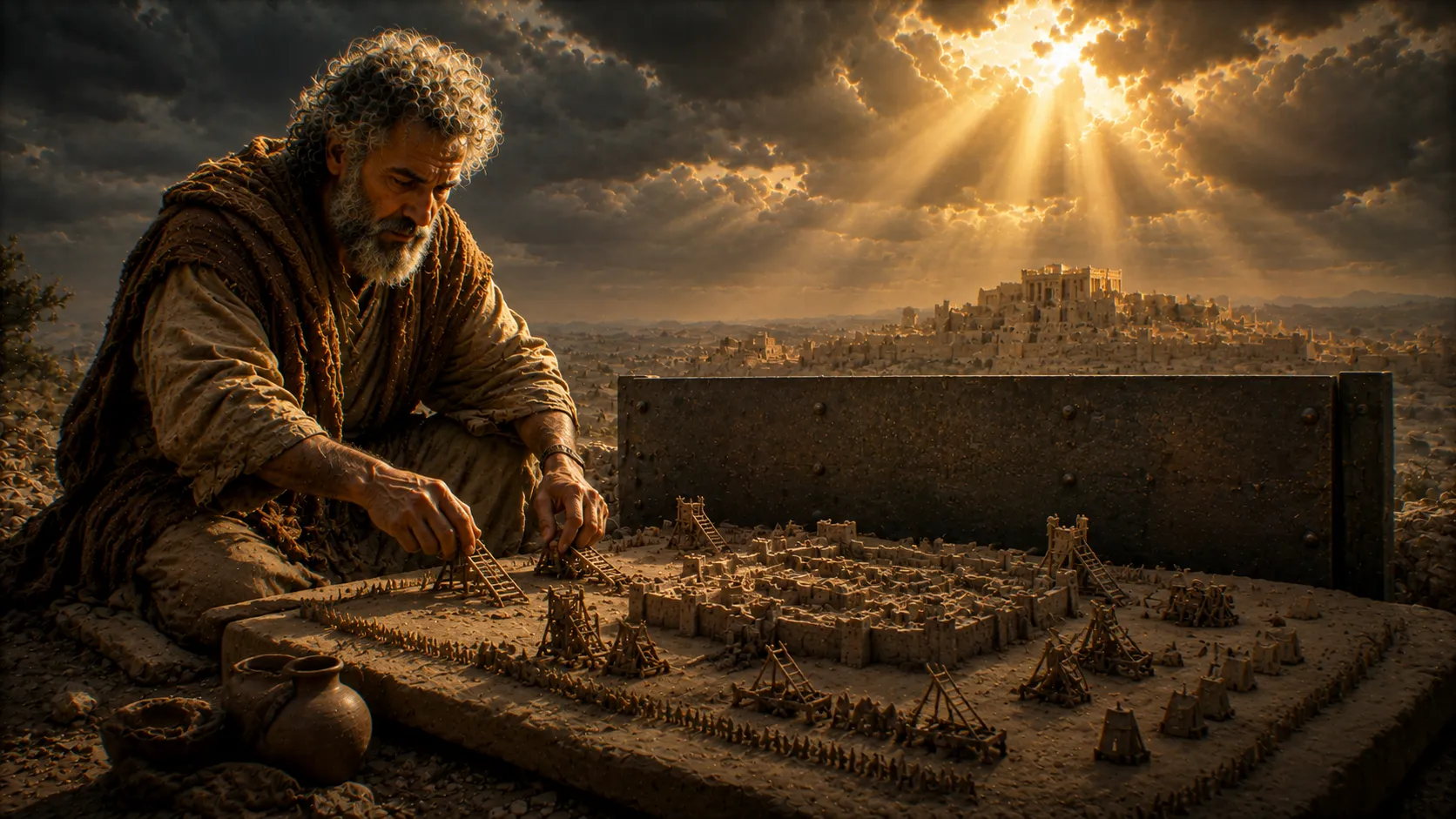
The Lord commands Ezekiel to take a large clay tablet and draw the city of Jerusalem upon it. He is then instructed to build miniature siege works around the city, including ramps, camps, and battering rams, symbolizing the Babylonian army that will soon surround Jerusalem. An iron plate is placed between Ezekiel and the city, representing the firm determination of God’s judgment against His rebellious people.
Next, God commands Ezekiel to lie on his left side for 390 days to bear the iniquity of the house of Israel. After completing this symbolic act, he must lie on his right side for 40 additional days to represent the sins of the house of Judah. Each day represents a year of the nation’s rebellion against God.
While performing these prophetic signs, Ezekiel is instructed to keep his face turned toward the model of Jerusalem with his arm uncovered, prophesying against the city throughout the symbolic siege.
God also gives Ezekiel strict instructions regarding his daily food and water. He must eat carefully measured portions of bread made from a mixture of grains and drink only a small amount of water each day. These limited rations symbolize the severe famine and desperation that Jerusalem’s inhabitants will experience during the Babylonian siege.
Initially, Ezekiel is commanded to bake his bread over human dung as a symbol of the ceremonial defilement the people will experience in exile. Distressed by this command because of his lifelong faithfulness to God’s laws regarding ceremonial purity, Ezekiel pleads with the Lord. In mercy, God allows him to use cow dung instead, preserving the prophetic message while showing compassion toward His faithful servant.
The chapter concludes with God explaining that the scarcity of food and water will leave the people horrified as they waste away because of their sins. Through these powerful symbolic actions, Ezekiel vividly demonstrates that Jerusalem’s coming judgment is certain unless the people turn back to the Lord.

Key Lessons From Ezekiel Chapter 4
- God often uses vivid illustrations to communicate spiritual truth.
- Persistent rebellion eventually brings unavoidable consequences.
- God’s warnings are acts of mercy intended to encourage repentance.
- Even in judgment, God listens to the sincere prayers of His faithful servants.
- Sin affects entire communities as well as individuals.
- God remains patient, giving repeated opportunities for repentance before judgment comes.
Important Verses
- Ezekiel 4:3 – “Moreover take for yourself an iron plate, and set it as an iron wall between you and the city. Set your face against it, and it shall be besieged.”
- Ezekiel 4:6 – “And when you have completed them, lie again on your right side; then you shall bear the iniquity of the house of Judah forty days. I have laid on you a day for each year.”
- Ezekiel 4:16 – “Moreover He said to me, ‘Son of man, surely I will cut off the supply of bread in Jerusalem; they shall eat bread by weight and with anxiety, and shall drink water by measure and with dread.'”
- Ezekiel 4:17 – “That they may lack bread and water, and be dismayed with one another, and waste away because of their iniquity.”