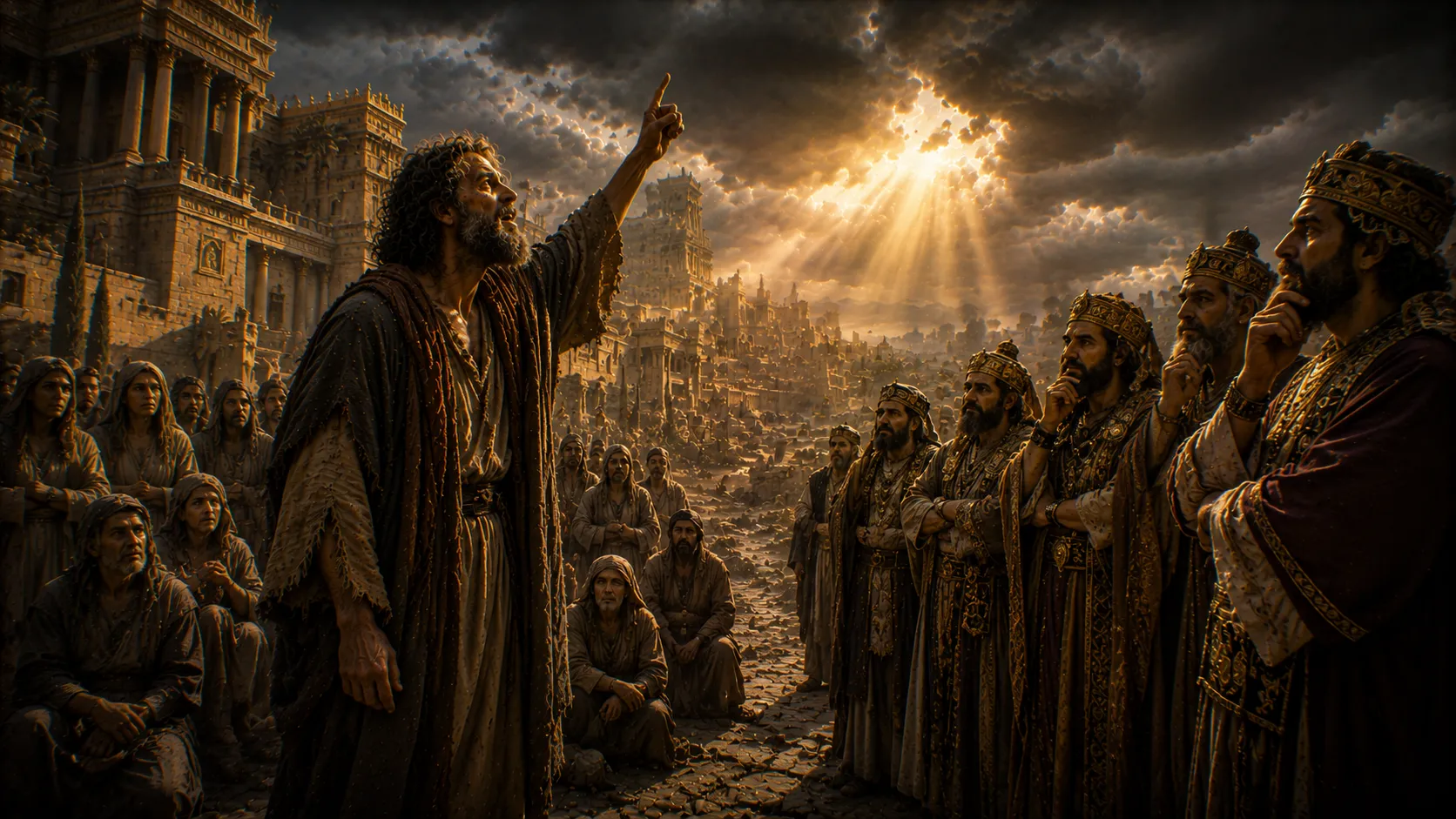
Amos Chapter 4 continues God’s warning to the northern kingdom of Israel by exposing its pride, injustice, and stubborn refusal to repent. Through the prophet Amos, the Lord recounts the many ways He patiently tried to turn His people back to Himself—including famine, drought, crop failures, plagues, war, and natural disasters. Yet after each act of discipline, the heartbreaking refrain remains: “Yet you have not returned to Me.” The chapter concludes with a solemn call for Israel to prepare to meet the Lord, reminding readers that God’s patience is great, but His judgment is certain for those who continually reject His mercy.
Amos Chapter 4 Summary
The chapter opens with a sharp rebuke directed toward the wealthy women of Samaria, whom Amos calls the “cows of Bashan.” They are condemned for living in luxury while oppressing the poor and demanding that others satisfy their selfish desires. Because of their injustice, God declares they will be carried away into exile with hooks, symbolizing the humiliation awaiting Israel.
Amos then exposes the hypocrisy of Israel’s religious worship. The people faithfully visit the shrines at Bethel and Gilgal, offering sacrifices and tithes, yet their hearts remain far from God. Their religious activity has become an empty display rather than genuine obedience.
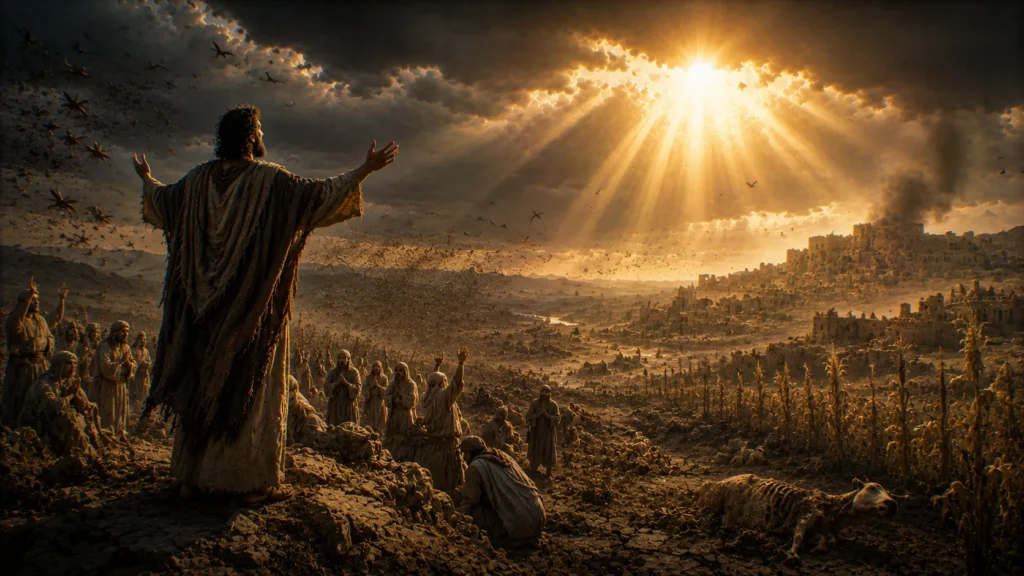
The Lord reminds Israel of the many warnings He has already sent. He withheld food through famine, brought drought upon the land, destroyed crops with blight and mildew, sent locusts to consume their harvests, afflicted them with plagues similar to those of Egypt, and allowed war to devastate their young men. He even overthrew some cities as He had destroyed Sodom and Gomorrah.
After each judgment, God repeats the sorrowful words, “Yet you have not returned to Me.” This repeated refrain reveals not only Israel’s stubbornness but also God’s persistent desire that His people would repent and be restored.
The chapter ends with a solemn warning: “Prepare to meet your God, O Israel!” Amos magnifies the greatness of the Lord, describing Him as the Creator of the mountains, the One who forms the wind, reveals His thoughts to mankind, turns dawn into darkness, and rules over all creation. Israel is called to recognize the majesty of the God they have continually resisted.
Amos Chapter 4 demonstrates that God’s discipline is motivated by His desire for repentance, but persistent rebellion eventually leads to unavoidable judgment.
Key Lessons From Amos Chapter 4
- God opposes those who oppress the poor and abuse their power.
- Religious rituals are meaningless without sincere obedience.
- God’s discipline is intended to lead people to repentance.
- Repeated rejection of God’s warnings brings greater judgment.
- God’s patience is great, but it is not limitless.
- Every person will one day stand before the sovereign Creator.
Important Verses
- Amos 4:1 – “Hear this word, you cows of Bashan, who are on the mountain of Samaria, who oppress the poor, who crush the needy.”
- Amos 4:6 – “Yet you have not returned to Me,” says the Lord.
- Amos 4:11 – “I overthrew some of you, as God overthrew Sodom and Gomorrah… Yet you have not returned to Me,” says the Lord.
- Amos 4:12-13 – “Prepare to meet your God, O Israel!… For behold, He who forms mountains, and creates the wind… The Lord God of hosts is His name.”