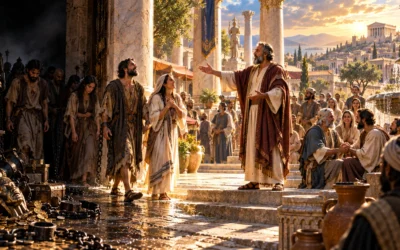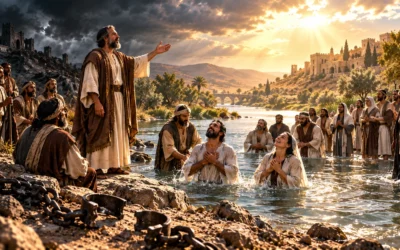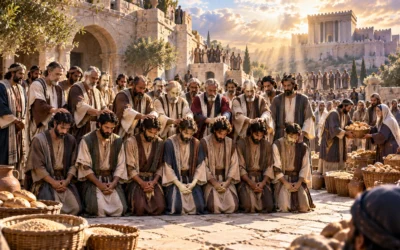

Romans Chapter 4 continues the Apostle Paul’s explanation of salvation by faith, using Abraham as the greatest Old Testament example of justification apart from works. Paul demonstrates that Abraham was declared righteous because he believed God long before he was circumcised or given the Law. This proves that salvation has always been based on God’s grace received through faith rather than human effort. The chapter also shows that Abraham is the spiritual father of all who believe, whether Jew or Gentile, and points ultimately to Jesus Christ, whose death and resurrection make our justification possible.
Romans Chapter 4 Summary
Paul begins by asking what Abraham discovered concerning righteousness before God. If Abraham had been justified by his own works, he would have had reason to boast. However, Scripture declares, “Abraham believed God, and it was accounted to him for righteousness.” Paul explains that righteousness is credited as a gift through faith rather than earned through human effort.
He then points to David, who also celebrated the blessing of forgiveness apart from works. David described the joy of those whose sins are forgiven and whose iniquities are covered by God’s grace.
Paul next explains that Abraham was counted righteous before he received circumcision. Therefore, circumcision served only as a sign and seal of the faith he already possessed. This means Abraham became the father of all believers, both the uncircumcised Gentiles who believe and the circumcised Jews who share his faith.
The apostle emphasizes that God’s promise to Abraham was never based upon obedience to the Law because the Law had not yet been given. Instead, the promise came through the righteousness that is received by faith. If inheritance depended upon keeping the Law, then faith would be meaningless and God’s promise would fail. But because salvation rests upon grace, the promise remains certain for everyone who believes.
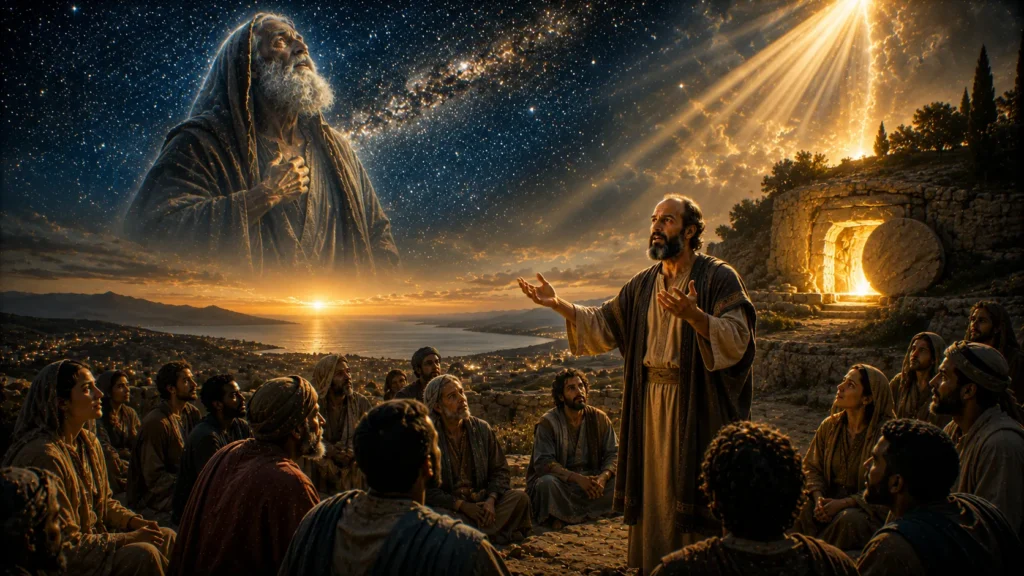
Abraham’s faith grew even stronger despite impossible circumstances. Although he and Sarah were far beyond the age of having children, Abraham refused to doubt God’s promise. Instead, he became fully convinced that God was able to accomplish everything He had promised. Therefore, his faith was credited to him as righteousness.
Paul concludes by explaining that Abraham’s story was written not only for him but also for all believers. Just as Abraham trusted God, those who believe in Jesus Christ—the One whom God raised from the dead—are also declared righteous. Jesus was delivered over because of humanity’s sins and raised from the dead for our justification.
Romans Chapter 4 powerfully proclaims that salvation has always been, and always will be, a gift of God’s grace received through faith alone.
Key Lessons From Romans Chapter 4
- Salvation is received through faith, not by works.
- Abraham is the father of all who believe.
- God’s promises depend upon His grace rather than human effort.
- Genuine faith trusts God even when circumstances seem impossible.
- Forgiveness is God’s gracious gift.
- Christ’s resurrection guarantees the believer’s justification.
Important Verses
- Romans 4:3 – “Abraham believed God, and it was accounted to him for righteousness.”
- Romans 4:5 – “But to him who does not work but believes on Him who justifies the ungodly, his faith is accounted for righteousness.”
- Romans 4:20-21 – “He did not waver at the promise of God through unbelief… being fully convinced that what He had promised He was also able to perform.”
- Romans 4:24-25 – “It shall be imputed to us who believe in Him who raised up Jesus our Lord from the dead, who was delivered up because of our offenses, and was raised because of our justification.”