



Genesis Chapter 25 marks a significant turning point in biblical history as the life of Abraham comes to an end and God’s covenant promises continue through his son Isaac. The chapter begins with Abraham’s later years, his additional descendants through Keturah, and his death at the age of 175. Abraham’s sons Isaac and Ishmael come together to bury their father in the cave of Machpelah, where Sarah had previously been laid to rest. The chapter also records the descendants of Ishmael, showing how God’s promise to make him into a great nation begins to unfold.
The story then shifts to Isaac and Rebekah, who struggle with infertility for twenty years before God answers Isaac’s prayers and blesses them with twin sons, Esau and Jacob. Even before their birth, God reveals that the two brothers will become the ancestors of separate nations and that the older will serve the younger. As the brothers grow, their contrasting personalities and choices create the foundation for a family conflict that will shape generations. The chapter concludes with Esau selling his birthright to Jacob for a simple meal, demonstrating the lasting consequences of valuing immediate satisfaction over a precious inheritance.
Genesis Chapter 25 Summary
Genesis Chapter 25 begins by describing Abraham’s later years and his marriage to Keturah, who bears him six sons: Zimran, Jokshan, Medan, Midian, Ishbak, and Shuah. These sons become the ancestors of additional families and peoples throughout the ancient Near East. Although Abraham has many descendants, he gives his principal inheritance to Isaac, the son through whom God has promised to continue His covenant. Abraham also provides gifts to the sons of his concubines and sends them eastward, away from Isaac, establishing separate households and preserving Isaac’s position as the principal heir.
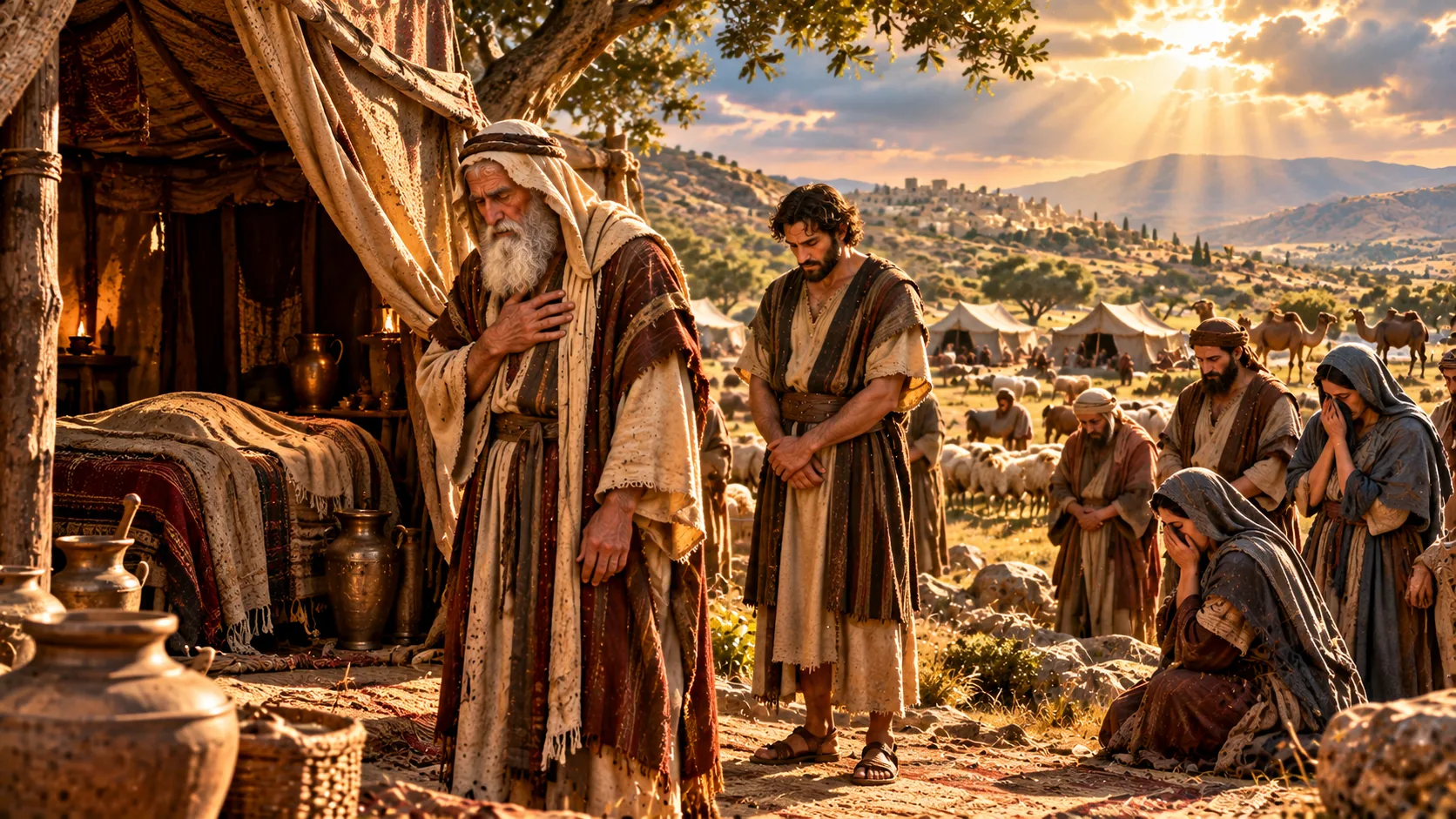
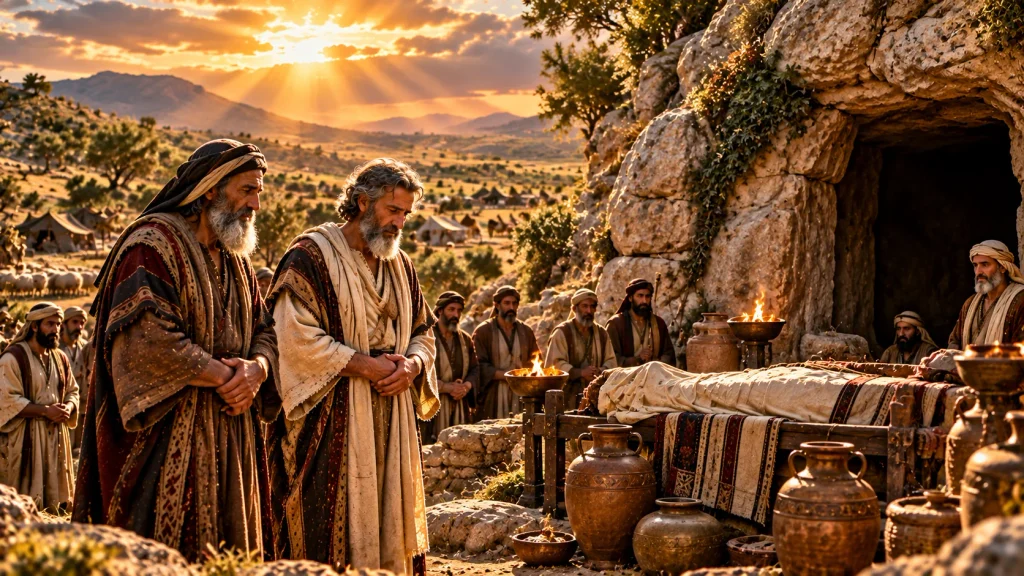
After living a long and remarkable life, Abraham dies at the age of 175 years. Scripture describes him as dying at a good old age, having lived a full life. His sons Isaac and Ishmael reunite to bury him in the cave of Machpelah, near Mamre, in the field Abraham had purchased from Ephron the Hittite. This is the same burial place where Sarah was laid to rest, bringing Abraham’s earthly journey to a peaceful conclusion. Following Abraham’s death, God continues to bless Isaac, who lives near Beer-lahai-roi. The covenant promises given to Abraham remain alive through the next generation.
The chapter then records the descendants of Ishmael, Abraham’s firstborn son through Hagar. Ishmael becomes the father of twelve sons, who establish their own settlements and tribal leadership. Their names include Nebajoth, Kedar, Adbeel, Mibsam, Mishma, Dumah, Massa, Hadar, Tema, Jetur, Naphish, and Kedemah. These descendants spread across territories extending from Havilah to Shur, toward Egypt and Assyria. Ishmael lives to the age of 137 before his death. His twelve sons fulfill God’s earlier promise that Ishmael would become the father of twelve princes and a great nation, demonstrating that God has not forgotten His promises concerning Abraham’s other son.
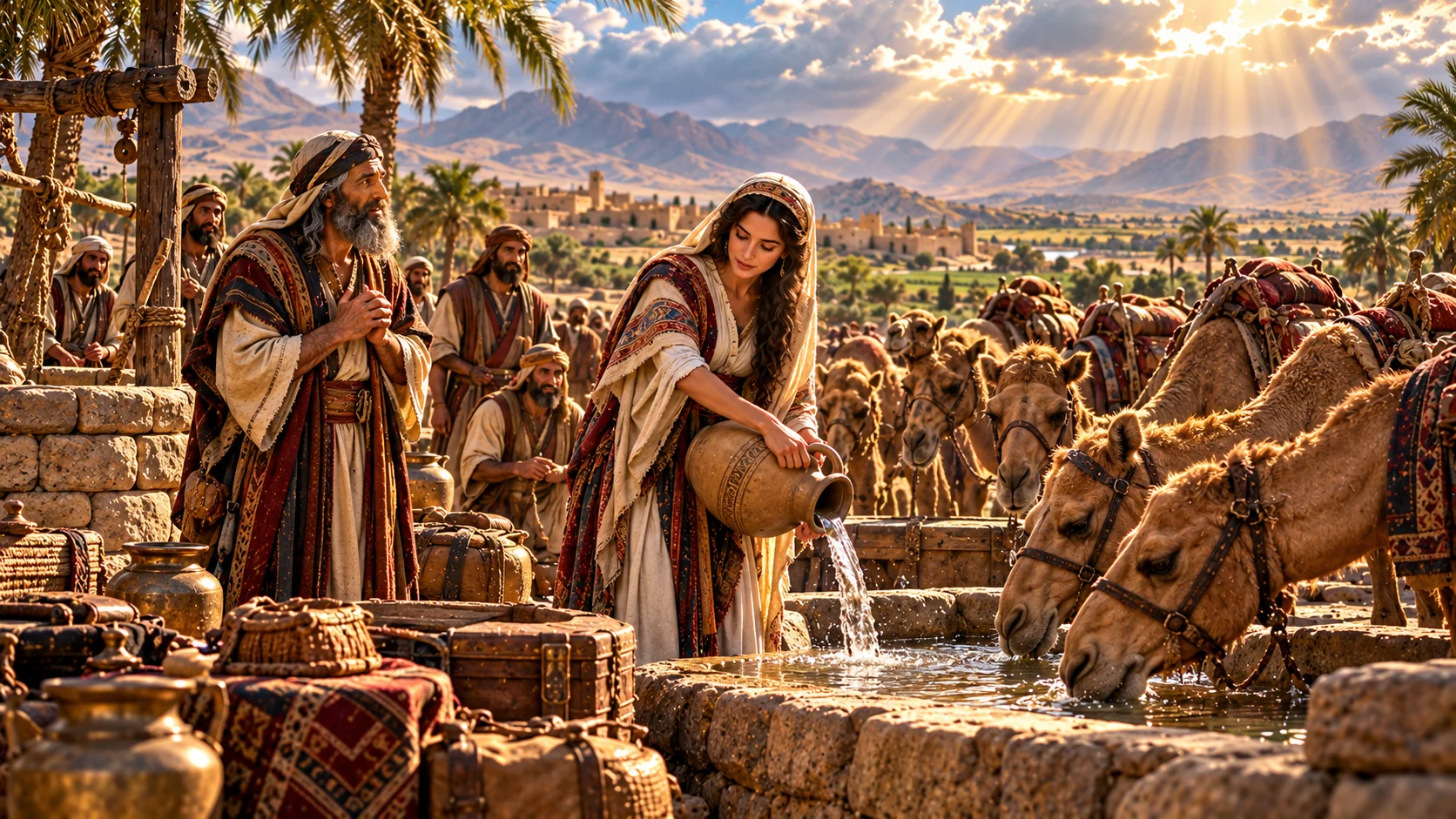
The narrative then turns to Isaac and Rebekah and their struggle to have children. Isaac is forty years old when he marries Rebekah, the daughter of Bethuel and sister of Laban. However, Rebekah is unable to conceive, and the couple remains childless for many years. Isaac prays earnestly to the Lord on behalf of his wife, and God answers his prayer. After twenty years of marriage, Rebekah becomes pregnant with twins. Isaac is sixty years old when his sons are born, revealing that God’s promises sometimes require patience, perseverance, and trust through long periods of waiting.
During her pregnancy, Rebekah experiences an unusual struggle within her womb, causing her to seek an answer from the Lord. God reveals that two nations are growing within her and that the two peoples will be separated from the moment of their birth. He declares that one nation will be stronger than the other and that the older son will serve the younger. This prophecy is especially significant because ancient family traditions normally gave the firstborn son special privileges and authority. God’s declaration reveals that His purposes will unfold according to His own plan rather than simply following human customs.
When the time comes for Rebekah to give birth, Esau is born first, appearing reddish and covered with hair. His name becomes associated with his distinctive appearance. His twin brother Jacob follows, grasping Esau’s heel as he emerges. This unusual detail foreshadows the rivalry that will develop between the brothers. Although Esau is technically the firstborn and therefore entitled to the traditional birthright, God’s earlier prophecy indicates that Jacob will ultimately hold the more important position in the covenant family.
As the brothers grow older, their personalities and interests become increasingly different. Esau develops into a skilled hunter who enjoys spending his time outdoors in the fields and wilderness. Jacob, by contrast, is described as a quiet man who prefers remaining among the tents. Their parents also develop different preferences: Isaac favors Esau because he enjoys the wild game Esau brings home, while Rebekah favors Jacob. These divided affections contribute to the growing tension within the household and prepare the way for the conflicts that will unfold in later chapters.
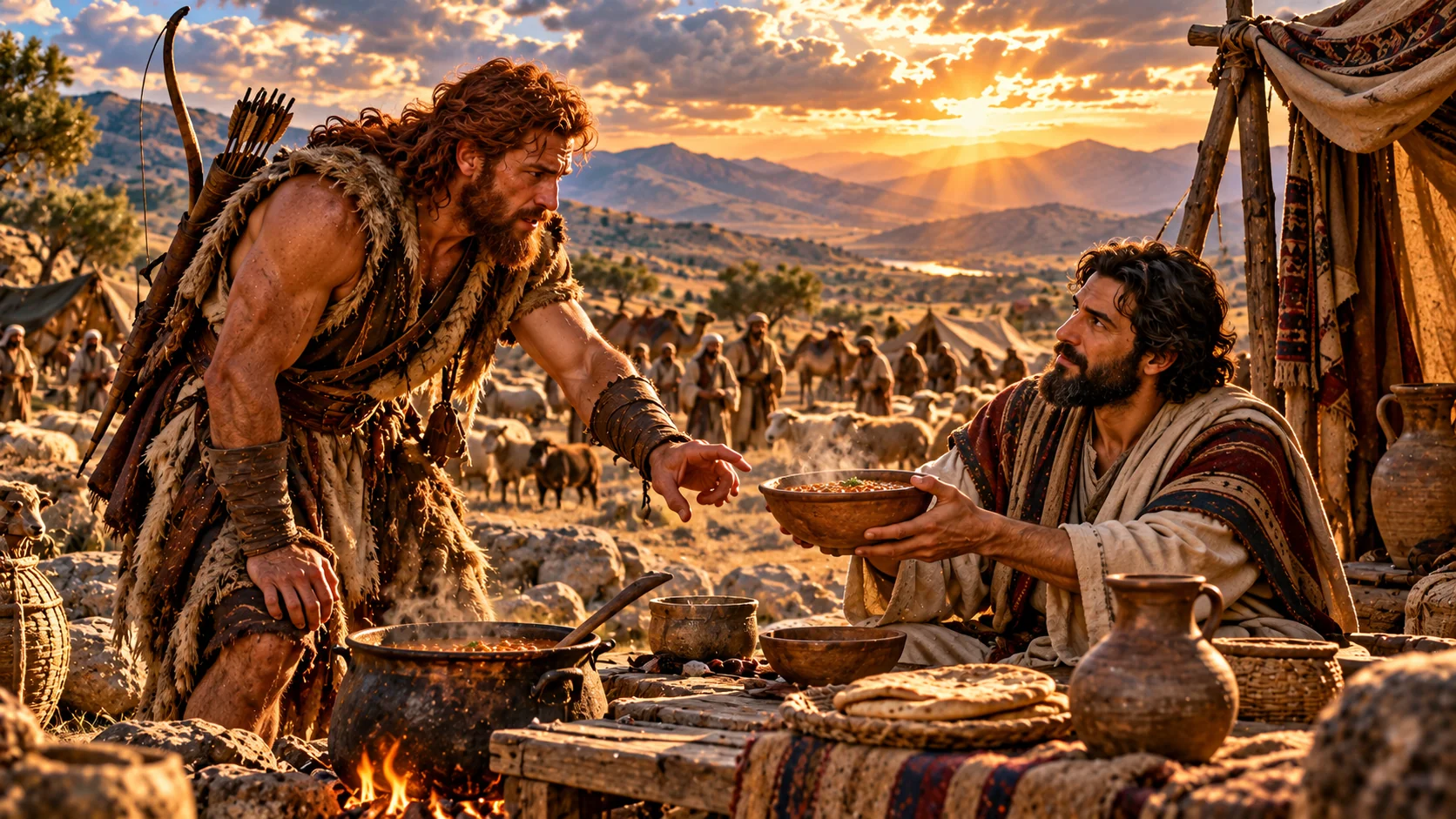
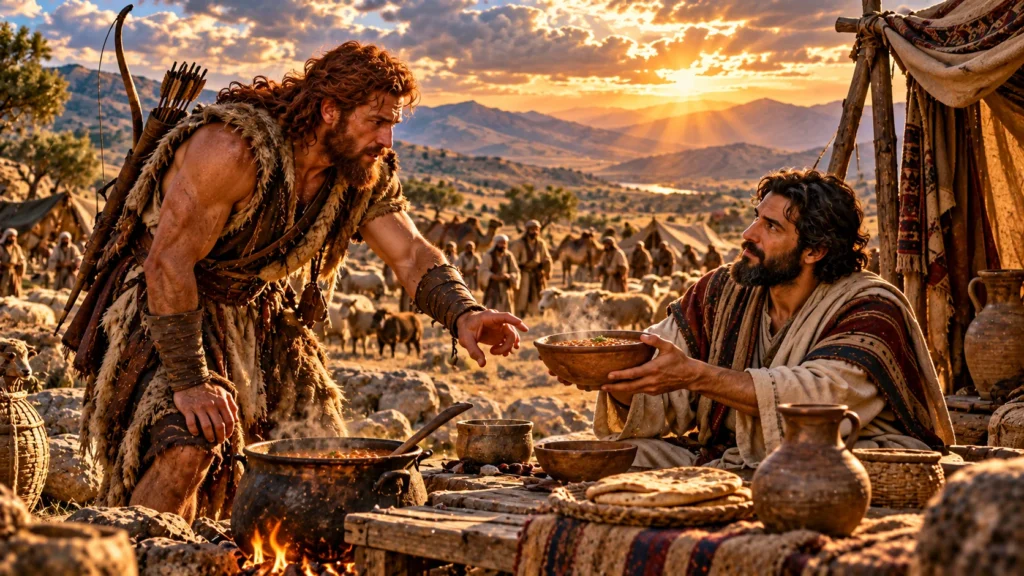
One day, Esau returns from the fields exhausted and extremely hungry while Jacob is preparing a stew. Esau asks Jacob to give him some of the red stew, but Jacob sees an opportunity and demands that Esau sell him his birthright in exchange for the meal. The birthright traditionally represents the special inheritance and privileges belonging to the firstborn son, including a greater share of the family’s possessions and a position of leadership. Within Abraham’s family, this inheritance also carries particular significance because of the covenant promises passed down through the generations.
Rather than recognizing the long-term importance of his birthright, Esau responds that he is so hungry that his inheritance seems worthless to him. Jacob insists that Esau swear an oath confirming the exchange, and Esau agrees. Jacob then gives his brother bread and lentil stew. Esau eats, drinks, rises, and leaves, apparently unconcerned about the enormous privilege he has surrendered. Scripture concludes the account by emphasizing that Esau despised his birthright, revealing his failure to appreciate its lasting value.
Genesis Chapter 25 ultimately demonstrates the faithfulness of God across generations and the importance of the choices people make. Abraham’s death does not bring God’s covenant to an end, for His promises continue through Isaac and his descendants. The birth of Jacob and Esau introduces two brothers whose contrasting attitudes toward inheritance, responsibility, and spiritual privilege will shape the future of their family. Through the events of this chapter, the biblical narrative reveals that God’s purposes continue despite human weakness, impatience, favoritism, and conflict.
Key Lessons – Genesis Chapter 25
- God’s promises continue across generations. Abraham’s death does not end the covenant, as God’s blessings continue through Isaac and his descendants.
- God remembers every promise He makes. Ishmael’s twelve sons demonstrate the fulfillment of God’s earlier promise concerning his descendants.
- Prayer and patience are essential to faith. Isaac prays for Rebekah, and God answers after twenty years of marriage.
- God’s plans are not limited by human traditions. The prophecy concerning Jacob and Esau reveals that God can choose the younger over the older to accomplish His purposes.
- Family favoritism can create division. Isaac’s preference for Esau and Rebekah’s preference for Jacob contribute to future conflict between the brothers.
- Immediate desires can lead to lasting consequences. Esau exchanges his valuable birthright for a single meal because he prioritizes his present hunger.
- Spiritual blessings should never be taken lightly. Esau’s disregard for his birthright demonstrates the danger of failing to recognize the value of a precious inheritance.
- Wisdom requires considering the future. Decisions made during moments of exhaustion, hunger, or emotional distress can have consequences far beyond the immediate situation.
- God remains faithful despite human imperfections. Although Jacob and Esau both display weaknesses, God’s larger covenant purposes continue.
- Every generation must decide what it values most. The contrasting choices of Jacob and Esau remind believers to consider what is truly important and lasting.
Important Verses
- Genesis 25:8 (KJV)
“Then Abraham gave up the ghost, and died in a good old age, an old man, and full of years; and was gathered to his people.” - Genesis 25:11 (KJV)
“And it came to pass after the death of Abraham, that God blessed his son Isaac; and Isaac dwelt by the well Lahairoi.” - Genesis 25:21 (KJV)
“And Isaac intreated the LORD for his wife, because she was barren: and the LORD was intreated of him, and Rebekah his wife conceived.” - Genesis 25:23 (KJV)
“And the LORD said unto her, Two nations are in thy womb, and two manner of people shall be separated from thy bowels; and the one people shall be stronger than the other people; and the elder shall serve the younger.” - Genesis 25:26 (KJV)
“And after that came his brother out, and his hand took hold on Esau’s heel; and his name was called Jacob: and Isaac was threescore years old when she bare them.” - Genesis 25:31 (KJV)
“And Jacob said, Sell me this day thy birthright.” - Genesis 25:34 (KJV)
“Then Jacob gave Esau bread and pottage of lentiles; and he did eat and drink, and rose up, and went his way: thus Esau despised his birthright.”