Ezekiel Chapter 6 contains a powerful prophecy of judgment against the mountains of Israel because the people have filled the land with idolatry. God commands Ezekiel to prophesy against the high places, altars, idols, and pagan worship centers that have drawn Israel away from Him. These places of false worship will be destroyed, and severe judgment will come upon the nation through the sword, famine, and pestilence. Yet the chapter also contains hope. God promises that a remnant will survive among the nations, and some of those survivors will remember Him, recognize the seriousness of their rebellion, and turn away from their idols. Ezekiel 6 reveals both the seriousness of spiritual unfaithfulness and God’s purpose in judgment: “They shall know that I am the LORD.”
Ezekiel Chapter 6 Summary
Ezekiel Chapter 6 begins when the word of the Lord comes to the prophet.
God tells Ezekiel:
“Son of man, set thy face toward the mountains of Israel, and prophesy against them.”
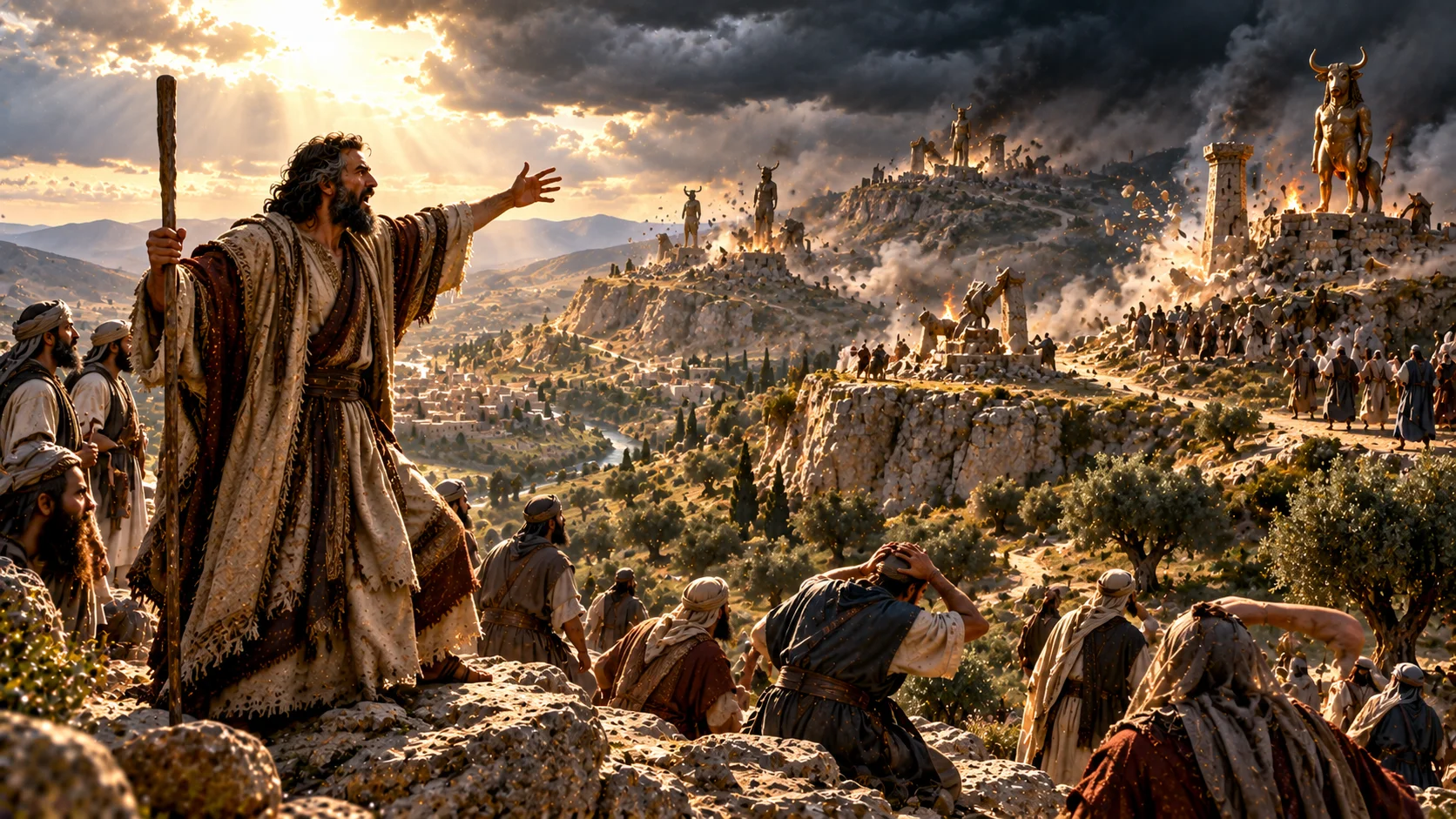
Ezekiel is commanded to speak directly against Israel’s mountains, hills, rivers, and valleys.
The landscape itself is significant because throughout these places the Israelites had established high places where false gods were worshiped.
God announces that He will bring judgment against these centers of idolatry.
Their high places will become desolate.
Their altars will be destroyed.
Their images will be broken.
Their works will be abolished.
The very places where Israel had abandoned the Lord will become visible evidence of judgment.
God declares that people will fall before their idols and their remains will lie around the altars they trusted.
The imagery is intentionally severe.
Israel had looked to these idols for protection, prosperity, and security, but those idols would be completely powerless when judgment arrived.
God then announces that the cities will become devastated and the high places abandoned.
The purpose is repeated throughout the chapter:
“And ye shall know that I am the LORD.”
Judgment will expose the complete inability of Israel’s idols to save them.
Yet destruction will not be total.
God declares:
“Yet will I leave a remnant.”
Some Israelites will escape the sword and be scattered among other nations.
While living among those nations, the survivors will remember the Lord.
They will understand how deeply their spiritual unfaithfulness grieved Him.
Israel’s idolatry is described using the language of an unfaithful relationship.
Their hearts had departed from God, and their eyes had turned toward idols.
When the survivors finally understand the seriousness of what they have done, their attitude will change.
They will loathe themselves because of the evil and abominations they committed.
This repentance demonstrates that God’s judgment is not meaningless destruction.
It exposes sin and brings some people to recognize the truth.
The survivors will understand that when God warned them about judgment, He was not speaking empty words.
God then tells Ezekiel to respond dramatically to the seriousness of the prophecy.
He is commanded to strike his hands together and stamp his foot.
He cries:
“Alas for all the evil abominations of the house of Israel!”
Judgment will come through three devastating means:
the sword, famine, and pestilence.
Those far away may die from disease.
Those nearby may fall by the sword.
Those who survive these dangers may suffer from famine.
God declares that His fury against Israel’s rebellion will be accomplished.
Again, the destruction of the idols becomes central.
The people will recognize the Lord when judgment reaches their false altars.
Their slain will be found around the places where they had burned incense to idols—upon high hills, mountain peaks, beneath green trees, and under spreading oaks.
These locations had once seemed attractive as places of worship.
Now they would become reminders of Israel’s spiritual rebellion.
God declares that He will stretch out His hand against the land.
The devastation will extend throughout Israel’s territory.
The chapter closes by repeating its central message:
“And they shall know that I am the LORD.”
Ezekiel Chapter 6 therefore presents a powerful progression:
idolatry → warning → destruction of false worship → judgment → scattering → remembrance → repentance → recognition of the Lord.
Israel had trusted things that could not save them.
Through judgment, both the rebellious and the surviving remnant would discover that the Lord alone is God.

Key Lessons – Ezekiel Chapter 6
- God takes idolatry seriously. Israel’s idols were not harmless religious objects; they represented the people’s rejection of their covenant relationship with God.
- Anything trusted in place of God can ultimately fail. Israel’s altars and idols were powerless when judgment arrived.
- God repeatedly warns before judgment. Ezekiel’s prophecy demonstrates that Israel was not judged without first receiving God’s warnings.
- Sin can affect more than individuals. Israel’s spiritual rebellion had become so widespread that its influence covered cities, mountains, valleys, and the entire land.
- God preserves a remnant. Even during severe judgment, some people survive and eventually remember the Lord.
- True repentance includes recognizing the seriousness of sin. The surviving Israelites come to understand how deeply their unfaithfulness had separated them from God.
- God’s word is trustworthy. The survivors eventually recognize that the Lord had not warned them “in vain.”
- The central purpose is knowing the Lord. The repeated declaration “they shall know that I am the LORD” shows that God’s judgment exposes false gods and reveals His sovereign authority.
Important Verses
Ezekiel 6:2
“Son of man, set thy face toward the mountains of Israel, and prophesy against them.”
Ezekiel 6:4
“And your altars shall be desolate, and your images shall be broken.”
Ezekiel 6:7
“And ye shall know that I am the LORD.”
Ezekiel 6:8
“Yet will I leave a remnant, that ye may have some that shall escape the sword among the nations.”
Ezekiel 6:9
“And they that escape of you shall remember me among the nations whither they shall be carried captives.”
Ezekiel 6:10
“And they shall know that I am the LORD, and that I have not said in vain that I would do this evil unto them.”
Ezekiel 6:12
“He that is far off shall die of the pestilence; and he that is near shall fall by the sword.”
Ezekiel 6:14
“And they shall know that I am the LORD.”