
Ecclesiastes Chapter 6 continues Solomon’s examination of wealth, possessions, success, and the human search for satisfaction. He describes a painful tragedy: a person may receive riches, honor, possessions, and even a long life, yet still lack the ability to enjoy them. Solomon emphasizes that accumulating more does not guarantee contentment because human desire is never completely satisfied by material things. The chapter challenges the assumption that prosperity automatically produces happiness and reminds us of the limits of human understanding. Ecclesiastes 6 teaches that life cannot be measured simply by what a person owns, achieves, or accumulates. The ability to appreciate what God has provided is itself a precious gift.
Ecclesiastes Chapter 6 Summary
Ecclesiastes 6 begins with Solomon describing an evil he has observed under the sun—one that weighs heavily upon humanity.
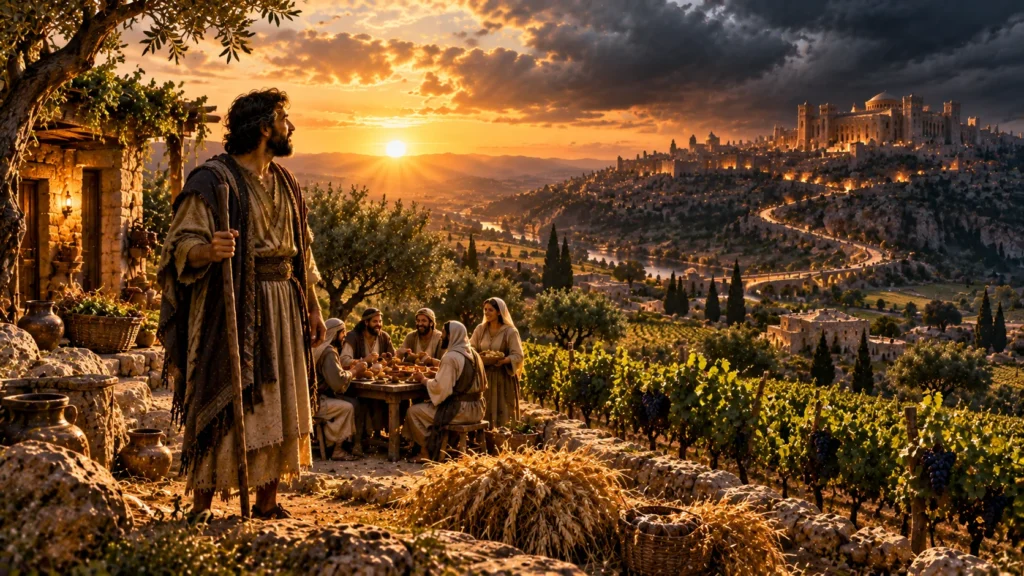
A person may receive riches, wealth, and honor.
He may possess everything his heart appears to desire.
Yet there is a devastating problem:
He does not have the ability to enjoy what he possesses.
Instead, someone else ultimately enjoys his wealth.
Solomon describes this as vanity and a grievous evil.
The problem is not simply lacking possessions.
The person has abundance but cannot experience satisfaction from it.
Solomon then presents an intentionally extreme comparison.
A man might have a hundred children and live for many years.
From an ancient perspective, both would normally represent extraordinary blessing and prosperity.
Yet if that person never learns to enjoy the good things of life and ultimately receives no honorable burial, Solomon says that even a stillborn child is better off than he is.
The comparison is deliberately severe.
Solomon’s point is that a long life without genuine satisfaction is not necessarily a fulfilling life.
He continues by describing someone who might live two thousand years.
Even such extraordinary longevity would ultimately end in death.
Everyone eventually goes to the same place.
Solomon then turns to the endless cycle of human appetite.
People labor so they can eat and survive, yet their appetite is never permanently satisfied.
A meal satisfies hunger temporarily, but hunger eventually returns.
Solomon uses this basic human experience to illustrate a larger reality about desire.
Human beings continually pursue things they believe will finally satisfy them, yet desire repeatedly returns.
Solomon asks:
“For what hath the wise more than the fool?”
Wisdom certainly has value, but neither wisdom nor foolishness can eliminate the fundamental limitations of human existence.
Solomon then offers an important principle:
“Better is the sight of the eyes than the wandering of the desire.”
In other words, appreciating what is actually before us is better than constantly chasing what we do not possess.
Endless desire keeps the heart restless.
Contentment recognizes and appreciates what has already been given.
Solomon again describes this restless pursuit as vanity and vexation of spirit.
The chapter then turns toward the limitations of humanity.
Whatever exists has already been named, and humanity’s nature is known.
A human being cannot successfully contend with One who is mightier.
This emphasizes humanity’s limited power and inability to control every aspect of life.
Solomon warns that multiplying words does not remove life’s uncertainties.
Human beings can discuss, debate, plan, speculate, and argue endlessly, but words alone cannot give us complete control or understanding.
The chapter concludes with two profound questions.
Who truly knows what is good for a person during the few days of this fleeting life?
And:
Who can tell a person what will happen after him under the sun?
Human knowledge is limited.
Life passes quickly, like a shadow.
We cannot fully control the future, guarantee satisfaction through possessions, or know everything that will happen after us.
Ecclesiastes 6 therefore confronts the illusion that more wealth, more years, more achievements, or more possessions will automatically produce a meaningful life.
True contentment cannot simply be accumulated.
Key Lessons – Ecclesiastes Chapter 6
- Having wealth and enjoying wealth are not the same thing. A person can possess extraordinary riches while remaining deeply dissatisfied.
- The ability to enjoy what we have is itself a gift. Material abundance means little when the heart cannot experience gratitude or contentment.
- More does not automatically mean better. More possessions, greater success, and even a longer life cannot guarantee fulfillment.
- Human desire can become endless. Constantly pursuing the next possession, achievement, or experience can prevent us from appreciating what is already before us.
- Contentment is better than endless craving. Solomon teaches that enjoying what we can see and possess is better than allowing desire to wander continually toward what we lack.
- Life is brief and uncertain. Even an extraordinarily long life eventually reaches the same destination, reminding us not to build our entire identity around temporary things.
- Human understanding has limits. We cannot completely control the future or know everything that will happen after our lives.
Important Verses
- Ecclesiastes 6:2
- “A man to whom God hath given riches, wealth, and honour, so that he wanteth nothing for his soul of all that he desireth, yet God giveth him not power to eat thereof.”
- Ecclesiastes 6:3
- “If a man beget an hundred children, and live many years… and also that he have no burial; I say, that an untimely birth is better than he.”
- Ecclesiastes 6:6
- “Yea, though he live a thousand years twice told, yet hath he seen no good: do not all go to one place?”
- Ecclesiastes 6:7
- “All the labour of man is for his mouth, and yet the appetite is not filled.”
- Ecclesiastes 6:9
- “Better is the sight of the eyes than the wandering of the desire.”
- Ecclesiastes 6:11
- “Seeing there be many things that increase vanity, what is man the better?”
- Ecclesiastes 6:12
- “For who knoweth what is good for man in this life, all the days of his vain life which he spendeth as a shadow?”