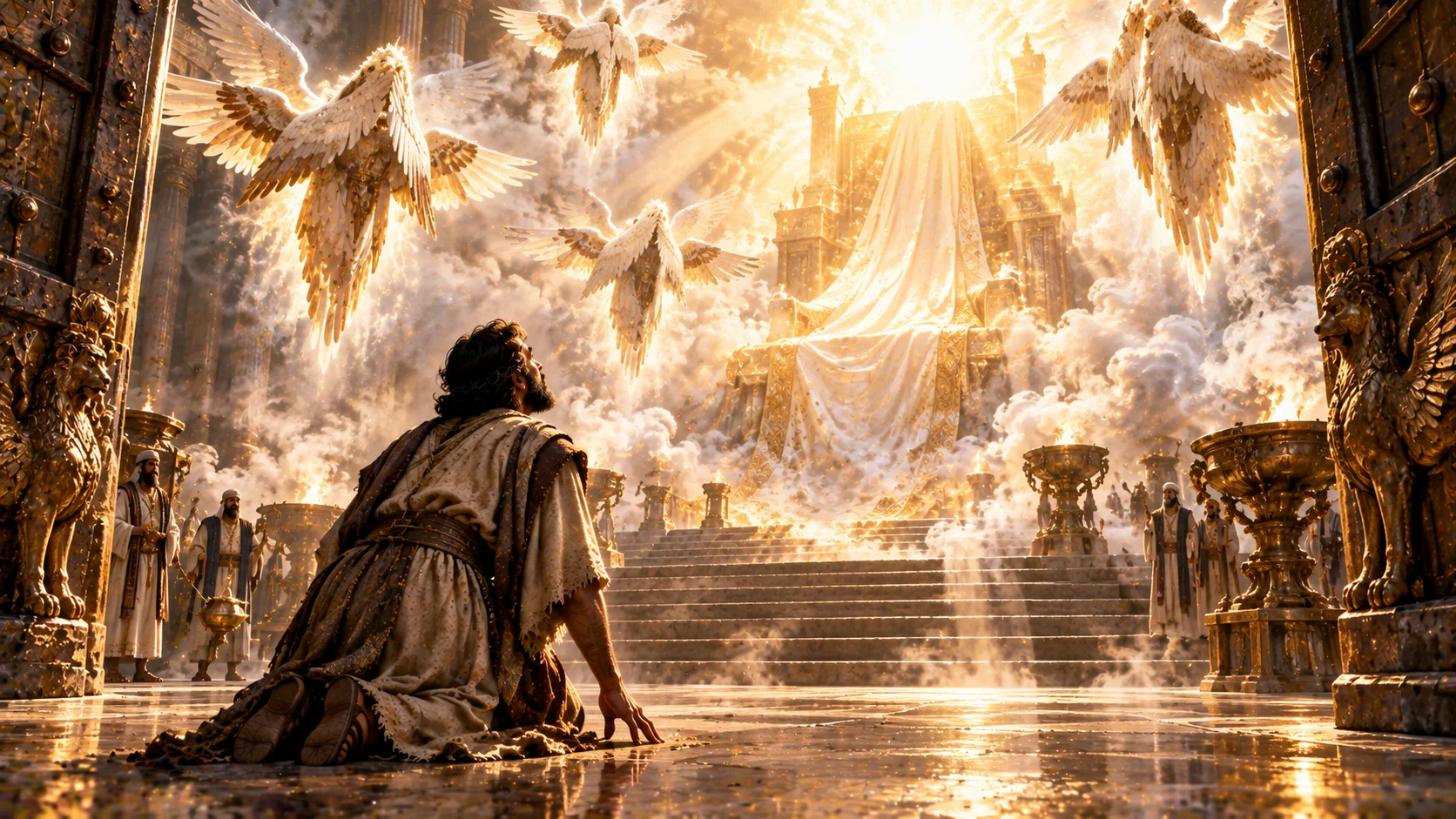
Isaiah Chapter 6 records Isaiah’s extraordinary vision of the Lord and his calling to become a prophet. Isaiah sees the Lord exalted upon His throne as the heavenly beings proclaim His absolute holiness. The Temple shakes, smoke fills the sanctuary, and Isaiah becomes painfully aware of his own sinfulness. Yet God does not leave him condemned. Isaiah’s guilt is removed, his sin is forgiven, and he responds willingly when the Lord asks who will carry His message. The chapter then reveals that Isaiah’s ministry will be difficult: many people will hear God’s warning without responding in repentance. Even after coming judgment, however, the chapter closes with a small but important picture of hope—a holy remnant will remain.
Isaiah Chapter 6 Summary
Isaiah 6 begins by identifying the historical setting:
“In the year that king Uzziah died.”
During this time of uncertainty and transition, Isaiah receives an overwhelming vision of the Lord.
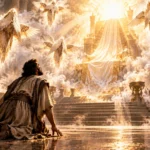
He sees the Lord sitting upon a throne, high and lifted up, and the train of His robe fills the Temple.
Above Him are heavenly beings called seraphim.
Each has six wings.
With two wings they cover their faces, with two they cover their feet, and with two they fly.
They call to one another:
“Holy, holy, holy, is the LORD of hosts: the whole earth is full of his glory.”
Their voices are so powerful that the foundations of the doorway shake.
The Temple fills with smoke.
Confronted with the overwhelming holiness of God, Isaiah does not respond with pride or self-confidence.
Instead, he immediately becomes aware of his own sinfulness.
He cries:
“Woe is me! for I am undone.”
Isaiah describes himself as a man of unclean lips living among a people of unclean lips.
Seeing the King, the Lord of hosts, causes Isaiah to recognize the enormous difference between God’s holiness and human sinfulness.
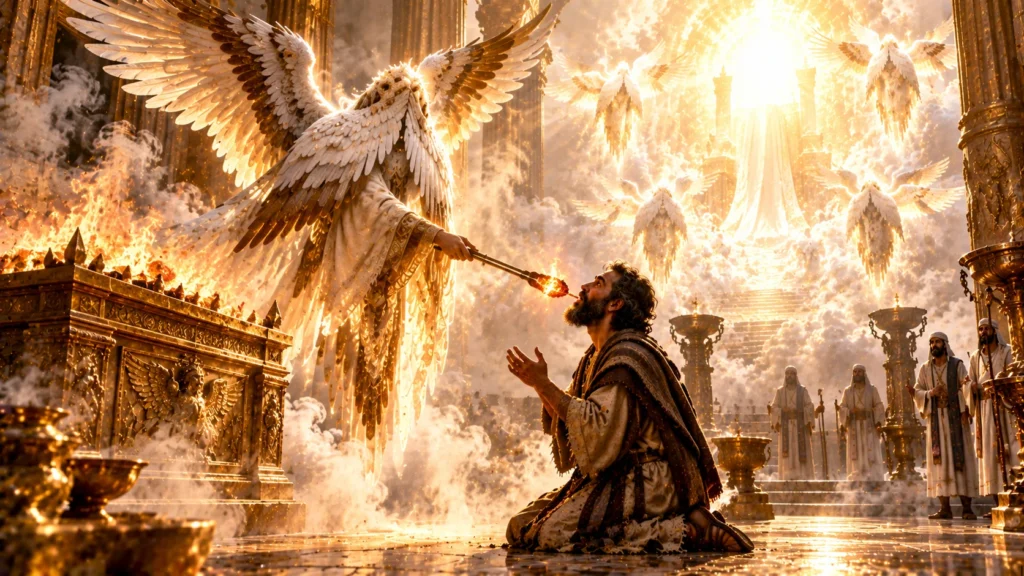
Then one of the seraphim flies toward Isaiah.
The seraph carries a burning coal taken from the altar with tongs.
The coal touches Isaiah’s lips.
The heavenly messenger declares that Isaiah’s guilt has been taken away and his sin has been purged.
The man who moments earlier cried, “Woe is me,” has now experienced cleansing and forgiveness.
Isaiah then hears the voice of the Lord asking:
“Whom shall I send, and who will go for us?”
Isaiah responds without hesitation:
“Here am I; send me.”
His encounter with God’s holiness and forgiveness leads directly into willing service.
God then gives Isaiah his mission.
It will not be an easy ministry.
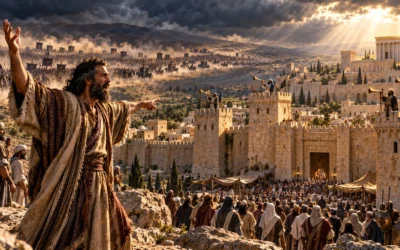
Isaiah must proclaim God’s message to people who will hear his words but repeatedly fail to understand and respond.
Their spiritual condition has become hardened.
Isaiah realizes how difficult this assignment will be and asks:
“Lord, how long?”
The answer reveals coming judgment.
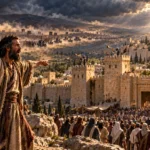
Cities will eventually become devastated, houses will be left without inhabitants, and the land will become desolate.
The Lord will remove people from the land, leaving widespread abandonment behind.
Yet judgment will not mean the complete end of God’s purposes.
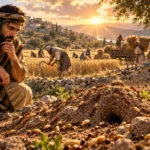
The chapter closes with the image of a tree that has been cut down but still possesses a stump.
Isaiah declares:
“The holy seed shall be the substance thereof.”
Even after severe judgment, a remnant will remain.
Therefore, Isaiah Chapter 6 moves through a powerful sequence:
God’s holiness → human conviction → divine cleansing → willing service → difficult mission → judgment → hope through a remnant.
Key Lessons – Isaiah Chapter 6
- God is absolutely holy. The repeated declaration “Holy, holy, holy” emphasizes the incomparable purity and majesty of the Lord.
- Encountering God’s holiness reveals our own sinfulness. Isaiah’s first response to the vision is recognition of his own unworthiness.
- God provides cleansing for those who are guilty. Isaiah cannot cleanse himself; his guilt is removed through an act initiated from God’s presence.
- Forgiveness prepares us for service. Isaiah receives cleansing before responding, “Here am I; send me.”
- Serving God requires willingness. Isaiah does not know that his mission will be easy when he volunteers; he simply makes himself available.
- Faithfulness does not always produce immediate visible success. Isaiah is called to proclaim truth even though many people will refuse to respond.
- God preserves hope even through judgment. The final image of the holy seed shows that destruction will not completely eliminate God’s purposes for His people.
Important Verse
- Isaiah 6:1
- “In the year that king Uzziah died I saw also the Lord sitting upon a throne, high and lifted up.”
- Isaiah 6:3
- “Holy, holy, holy, is the LORD of hosts: the whole earth is full of his glory.”
- Isaiah 6:5
- “Then said I, Woe is me! for I am undone; because I am a man of unclean lips.”
- Isaiah 6:7
- “Lo, this hath touched thy lips; and thine iniquity is taken away, and thy sin purged.”
- Isaiah 6:8
- “Also I heard the voice of the Lord, saying, Whom shall I send, and who will go for us? Then said I, Here am I; send me.”
- Isaiah 6:11
- “Then said I, Lord, how long?”
- Isaiah 6:13
- “So the holy seed shall be the substance thereof.”