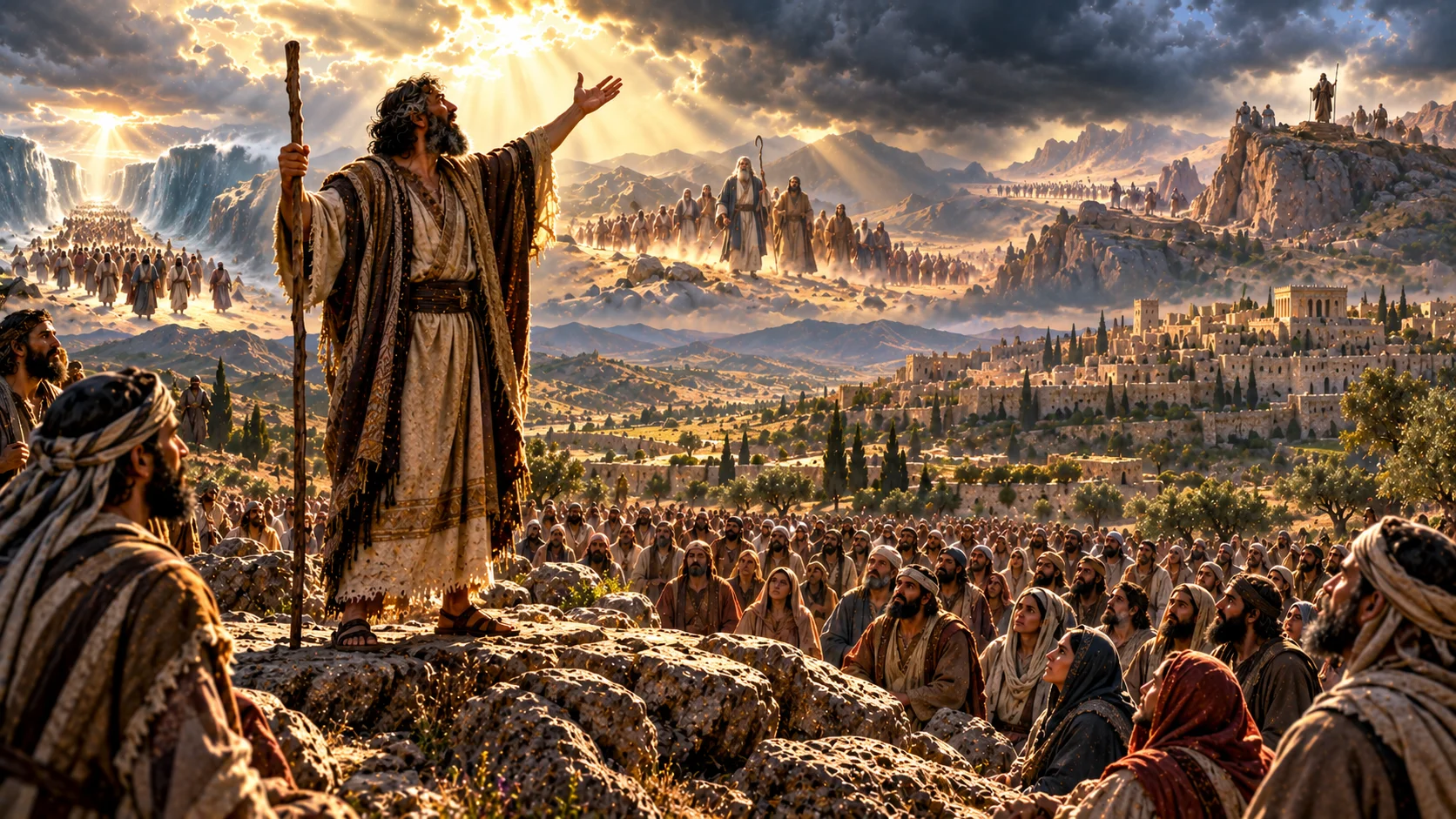
Micah Chapter 6 presents a dramatic courtroom-like confrontation between God and His people. The Lord calls the mountains and foundations of the earth as witnesses while He brings His case against Israel. God reminds His people of His faithfulness—delivering them from Egypt, giving them faithful leaders, protecting them from Balak’s schemes, and bringing them safely into the Promised Land. Israel responds by asking what sacrifices could possibly satisfy God, but Micah reveals that the Lord’s true desire is not extravagant religious offerings. Instead, God requires His people “to do justly, and to love mercy, and to walk humbly with thy God.” The remainder of the chapter exposes dishonesty, violence, deception, and idolatry within the nation and warns that persistent rebellion will bring judgment.
Micah Chapter 6 Summary
Micah Chapter 6 begins with the Lord commanding Micah:
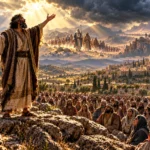
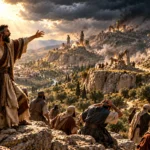
“Arise, contend thou before the mountains, and let the hills hear thy voice.”
The scene resembles a great courtroom.
The mountains, hills, and enduring foundations of the earth are called as witnesses as God presents His case against Israel.
The Lord asks:
“O my people, what have I done unto thee? and wherein have I wearied thee?”
God challenges Israel to explain why they have turned away from Him.
Rather than beginning by listing Israel’s sins, God first reminds them of His own faithfulness.
He brought Israel out of Egypt.
He redeemed them from slavery.
He gave them Moses, Aaron, and Miriam to lead them.
God then reminds Israel of Balak king of Moab and Balaam son of Beor.
Balak wanted Balaam to curse Israel.
Yet God overturned the plan and protected His people.
What was intended as a curse could not defeat those whom God had determined to bless.
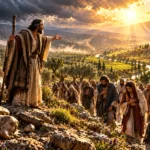
The Lord also reminds them of their journey from Shittim to Gilgal.
These events demonstrated His faithful guidance as Israel entered the Promised Land.
Remembering what God had done should cause Israel to recognize:
“The righteousness of the LORD.”
Israel then responds with a series of questions.
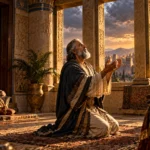
How should they approach such a holy God?
Should they come with burnt offerings?
Would year-old calves satisfy Him?
Would thousands of rams be enough?
What about:
“Ten thousands of rivers of oil?”
The questions become increasingly extreme.
Finally, the speaker asks whether even offering his firstborn could somehow pay for his sin.
The answer is no.
God is not looking for increasingly extravagant attempts to purchase His favor.
Micah then gives one of the most important summaries of godly living in the Old Testament:
“He hath shewed thee, O man, what is good.”
God has already revealed what He desires:
“To do justly, and to love mercy, and to walk humbly with thy God.”
The emphasis is not on abandoning worship or sacrifice altogether.
Rather, religious ceremony without a life shaped by God’s character is empty.
Do justly means practicing what is right and fair.
Love mercy means valuing steadfast love, kindness, compassion, and faithfulness.
Walk humbly with God means living in continual dependence upon Him rather than pride and self-sufficiency.
The chapter then turns from what God requires to what He actually finds within the city.
The Lord calls out to Jerusalem, warning that wisdom means fearing His name.
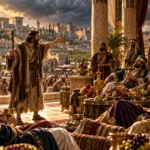
God exposes dishonest wealth.
He asks whether He can consider people innocent when their prosperity has been accumulated through wrongdoing.
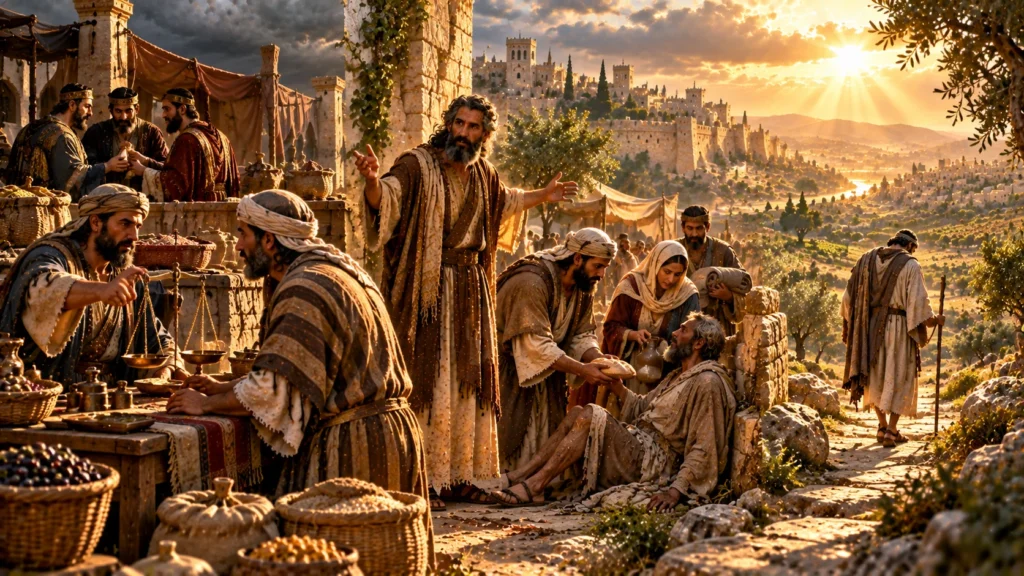
Merchants use dishonest scales.
Their measuring weights are deceptive.
Economic corruption has become part of everyday life.
The wealthy are filled with violence.
The inhabitants speak lies.
Deception has become normal.
Their religious profession does not match the way they treat other people.
Because they refuse to change, God announces judgment.
Their efforts will repeatedly fail to produce satisfaction.
They will eat but not be filled.
They will attempt to preserve possessions but will lose them.
They will sow but not reap the harvest they expected.
They will press olives but will not enjoy the oil.
They will produce wine but will not drink it.
These judgments represent a reversal of the prosperity they pursued through corruption.
They worked to accumulate more, yet they would discover that possessions obtained without righteousness could not provide security.
Micah then identifies another major problem.
The people have followed:
“The statutes of Omri”
and:
“All the works of the house of Ahab.”
Omri and Ahab represented a legacy of idolatry and rebellion in Israel.
Instead of following the Lord’s ways, the people have continued patterns associated with corrupt rulers.
Because of this persistent rebellion, God warns that their land will become desolate and its inhabitants an object of reproach.
Micah Chapter 6 therefore presents a powerful progression:
God’s faithfulness → Israel’s religious questions → God’s true requirement → corruption exposed → judgment announced.
The chapter makes the contrast unmistakable.
Israel wonders whether God wants more sacrifices.
God wants changed lives.
He desires people who practice justice, cherish mercy, and humbly walk with Him.
Key Lessons – Micah Chapter 6
- Remembering God’s faithfulness should lead to faithful living. God reminds Israel of Egypt, Moses, Aaron, Miriam, Balak, Balaam, and His guidance into the Promised Land.
- God cannot be bought with extravagant religious offerings. Thousands of sacrifices cannot replace genuine obedience.
- God cares deeply about justice. Faith must affect how people conduct business, exercise power, and treat others.
- God wants His people to love mercy. Mercy is not merely something to practice reluctantly; Micah says we should love it.
- Walking with God requires humility. Genuine faith recognizes our dependence upon God rather than trusting our own righteousness, wealth, or accomplishments.
- Outward religion cannot hide inward corruption. Israel maintained religious practices while dishonesty, violence, and deception continued throughout society.
- Dishonest gain cannot provide lasting security. Israel accumulated wealth through corrupt practices, but God warns that their efforts will ultimately leave them unsatisfied.
- We must be careful whose example we follow. Israel continued the rebellious patterns associated with Omri and Ahab instead of returning to God’s ways.
Important Verses
- Micah 6:3
- “O my people, what have I done unto thee? and wherein have I wearied thee? testify against me.”
- Micah 6:4
- “For I brought thee up out of the land of Egypt, and redeemed thee out of the house of servants.”
- Micah 6:6
- “Wherewith shall I come before the LORD, and bow myself before the high God?”
- Micah 6:7
- “Will the LORD be pleased with thousands of rams, or with ten thousands of rivers of oil?”
- Micah 6:8
- “He hath shewed thee, O man, what is good; and what doth the LORD require of thee, but to do justly, and to love mercy, and to walk humbly with thy God?”
- Micah 6:11
- “Shall I count them pure with the wicked balances, and with the bag of deceitful weights?”
- Micah 6:12
- “For the rich men thereof are full of violence, and the inhabitants thereof have spoken lies.”
- Micah 6:15
- “Thou shalt sow, but thou shalt not reap.”