







1 Timothy Chapter 6 concludes Paul’s first letter to Timothy with powerful teaching about godliness, contentment, money, temptation, Christian character, generosity, and faithfulness to the truth. Paul warns against false teachers who treat religion as a way to gain wealth and declares that “godliness with contentment is great gain.” Because people bring nothing into the world and can carry nothing out, believers should resist the relentless pursuit of riches. Paul famously warns that “the love of money is the root of all evil” and urges Timothy instead to pursue righteousness, godliness, faith, love, patience, and meekness. Timothy is commanded to “fight the good fight of faith” and lay hold on eternal life. Paul also instructs wealthy Christians not to trust uncertain riches but to become rich in good works, generosity, and willingness to share. The chapter closes by urging Timothy to guard faithfully what God has entrusted to him.
1 Timothy Chapter 6 Summary
1 Timothy Chapter 6 begins with Paul addressing believers living as servants under the social structures of the first-century Roman world.
Paul tells them to treat their masters with appropriate honor:
“Let as many servants as are under the yoke count their own masters worthy of all honour.”
His concern includes the reputation of the Christian message:
“That the name of God and his doctrine be not blasphemed.”
Paul then addresses situations in which both servant and master are believers.
Christian servants should not become disrespectful simply because their masters are now spiritual brothers.
Instead, they should serve faithfully because those receiving their service are:
“Faithful and beloved.”
Paul tells Timothy:
“These things teach and exhort.”
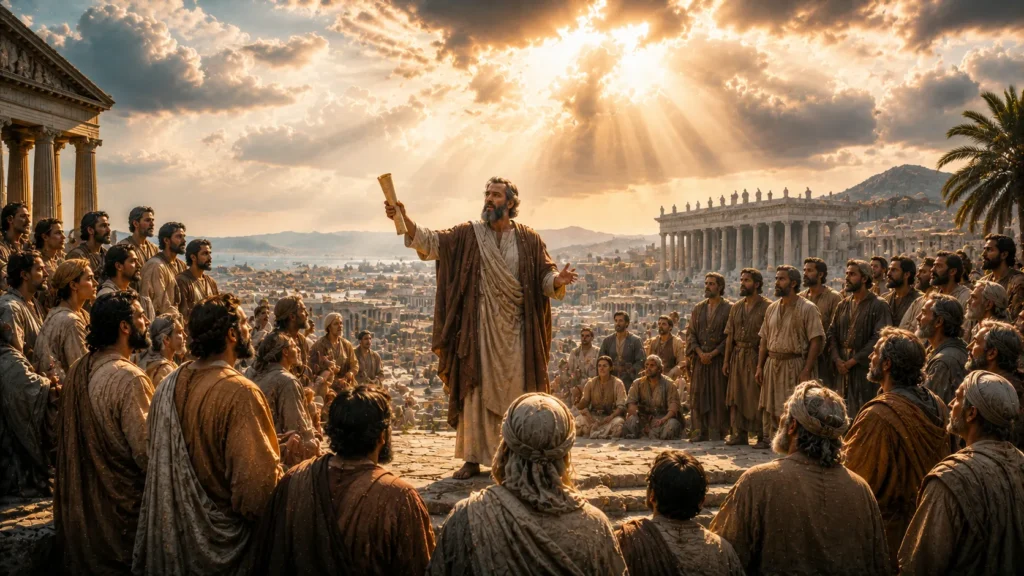
He then returns to one of the major concerns running throughout the letter:
false teaching.
Paul warns about anyone who teaches differently and refuses:
“Wholesome words, even the words of our Lord Jesus Christ.”
False teaching is not merely an intellectual mistake.
Paul describes the destructive character that can accompany it.
Such a teacher may become proud while understanding very little.
Paul describes an unhealthy obsession with:
“Questions and strifes of words.”
These controversies produce destructive results:
“Envy, strife, railings, evil surmisings.”
Instead of producing holiness, false teaching can create suspicion, arguments, division, and corruption.
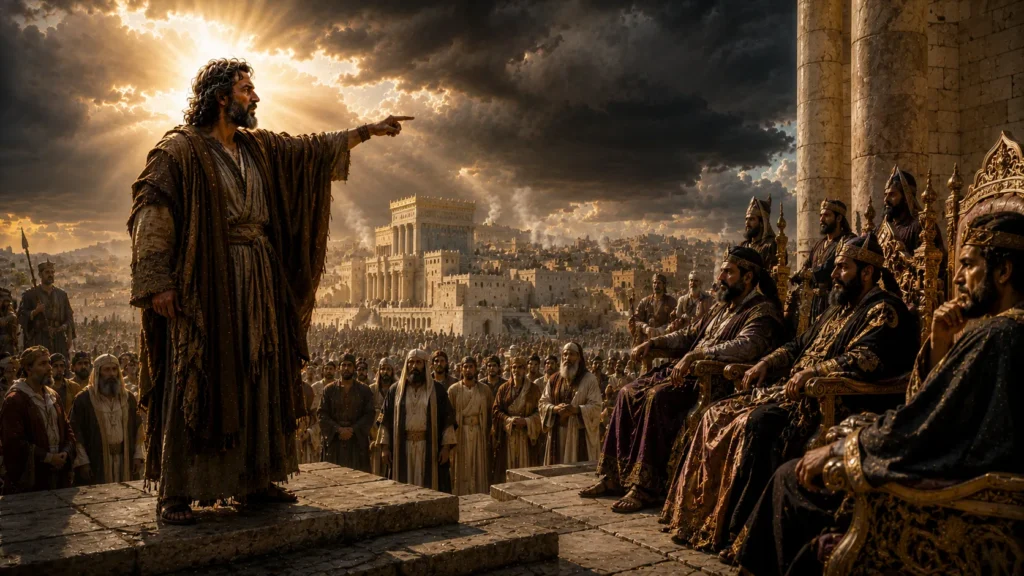
Paul especially condemns teachers who imagine:
“That gain is godliness.”
They treat religion as a means of obtaining material advantage.
Paul tells Timothy:
“From such withdraw thyself.”
Paul then completely reverses their definition of gain.
He declares:
“But godliness with contentment is great gain.”
True wealth is not found in using God to obtain more possessions.
True gain is found in knowing God and being content with what He provides.
Paul reminds Timothy of a simple reality shared by every human being:
“For we brought nothing into this world, and it is certain we can carry nothing out.”
People enter life without material possessions.
They also leave their earthly possessions behind at death.
Therefore, wealth cannot be the ultimate measure of a successful life.
Paul continues:
“And having food and raiment let us be therewith content.”
He is not condemning responsible work, provision, saving, or possessing resources.
His warning concerns the desire to become rich as the controlling pursuit of life.
Paul writes:
“But they that will be rich fall into temptation and a snare.”
The relentless desire for wealth can trap people.
It can draw them into:
“Many foolish and hurtful lusts.”
Those desires can eventually:
“Drown men in destruction and perdition.”
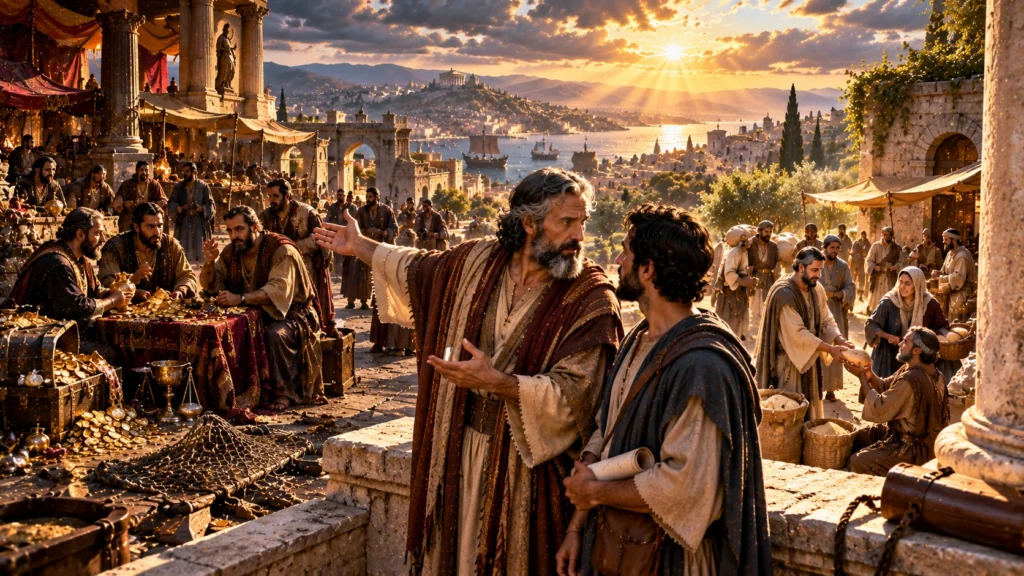
Paul then gives one of the Bible’s most frequently quoted warnings about money:
“For the love of money is the root of all evil.”
The warning concerns the love of money, not money itself.
Paul explains that some people have coveted wealth so intensely that they have:
“Erred from the faith.”
Their pursuit of riches has pulled them away from devotion to God.
And they have:
“Pierced themselves through with many sorrows.”
Money promised security and satisfaction but instead produced spiritual pain.
Paul then turns directly toward Timothy.
The tone becomes urgent and personal:
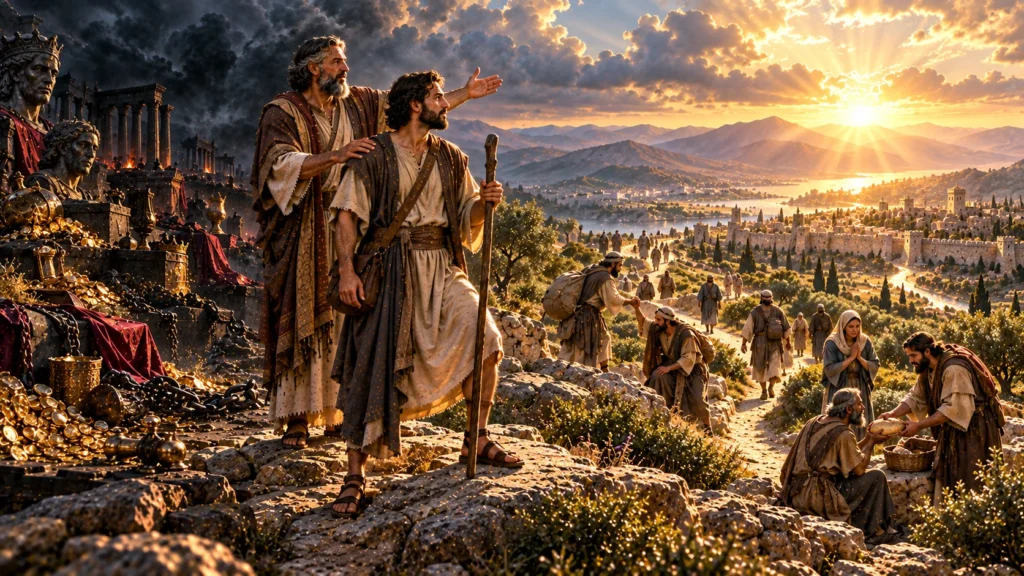
“But thou, O man of God, flee these things.”
Timothy must not merely recognize the danger.
He must flee it.
But Christian discipleship involves more than running away from something.
Timothy must also run toward something.
Paul tells him:
“Follow after righteousness, godliness, faith, love, patience, meekness.”
This creates a powerful contrast.
Timothy should flee:
greed, pride, destructive controversy, and the pursuit of riches.
He should pursue:
righteousness, godliness, faith, love, patience, and meekness.
Then Paul gives Timothy one of the chapter’s great commands:
“Fight the good fight of faith.”
The Christian life requires perseverance.
Timothy must:
“Lay hold on eternal life.”
Paul reminds him that he has been called and has publicly confessed his faith before many witnesses.
Paul then places Timothy’s calling before the highest possible authority.
He charges Timothy:
“In the sight of God.”
He also points to:
“Christ Jesus, who before Pontius Pilate witnessed a good confession.”
Jesus Himself remained faithful under tremendous pressure.
Timothy must likewise remain faithful.
Paul commands him to keep:
“This commandment without spot, unrebukeable.”
He must remain faithful:
“Until the appearing of our Lord Jesus Christ.”
Paul then erupts into magnificent praise of God.
He describes God as:
“The blessed and only Potentate.”
“The King of kings, and Lord of lords.”
God alone possesses immortality in Himself.
Paul says He dwells:
“In the light which no man can approach unto.”
God’s majesty exceeds human sight and comprehension.
Paul concludes:
“To whom be honour and power everlasting. Amen.”
Then Paul returns to the subject of wealth.
His earlier warning does not mean that every wealthy Christian must automatically become poor.
Instead, those who possess wealth receive specific responsibilities.
Paul tells Timothy:
“Charge them that are rich in this world, that they be not highminded.”
Wealth must not become a source of pride.
Nor should wealthy believers:
“Trust in uncertain riches.”
Money can disappear.
Economic circumstances can change.
Possessions cannot provide ultimate security.
Instead, believers should trust:
“In the living God.”
Paul adds that God:
“Giveth us richly all things to enjoy.”
The answer to materialism is not necessarily rejecting every good thing.
It is receiving God’s provision with gratitude rather than turning His gifts into gods.
Paul then explains what wealthy Christians should do with their resources:
“That they do good.”
They should be:
“Rich in good works.”
They should be:
“Ready to distribute, willing to communicate.”
In other words, material wealth should become an opportunity for generosity.
Instead of merely accumulating treasure for themselves, believers can use temporary resources for purposes that have eternal significance.
Paul describes this as:
“Laying up in store for themselves a good foundation against the time to come.”
The chapter then closes with a personal appeal.
Paul writes:
“O Timothy, keep that which is committed to thy trust.”
Timothy has been entrusted with the truth of the gospel.
He must guard it carefully.
Paul warns him against:
“Profane and vain babblings.”
And against:
“Oppositions of science falsely so called.”
Here the older English word translated “science” carries the sense of knowledge. Paul is warning about claims to supposedly superior knowledge that contradict the apostolic faith, not making a statement against modern scientific inquiry.
Some who professed this false knowledge had:
“Erred concerning the faith.”
Paul therefore ends where Christian life begins and continues:
“Grace be with thee. Amen.”
1 Timothy Chapter 6 presents a powerful progression:
faithful service → reject false teaching → choose contentment → resist the love of money → flee destructive desires → pursue godly character → fight the good fight of faith → lay hold on eternal life → trust God rather than riches → become rich in good works → guard the truth → remain in grace.
The chapter asks an important question:
What does true wealth look like before God?
Paul’s answer is radically different from the world’s.
True wealth is godliness with contentment, faithfulness to Christ, generous good works, eternal hope, and treasure invested in what lasts forever.
Key Lessons – 1 Timothy Chapter 6
- Christian conduct should honor God in everyday responsibilities. Faithfulness is not limited to worship gatherings; it affects how believers work and treat other people.
- Sound teaching should produce godliness rather than endless controversy. Paul warns about arguments that generate envy, strife, suspicion, and division.
- Religion should never be treated primarily as a way to make money. Paul condemns those who imagine that godliness exists for material gain.
- Godliness with contentment is great gain. True spiritual wealth comes from knowing God and being satisfied in Him.
- Earthly possessions are temporary. We brought nothing into this world and will take no material possessions out of it.
- The determined pursuit of riches creates spiritual danger. Paul warns that those who make wealth their great ambition can fall into temptation and destructive desires.
- Money itself is not identified as the root problem; the love of money is. Wealth becomes dangerous when it captures the heart and competes with devotion to God.
- Believers should flee destructive desires and actively pursue godly character. Paul tells Timothy to pursue righteousness, godliness, faith, love, patience, and meekness.
- The Christian life requires perseverance. Timothy is commanded to “fight the good fight of faith.”
- Eternal life should shape present priorities. Paul tells Timothy to lay hold on eternal life rather than allowing temporary things to dominate his attention.
- Ultimate confidence belongs in God rather than wealth. Riches are uncertain, but the living God remains trustworthy.
- Possessions can become instruments for good. Wealthy believers are encouraged to become rich in good works, generous, and willing to share.
- God’s servants must guard the truth entrusted to them. Timothy is responsible for faithfully preserving and proclaiming the gospel.
- Grace remains essential. Paul closes the letter with the simple but powerful blessing: “Grace be with thee.”
Important Verses
- 1 Timothy 6:6
- “But godliness with contentment is great gain.”
- 1 Timothy 6:7
- “For we brought nothing into this world, and it is certain we can carry nothing out.”
- 1 Timothy 6:8
- “And having food and raiment let us be therewith content.”
- 1 Timothy 6:9
- “But they that will be rich fall into temptation and a snare.”
- 1 Timothy 6:10
- “For the love of money is the root of all evil.”
- 1 Timothy 6:11
- “But thou, O man of God, flee these things; and follow after righteousness, godliness, faith, love, patience, meekness.”
- 1 Timothy 6:12
- “Fight the good fight of faith, lay hold on eternal life.”
- 1 Timothy 6:15
- “Who is the blessed and only Potentate, the King of kings, and Lord of lords.”
- 1 Timothy 6:17
- “Charge them that are rich in this world, that they be not highminded, nor trust in uncertain riches.”
- 1 Timothy 6:18
- “That they do good, that they be rich in good works, ready to distribute, willing to communicate.”
- 1 Timothy 6:20
- “O Timothy, keep that which is committed to thy trust.”