Acts Chapter 6 shows the early church facing two very different challenges: internal tension caused by rapid growth and external opposition against the gospel. When Greek-speaking Jewish believers complain that their widows are being overlooked in the daily distribution of food, the apostles respond by establishing an organized solution that protects both compassionate ministry and the preaching of God’s Word. Seven respected men are chosen to oversee the responsibility, including Stephen, a man described as full of faith and the Holy Spirit. The chapter then shifts its attention to Stephen, whose powerful ministry brings him into conflict with religious opponents. Unable to defeat his wisdom, they resort to false accusations and bring him before the council. Acts 6 demonstrates that a growing church needs wisdom, servant leadership, fairness, prayer, spiritual maturity, and courage in the face of opposition.
Acts Chapter 6 Summary
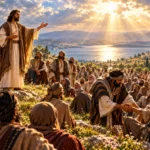
Acts Chapter 6 begins during a period of tremendous growth in the early church.
Luke tells us:
“The number of the disciples was multiplied.”
But growth brings a new problem.
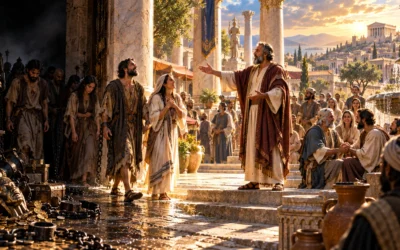
A complaint arises among the Grecian Jews, or Hellenistic Jewish believers, against the Hebrews.
Their widows are apparently being neglected in the church’s:
“Daily ministration.”
The problem is significant.
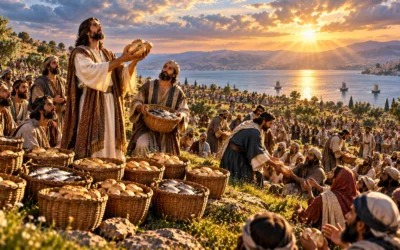
The early believers have been caring for one another and distributing resources to those in need.
But some widows are not receiving the same attention as others.
Rather than ignoring the complaint or allowing division to grow, the twelve apostles gather the disciples together.
They recognize that caring for physical needs is important.
However, they also recognize their particular responsibility to preach and teach God’s Word.
They explain:
“It is not reason that we should leave the word of God, and serve tables.”
This does not mean that serving food or caring for widows is beneath them.
Instead, the apostles understand that different responsibilities require different servants.
They therefore tell the believers to choose:
“Seven men of honest report, full of the Holy Ghost and wisdom.”
These men will be appointed over the responsibility.
Notice the qualifications.
The church does not simply look for people who are available.
They are to have good reputations, spiritual maturity, wisdom, and evidence of the Holy Spirit working in their lives.
Meanwhile, the apostles explain their own priority:
“But we will give ourselves continually to prayer, and to the ministry of the word.”
The proposal pleases the entire congregation.
Seven men are selected:
Stephen, Philip, Prochorus, Nicanor, Timon, Parmenas, and Nicolas.
Stephen is introduced first and receives special attention.
Luke describes him as:
“A man full of faith and of the Holy Ghost.”
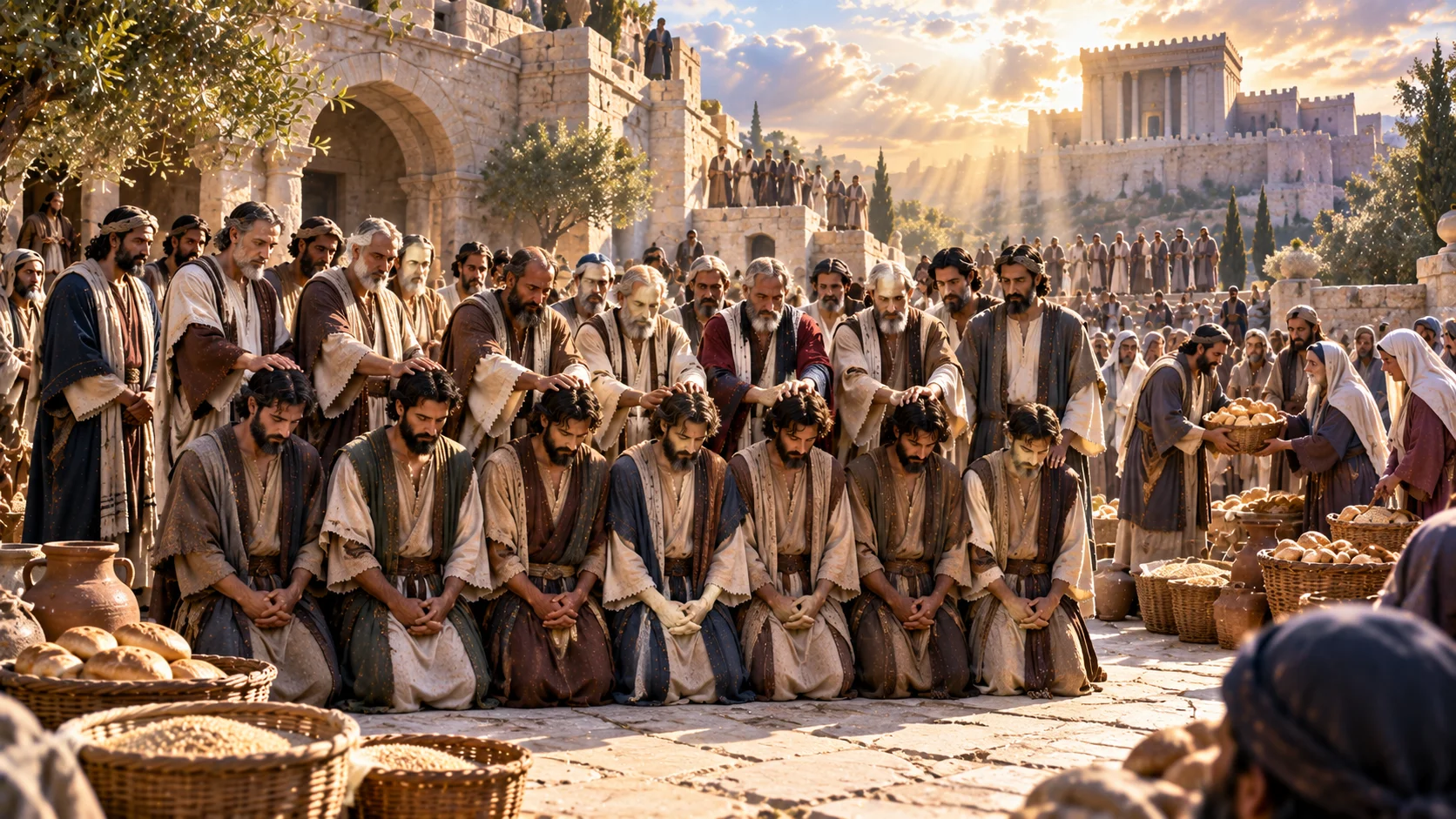
The seven men are brought before the apostles.
The apostles pray and lay their hands upon them, publicly recognizing and commissioning them for service.
The result is not merely improved organization.
The mission of the church continues advancing.
Luke writes:
“And the word of God increased.”
The number of disciples in Jerusalem multiplies greatly.
Even:
“A great company of the priests were obedient to the faith.”
The gospel is reaching people from increasingly significant parts of Jewish society.
Luke then turns his attention specifically toward Stephen.
Stephen is not merely an administrator.
He becomes a powerful witness for Jesus Christ.
Luke says:
“Stephen, full of faith and power, did great wonders and miracles among the people.”
Opposition soon develops.
Certain men from a synagogue begin disputing with Stephen.
These opponents represent several different regions and communities.
But despite their efforts:
“They were not able to resist the wisdom and the spirit by which he spake.”
Stephen’s opponents cannot successfully defeat his message through honest debate.
So they change tactics.
They secretly persuade men to accuse Stephen of speaking blasphemous words against Moses and God.
They stir up the people.
The elders and scribes become involved.
Stephen is seized and brought before the council, or Sanhedrin.
False witnesses are produced against him.
They claim:
“This man ceaseth not to speak blasphemous words against this holy place, and the law.”
They further accuse Stephen of teaching that Jesus of Nazareth will destroy the Temple and change the customs handed down through Moses.
These accusations distort Stephen’s message and prepare the way for the confrontation that continues in Acts Chapter 7.
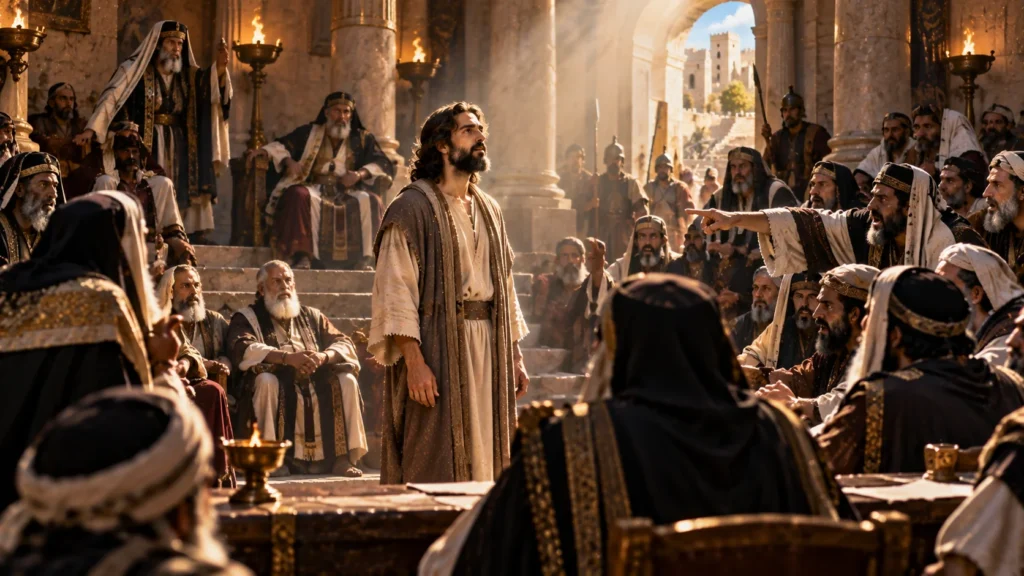
Yet Acts 6 ends with an extraordinary image.
Stephen stands surrounded by accusers.
Religious authorities are watching him.
False witnesses have spoken against him.
His future appears increasingly dangerous.
But Stephen does not appear defeated.
Luke writes:
“And all that sat in the council, looking stedfastly on him, saw his face as it had been the face of an angel.”
Stephen displays remarkable supernatural peace in the middle of hostility.
The chapter therefore begins with a dispute over serving tables and ends with one of those servants standing courageously before the highest Jewish council.
Acts Chapter 6 presents a powerful progression:
church growth → overlooked widows → wise organization → seven servants chosen → Word of God increases → Stephen ministers powerfully → opposition arises → false accusations → Stephen stands before the council.
The chapter demonstrates that faithful service can take many forms.
Some are called to preach.
Some are called to administer resources.
Some serve people with practical needs.
But every responsibility should be approached with wisdom, faithfulness, spiritual maturity, and dependence upon the Holy Spirit.
Stephen shows that someone chosen for practical service can also become an extraordinarily powerful witness for Christ.
Key Lessons – Acts Chapter 6
- Church growth can create new challenges. The rapid expansion of the early church produces practical problems that require wisdom and organization.
- Complaints should not automatically be ignored. The apostles take the concern of the overlooked widows seriously and establish a fair solution.
- Practical ministry is spiritually important. Those chosen to oversee the distribution are expected to be full of the Holy Spirit and wisdom.
- Different believers can have different responsibilities within the same mission. The seven oversee practical needs while the apostles remain devoted to prayer and the ministry of the Word.
- Prayer and Scripture must remain central to Christian ministry. The apostles deliberately protect time for these responsibilities.
- Good leadership allows others to serve. Rather than attempting to do everything themselves, the apostles entrust responsibility to qualified believers.
- Faithful organization can strengthen spiritual growth. After the problem is addressed, the Word of God continues spreading and the number of disciples increases greatly.
- Stephen demonstrates that no area of Christian service is insignificant. A man selected to help oversee practical needs becomes a powerful preacher and witness.
- Truth does not guarantee freedom from opposition. When Stephen’s opponents cannot overcome his wisdom, they resort to manipulation and false accusations.
- God can give His servants peace in the middle of hostility. Stephen stands before the council with remarkable composure even as false witnesses accuse him.
Important Verses
- Acts 6:1
- “And in those days, when the number of the disciples was multiplied, there arose a murmuring of the Grecians against the Hebrews.”
- Acts 6:3
- “Look ye out among you seven men of honest report, full of the Holy Ghost and wisdom.”
- Acts 6:4
- “But we will give ourselves continually to prayer, and to the ministry of the word.”
- Acts 6:5
- “And they chose Stephen, a man full of faith and of the Holy Ghost.”
- Acts 6:6
- “Whom they set before the apostles: and when they had prayed, they laid their hands on them.”
- Acts 6:7
- “And the word of God increased; and the number of the disciples multiplied in Jerusalem greatly.”
- Acts 6:8
- “And Stephen, full of faith and power, did great wonders and miracles among the people.”
- Acts 6:10
- “And they were not able to resist the wisdom and the spirit by which he spake.”
- Acts 6:15
- “And all that sat in the council, looking stedfastly on him, saw his face as it had been the face of an angel.”