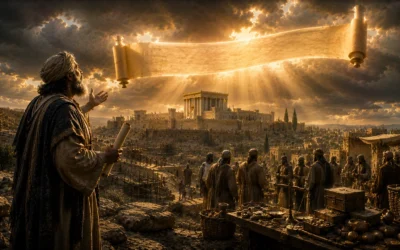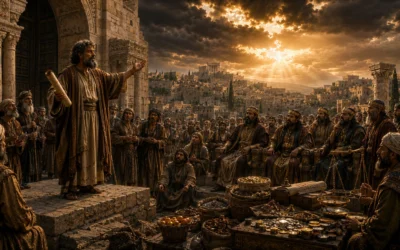
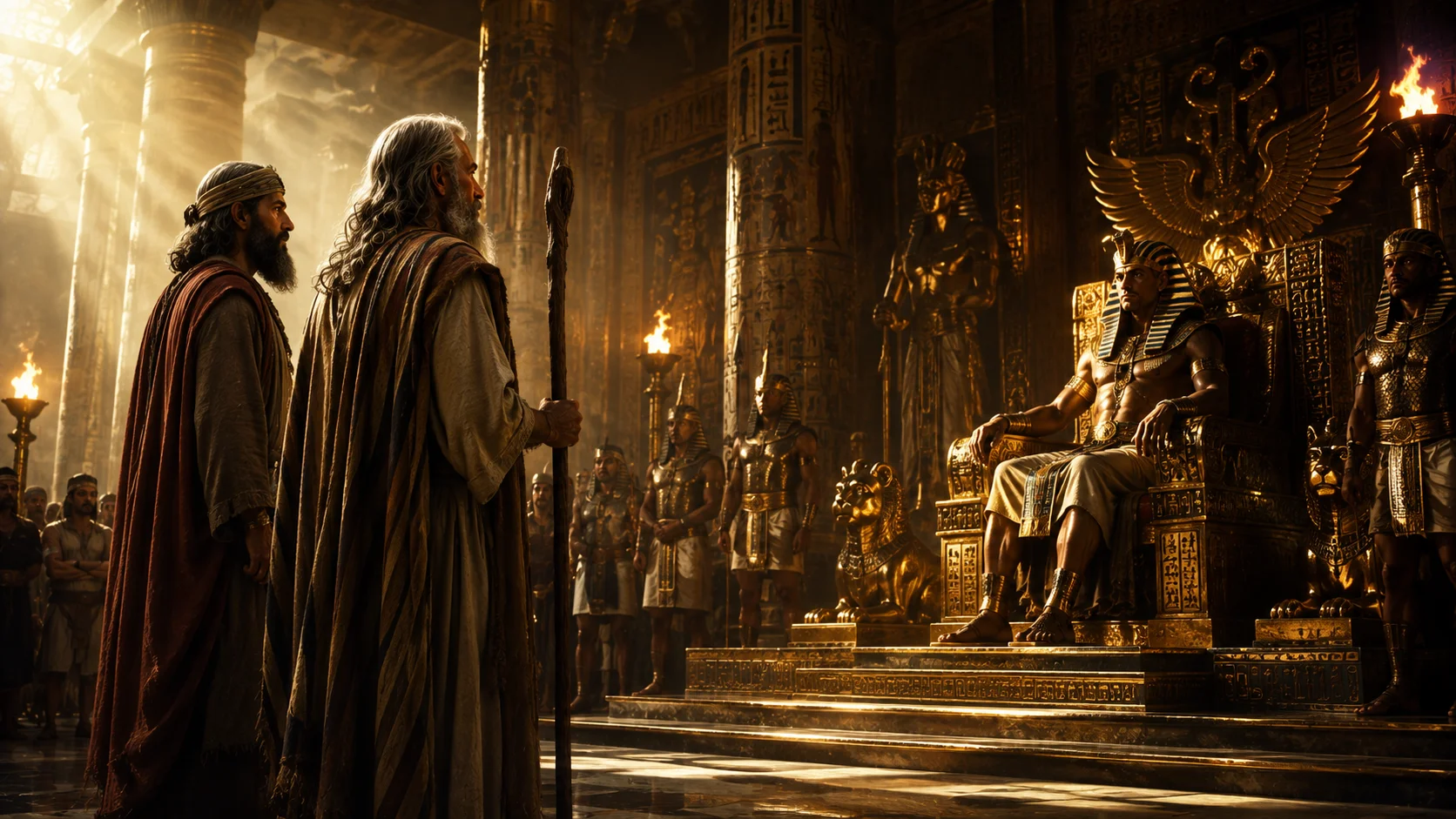
Exodus Chapter 5 records the first confrontation between Moses and Pharaoh after God sends Moses back to Egypt. Moses and Aaron boldly deliver God’s command that Pharaoh release the Israelites so they can worship Him in the wilderness.
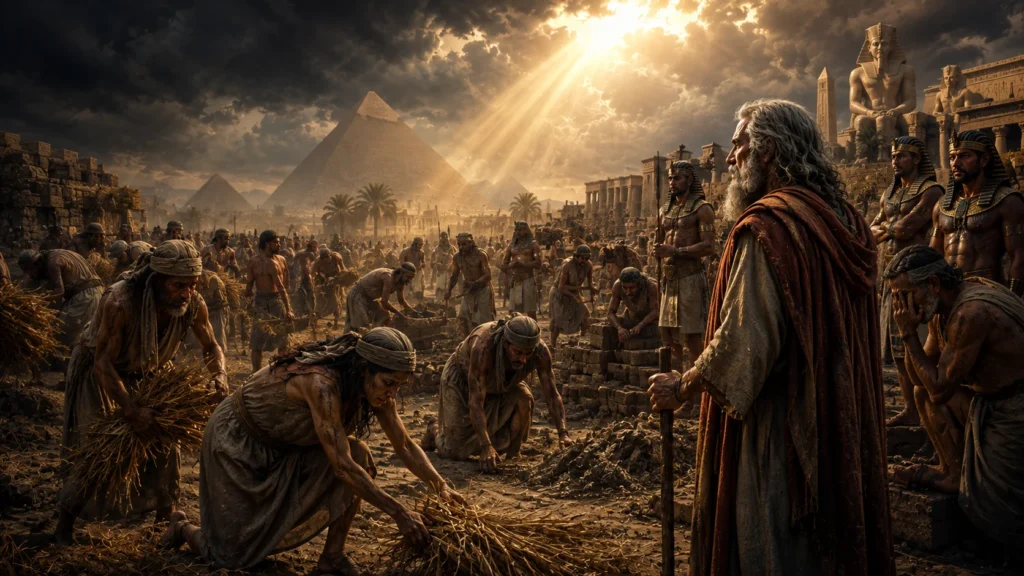
Instead of obeying, Pharaoh defiantly rejects the authority of the Lord and makes the Israelites’ slavery even more severe. The people are forced to produce the same number of bricks while gathering their own straw, causing tremendous suffering and frustration. The chapter reveals the growing conflict between Pharaoh’s earthly power and the authority of God while showing that deliverance can sometimes appear farther away just before God begins to act.
Exodus Chapter 5 Summary
Moses and Aaron approach Pharaoh with a message from the Lord: “Let my people go, that they may hold a feast unto me in the wilderness.”
Pharaoh responds with contempt, asking who the Lord is and declaring that he does not know Him and will not let Israel go. His response establishes the central conflict that will dominate the coming chapters. Pharaoh believes himself to be the supreme authority in Egypt, but God is about to demonstrate that His power is greater than Pharaoh’s.
Moses and Aaron explain that the God of the Hebrews has met with them and request permission for the Israelites to travel three days into the wilderness to offer sacrifices. Pharaoh refuses and accuses Moses and Aaron of distracting the people from their work.
That same day, Pharaoh orders the Egyptian taskmasters to stop providing straw for making bricks. The Israelites must now gather their own straw while still producing the same daily quota of bricks.
The people scatter throughout Egypt searching for stubble, but they cannot meet Pharaoh’s impossible demands. Israelite officers responsible for the workers are beaten and questioned about the declining brick production.
The officers appeal directly to Pharaoh, hoping he will recognize the injustice. Instead, Pharaoh accuses them of being lazy and again demands that they fulfill the original brick quota.
After leaving Pharaoh, the Israelite officers encounter Moses and Aaron. Angry over their worsening circumstances, they blame them for making Pharaoh hate the Israelites and giving the Egyptians another reason to punish them.
Deeply troubled, Moses turns to God. He asks why the Lord has allowed additional suffering to come upon His people and why God sent him if the situation has only become worse.
The chapter ends without immediate deliverance. Yet this moment of apparent defeat prepares the way for God to reveal His extraordinary power against Pharaoh and Egypt.
Key Lessons
- Obeying God does not always produce immediate relief. Moses obeyed God by confronting Pharaoh, but Israel’s suffering initially became worse. Faithfulness sometimes requires trusting God even when circumstances appear to move in the wrong direction.
- Pharaoh openly challenges God’s authority. Pharaoh’s question, “Who is the LORD?” reveals his pride and defiance. The coming plagues will provide a powerful answer to that question.
- Human power cannot ultimately defeat God’s purposes. Pharaoh appears to control Israel’s future, but his authority is temporary. God’s plan to deliver His people cannot be stopped.
- Hardship can test faith. When conditions became worse, the Israelites quickly blamed Moses and Aaron. Their reaction demonstrates how suffering can make trusting God’s promises difficult.
- We can bring our questions to God. Moses does not hide his confusion. He turns directly to the Lord with his concerns, demonstrating that believers can honestly bring their struggles and questions before God.
- God may be working even when nothing seems to be improving. Exodus 5 ends at a low point, but the story is far from finished. God is preparing to demonstrate His power and fulfill His promise of deliverance.
Important Verses
- Exodus 5:1 — Moses and Aaron confront Pharaoh with God’s command: “Let my people go, that they may hold a feast unto me in the wilderness.”
- Exodus 5:2 — Pharaoh defiantly asks, “Who is the LORD, that I should obey his voice to let Israel go?”
- Exodus 5:7–8 — Pharaoh orders that straw no longer be supplied to the Israelites while requiring them to produce the same number of bricks.
- Exodus 5:9 — Pharaoh increases the Israelites’ workload in an attempt to prevent them from listening to Moses.
- Exodus 5:21 — The Israelite officers blame Moses and Aaron for making their situation with Pharaoh worse.
- Exodus 5:22 — Moses returns to the Lord and questions why greater suffering has come upon His people.
- Exodus 5:23 — Moses expresses his frustration that since confronting Pharaoh, Israel’s suffering has increased and deliverance has not yet come.