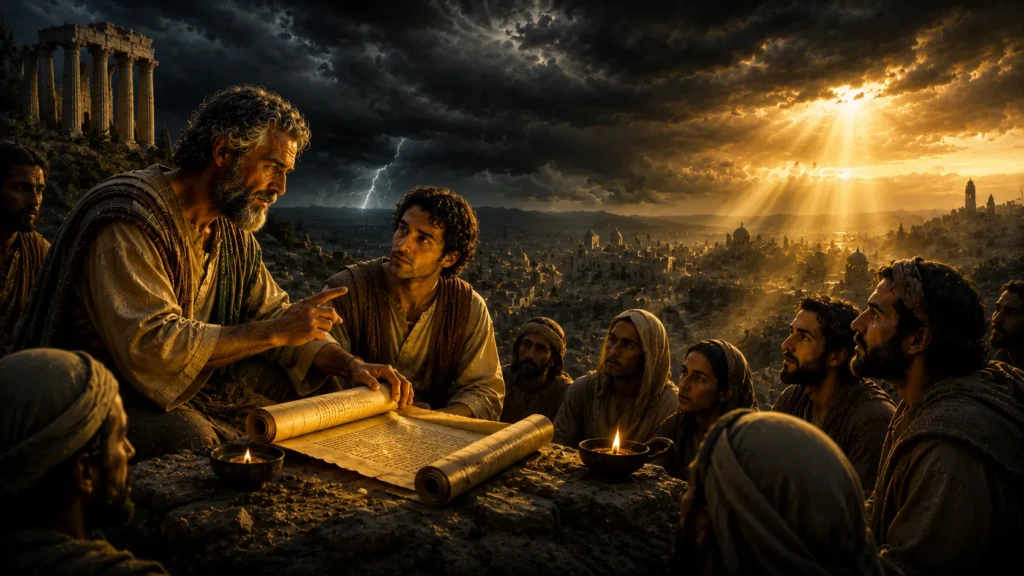

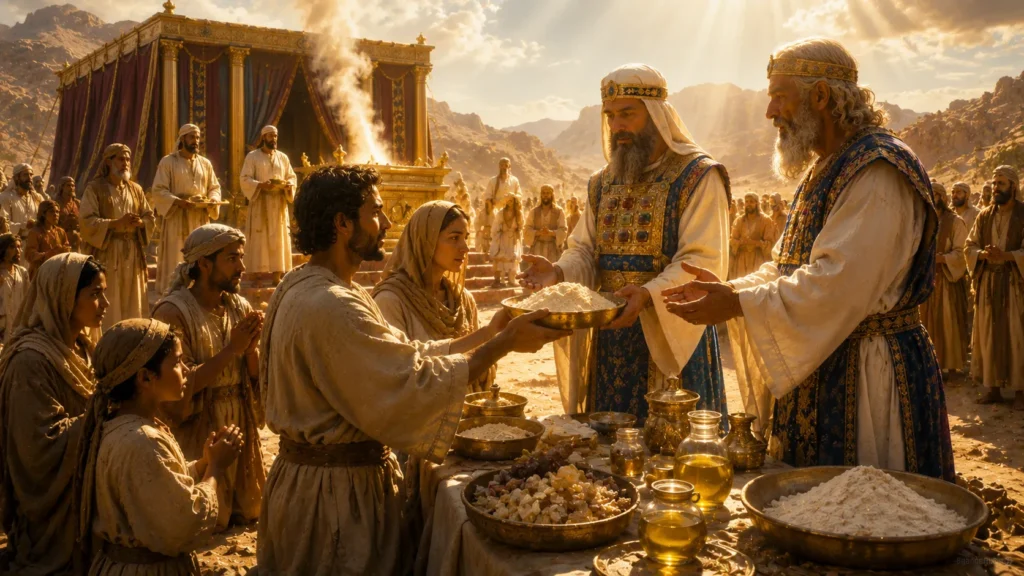



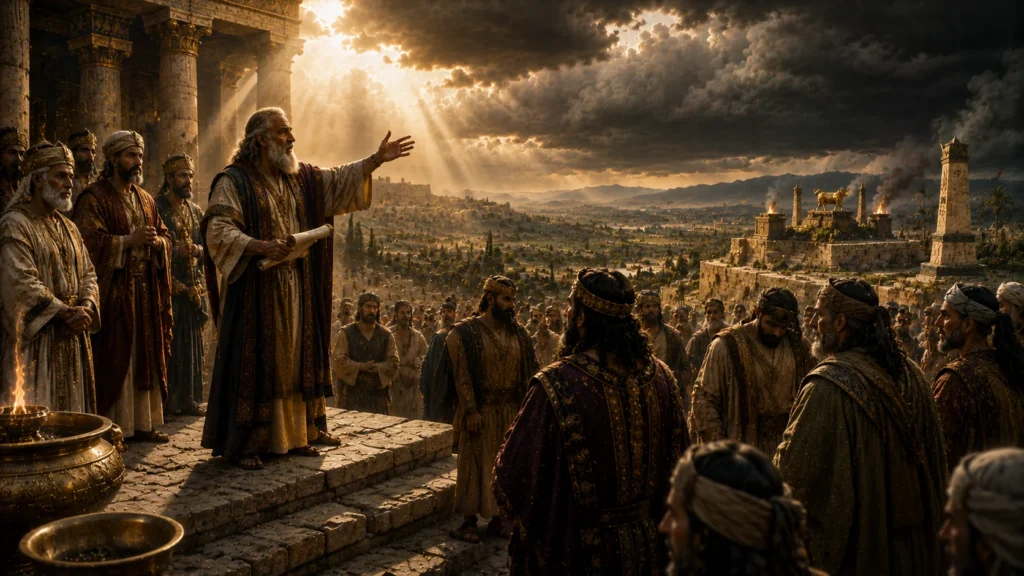
Hosea Chapter 5 delivers a serious warning of judgment against Israel and Judah because of their spiritual unfaithfulness. Through the prophet Hosea, God specifically confronts the priests, rulers, and people for leading the nation deeper into rebellion and idolatry.
The chapter portrays Israel’s sin as something deeply rooted within the nation. Pride prevents repentance, religious sacrifices cannot substitute for genuine faithfulness, and alliances with foreign powers cannot rescue God’s people from the consequences of abandoning Him. Yet the chapter closes with an important purpose behind God’s discipline: God withdraws until His people acknowledge their guilt and earnestly seek Him again.
Hosea Chapter 5 Summary
Hosea 5 begins with a direct command for Israel’s religious and political leaders to listen. Priests, the house of Israel, and the royal household are all held accountable because judgment is coming.
Instead of guiding the people toward God, their leadership has contributed to spiritual corruption.
God declares that He knows Ephraim and that Israel is not hidden from Him. Their idolatry and spiritual unfaithfulness are completely visible before the Lord.
Their sinful behavior has become so deeply established that it prevents them from returning to God. Hosea explains that a spirit of unfaithfulness is within them, and they no longer truly know the Lord.
Pride becomes another major obstacle. Israel’s arrogance testifies against the nation, causing both Israel and Judah to stumble.
The people attempt to seek God with flocks and herds for sacrifice, but they do not find Him. Their religious activity cannot compensate for hearts that remain rebellious.
Hosea then warns that judgment is approaching rapidly.
Ephraim will become desolate, and Judah is also condemned for corruption. God’s anger is compared to water being poured out in overwhelming force.
Instead of turning to God when trouble comes, Ephraim seeks assistance from Assyria. But foreign political power cannot heal the spiritual wound caused by rebellion against God.
The Lord describes Himself using two striking images.
First, He will be like a moth and decay, gradually consuming the strength of Ephraim and Judah.
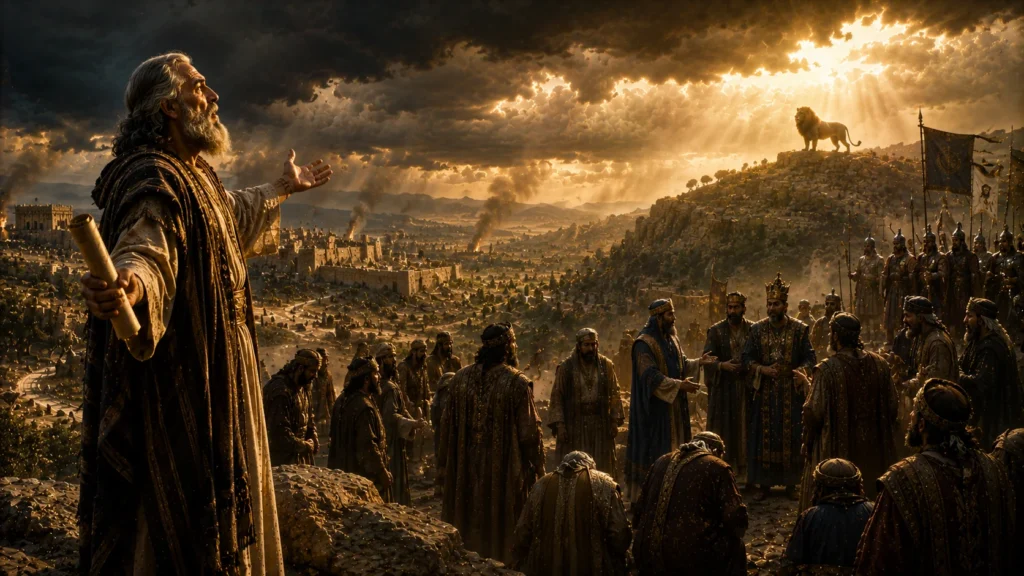
Then the imagery becomes much stronger: God declares that He will be like a lion that tears its prey and carries it away with no one able to rescue it.
The chapter ends with God withdrawing from His people.
Yet His withdrawal has a purpose. God will remain apart until they acknowledge their offense and seek His presence.
Hosea concludes by indicating that suffering may eventually cause the rebellious nation to earnestly search for the God it had previously abandoned.
Key Lessons – Hosea Chapter 5
- Spiritual leaders are accountable for how they influence others.
- God specifically confronts priests and rulers because leadership carries responsibility.
- Nothing is hidden from God.
- Israel’s rebellion may have been rationalized or concealed from others, but God declares that He knows exactly what is happening.
- Persistent sin can make repentance increasingly difficult.
- Repeated rebellion had become so deeply rooted that the people struggled to return genuinely to God.
- Pride prevents people from recognizing their need for God.
- Israel’s arrogance became evidence against the nation and contributed to its downfall.
- Religious activity cannot replace genuine repentance.
- The people brought sacrifices, but external worship could not compensate for hearts that remained far from God.
- Human power cannot heal a spiritual problem.
- Israel sought help from Assyria, but political alliances could not repair what rebellion against God had broken.
- God’s discipline is intended to bring His people back to Him.
- The chapter ends by showing that judgment is not meaningless; God desires acknowledgment of sin and renewed pursuit of Him.
- Seeking God should not be delayed until crisis arrives.
- Israel repeatedly ignored God during prosperity and sought alternatives when trouble came.
Important Verses
- Hosea 5:1 — Hosea calls the priests, Israel, and the royal household to listen because judgment concerns them directly.
- Hosea 5:3 — God declares that He knows Ephraim and that Israel is not hidden from Him.
- Hosea 5:4 — The people’s sinful behavior prevents them from returning to God, and they do not truly know the Lord.
- Hosea 5:5 — Israel’s pride testifies against the nation, causing Israel and Judah to stumble.
- Hosea 5:6 — The people seek the Lord with their flocks and herds, but outward sacrifices cannot restore a relationship damaged by persistent rebellion.
- Hosea 5:10 — God’s wrath against Judah’s corrupt leaders is compared to water being poured out.
- Hosea 5:13 — Ephraim recognizes his sickness and seeks help from Assyria, but Assyria cannot heal him.
- Hosea 5:14 — God compares His judgment to a powerful lion carrying away its prey with no one able to rescue it.
- Hosea 5:15 — “I will go and return to my place, till they acknowledge their offence, and seek my face: in their affliction they will seek me early.”