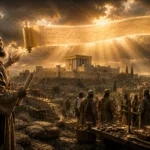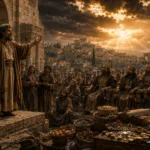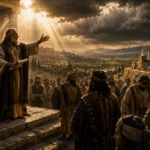
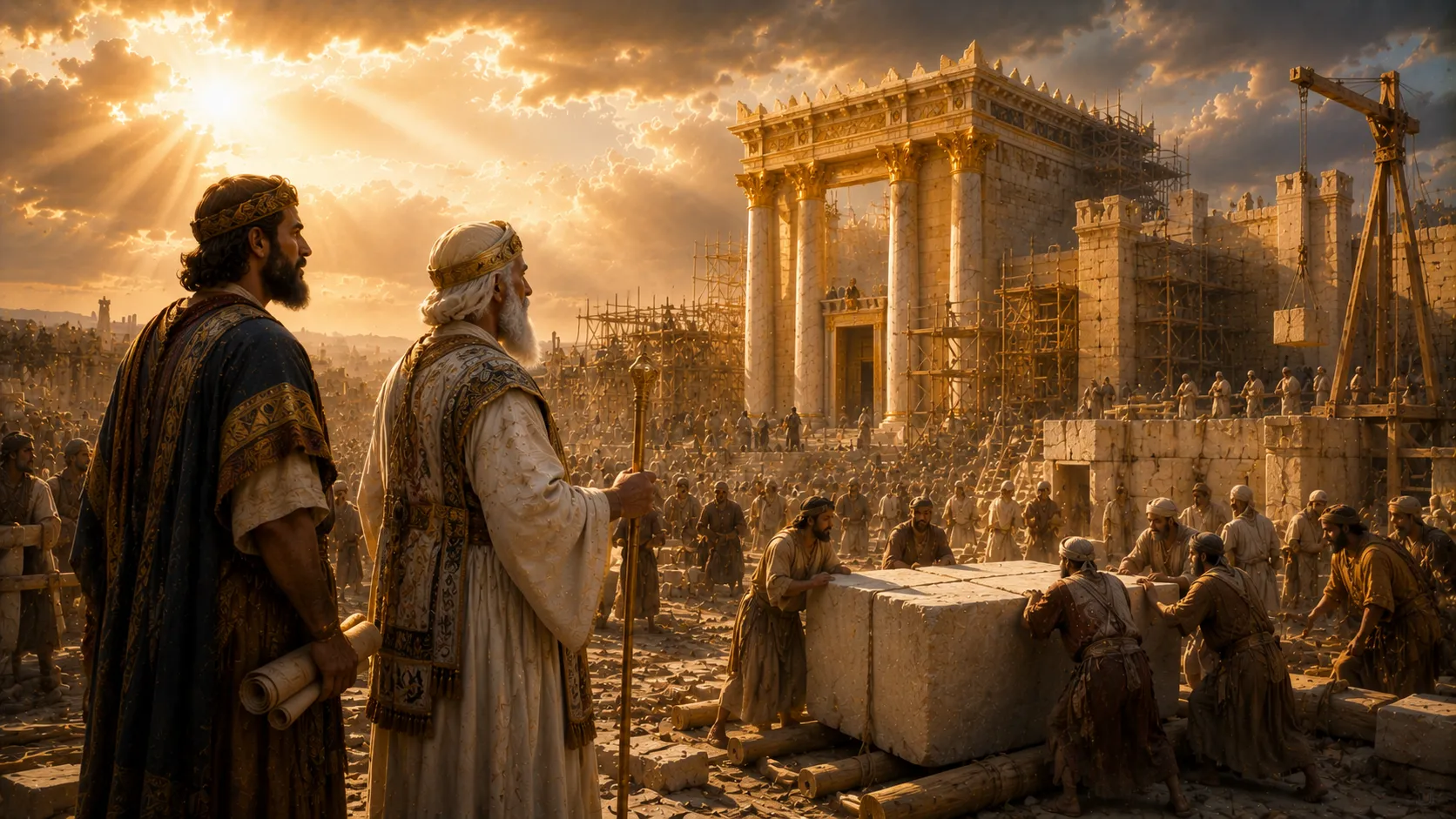
Haggai Chapter 2 encourages the people of Judah as they continue rebuilding the Temple after returning from exile. Although the new Temple appeared less impressive than Solomon’s, God reminded His people that His presence was with them and that the future glory of His house would surpass the former. The chapter also emphasizes holiness, obedience, and God’s sovereign plan to establish His kingdom.
Haggai Chapter 2 Summary
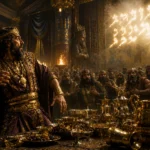
As the people worked on rebuilding the Temple, many of the older Israelites remembered the splendor of Solomon’s Temple and became discouraged because the new structure seemed far less magnificent.
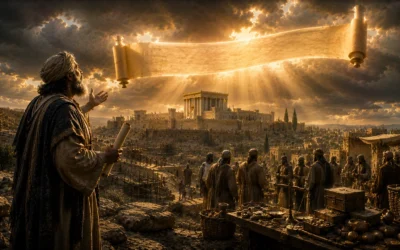
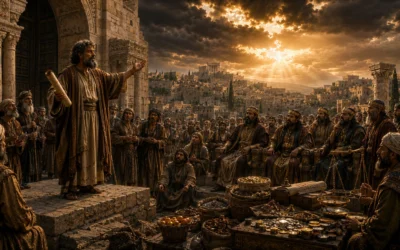
Through the prophet Haggai, God encouraged Zerubbabel, Joshua the high priest, and all the people to be strong and continue their work. The Lord reminded them that His presence remained with them just as it had been with Israel when they came out of Egypt.
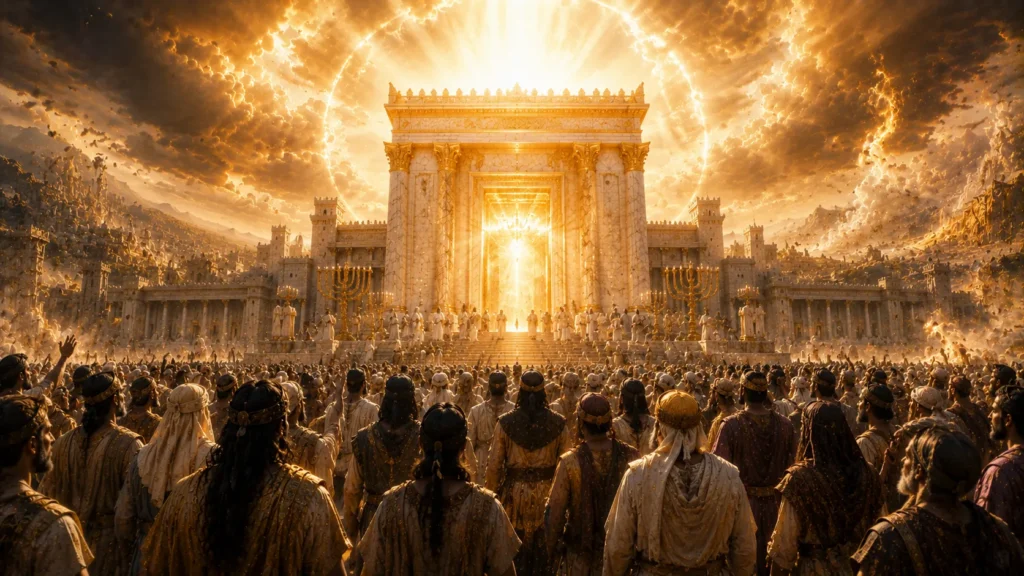
God promised that He would one day shake the heavens, the earth, the sea, and the nations. The treasures of the nations would come, and He would fill His Temple with glory. The Lord declared that the silver and gold already belonged to Him.
One of the chapter’s greatest promises follows as God proclaims that the glory of the latter Temple will be greater than that of the former. In this place, He promises to grant peace, pointing forward to His greater plan of redemption.
Later, Haggai uses questions about ceremonial purity to teach the people an important spiritual lesson. Holiness cannot simply be transferred by outward contact, but uncleanness spreads easily. In the same way, the people’s previous disobedience had affected their worship and their work.
Because they had neglected God’s house, their harvests had been disappointing, and many of their efforts had produced little. Yet from the day they recommitted themselves to obeying God and rebuilding the Temple, the Lord promised to bless them.
The chapter concludes with a personal message to Zerubbabel, the governor of Judah. God promises that although kingdoms will be shaken, Zerubbabel has been chosen by the Lord and will be like His signet ring, symbolizing God’s authority, faithfulness, and future Messianic purposes through David’s royal line.
Haggai Chapter 2 reminds believers that God’s presence is far greater than outward appearances, faithful obedience brings blessing, and God’s eternal kingdom will ultimately triumph over every earthly power.
Key Lessons From Haggai 2
- God’s presence is more valuable than outward success.
- Obedience brings God’s blessing.
- God encourages His people when they become discouraged.
- Holiness begins with a faithful heart.
- God controls the rise and fall of nations.
- The future glory of God’s kingdom surpasses earthly glory.
- God’s promises are always fulfilled.
Important Verses
- Haggai 2:4 — “Be strong…and work: for I am with you.”
- Haggai 2:6 — God will shake the heavens and the earth.
- Haggai 2:9 — The glory of the latter house shall be greater than the former.
- Haggai 2:19 — “From this day will I bless you.”
- Haggai 2:23 — Zerubbabel is chosen as God’s signet ring.