










1 Corinthians Chapter 5 addresses a serious case of sexual immorality within the church at Corinth and the congregation’s failure to respond appropriately. Paul is deeply concerned not only about the man involved but also because the church appears proud rather than grieved over the situation.
Paul commands the believers to exercise church discipline and remove the unrepentant offender from their fellowship. Using the imagery of leaven, Paul explains that tolerated sin can influence the entire community. He reminds believers that Christ is our Passover sacrifice and calls the church to live with sincerity and truth. The chapter concludes by distinguishing between interaction with unbelievers in the world and accountability for those who claim to follow Christ while openly persisting in serious sin.
1 Corinthians Chapter 5 Summary
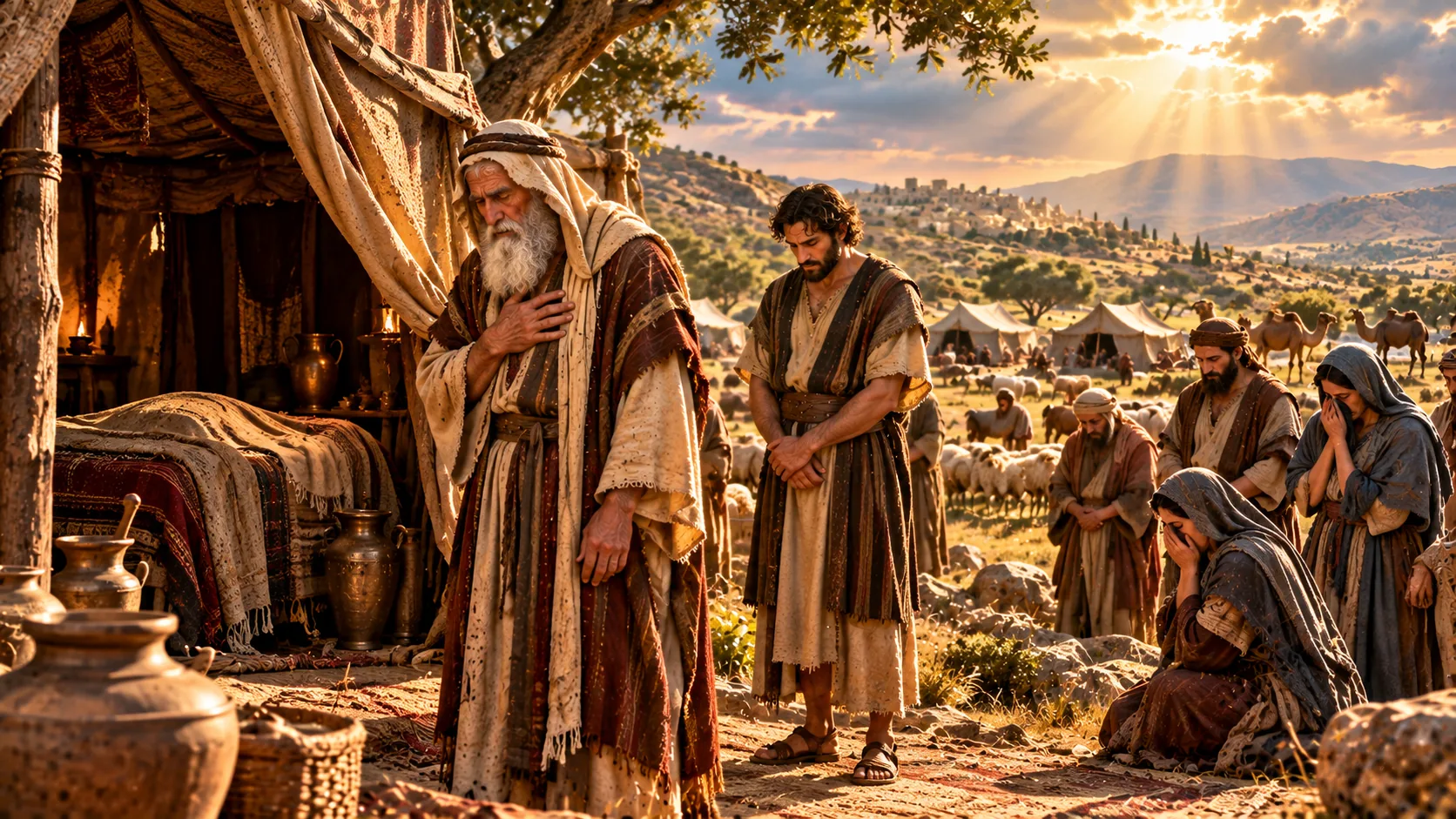
1 Corinthians 5 begins with Paul confronting a disturbing report concerning sexual immorality within the Corinthian church.
A man in the congregation is involved in a sexual relationship with his father’s wife, behavior Paul says was considered scandalous even among the surrounding Gentile culture.
Paul is also troubled by the congregation’s reaction.
Rather than mourning over the situation and addressing it, the Corinthians have become arrogant.
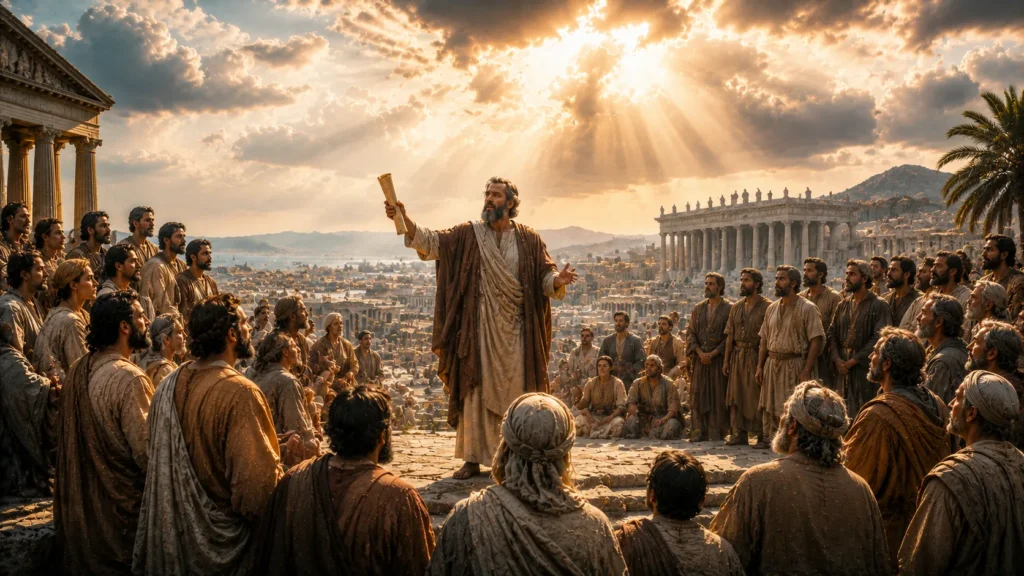
Although Paul is physically absent, he tells them that he has already judged the matter and instructs the assembled church to take decisive action.
The unrepentant offender is to be removed from their fellowship.
Paul describes this severe discipline as delivering the man to Satan for the destruction of the flesh so that his spirit might ultimately be saved in the day of the Lord Jesus.
The purpose is therefore not simple revenge or humiliation. The discipline is meant to recognize the seriousness of sin and ultimately encourage repentance and restoration.
Paul then confronts the church’s pride with an important illustration:
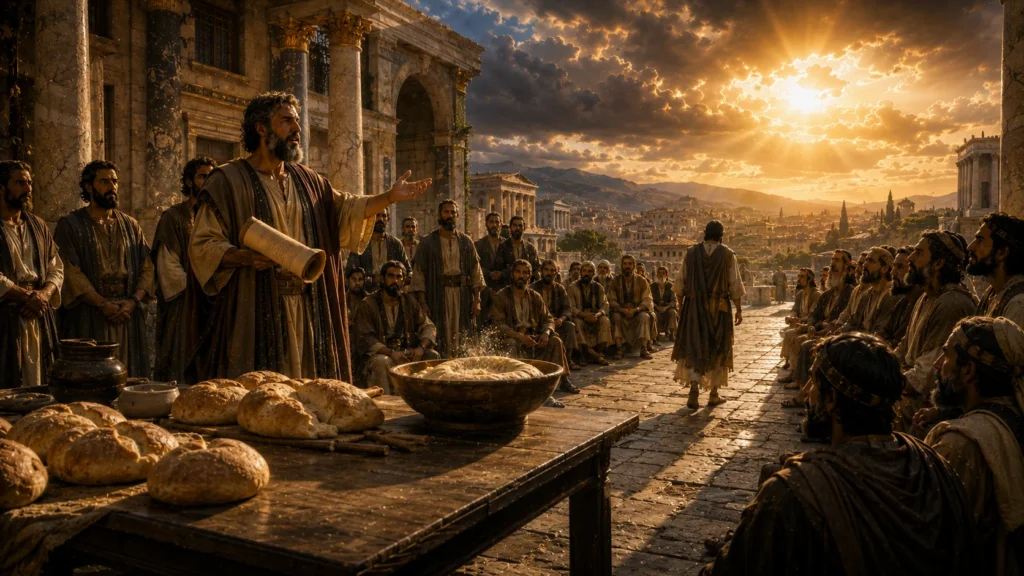
“Know ye not that a little leaven leaveneth the whole lump?”
Leaven spreads throughout dough. In the same way, openly tolerated sin can influence the spiritual health of the entire congregation.
Paul therefore tells the believers to remove the old leaven.
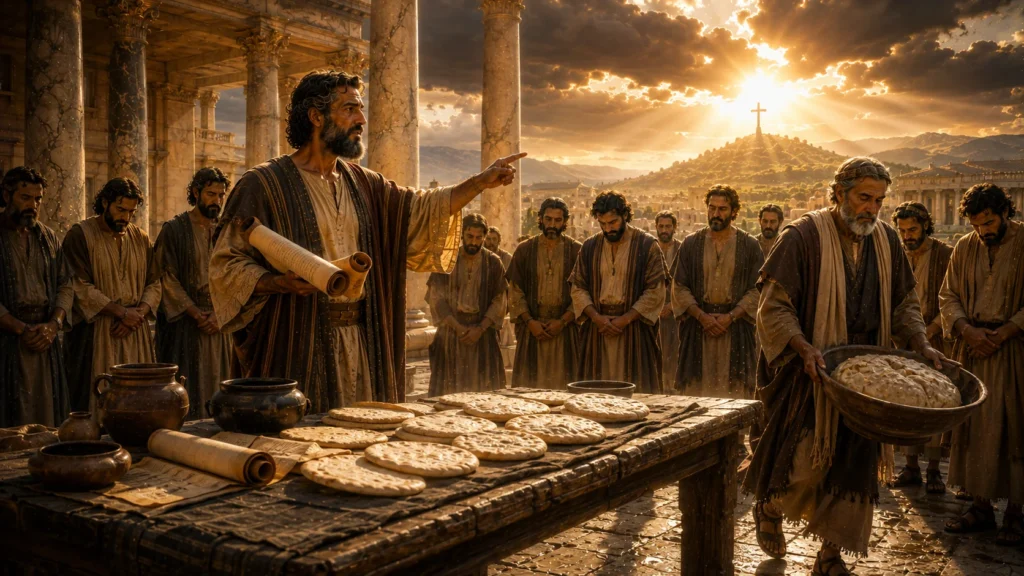
He connects this imagery with the Passover and declares:
“For even Christ our passover is sacrificed for us.”
Because Christ has sacrificed Himself for His people, believers are called to live differently.
Paul contrasts the old leaven of malice and wickedness with the unleavened bread of sincerity and truth.
He then clarifies something he had apparently written to the Corinthians previously.
When he instructed them not to associate with sexually immoral people, he did not mean that Christians must completely separate themselves from unbelievers who live sinfully.
Doing that would require leaving the world entirely.
Instead, Paul is specifically addressing people who identify themselves as fellow believers while openly and persistently practicing serious sin without repentance.
He lists several examples, including sexual immorality, greed, idolatry, abusive behavior, drunkenness, and fraud.
Paul’s point is about accountability within the Christian community.
He asks why Christians should attempt to judge everyone outside the church when God Himself judges those outside.
The church, however, has responsibility for addressing serious and unrepentant wrongdoing among those who claim to belong to its fellowship.
The chapter ends with the command to remove the wicked person from among them.
1 Corinthians Chapter 5 therefore presents a difficult but important principle: Christian grace does not mean pretending that serious, persistent sin does not matter.
The church is called to pursue holiness, truth, accountability, repentance, and restoration while leaving judgment of those outside the church ultimately to God.
Key Lessons – 1 Corinthians Chapter 5
- Serious sin should not be casually ignored.
- Paul expects the church to recognize the destructive nature of persistent, unrepentant wrongdoing.
- The church should grieve over sin rather than become proud or indifferent.
- Paul is deeply troubled that the Corinthians appear arrogant instead of mourning over the situation.
- Church discipline should have a redemptive purpose.
- Paul’s severe instructions ultimately look toward the offender’s repentance and salvation rather than personal revenge.
- Tolerated sin can affect an entire community.
- Paul’s illustration of a little leaven spreading through an entire batch of dough warns about sin’s broader influence.
- Christ’s sacrifice calls believers toward holiness.
- Because “Christ our passover is sacrificed for us,” Christian conduct should reflect the new life made possible through Him.
- God desires sincerity and truth.
- Paul contrasts malice and wickedness with the sincerity and truth that should characterize believers.
- Christians are not commanded to isolate themselves from unbelievers.
- Paul specifically clarifies that believers will naturally interact with sinful people in the wider world.
- Accountability is especially important among those who claim to follow Christ.
- Paul distinguishes between judging outsiders and addressing persistent wrongdoing within the church.
- Christian identity should be consistent with Christian conduct.
- Simply claiming the name of Christ should not become an excuse for openly continuing in serious sin without repentance.
- God remains the ultimate judge.
- The church has responsibilities within its community, but judgment of those outside ultimately belongs to God.
Important Verses
- 1 Corinthians 5:1 — Paul confronts the report of serious sexual immorality occurring within the Corinthian congregation.
- 1 Corinthians 5:2 — Paul rebukes the Corinthians for being proud when they should instead have mourned over the situation.
- 1 Corinthians 5:5 — Paul describes severe church discipline with the ultimate hope that the offender’s spirit may be saved in the day of the Lord Jesus.
- 1 Corinthians 5:6 — “Know ye not that a little leaven leaveneth the whole lump?”
- 1 Corinthians 5:7 — Paul commands the church to remove the old leaven and declares, “For even Christ our passover is sacrificed for us.”
- 1 Corinthians 5:8 — Believers are called to reject the leaven of malice and wickedness and embrace sincerity and truth.
- 1 Corinthians 5:9–10 — Paul clarifies that his instructions do not require Christians to completely avoid sinful unbelievers in the world.
- 1 Corinthians 5:11 — Paul specifically addresses fellowship with someone who claims to be a believer while persistently practicing serious and unrepentant sin.
- 1 Corinthians 5:12–13 — Paul distinguishes between accountability within the church and God’s judgment of those outside it.