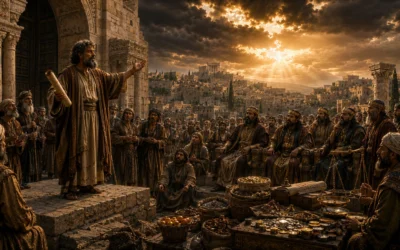
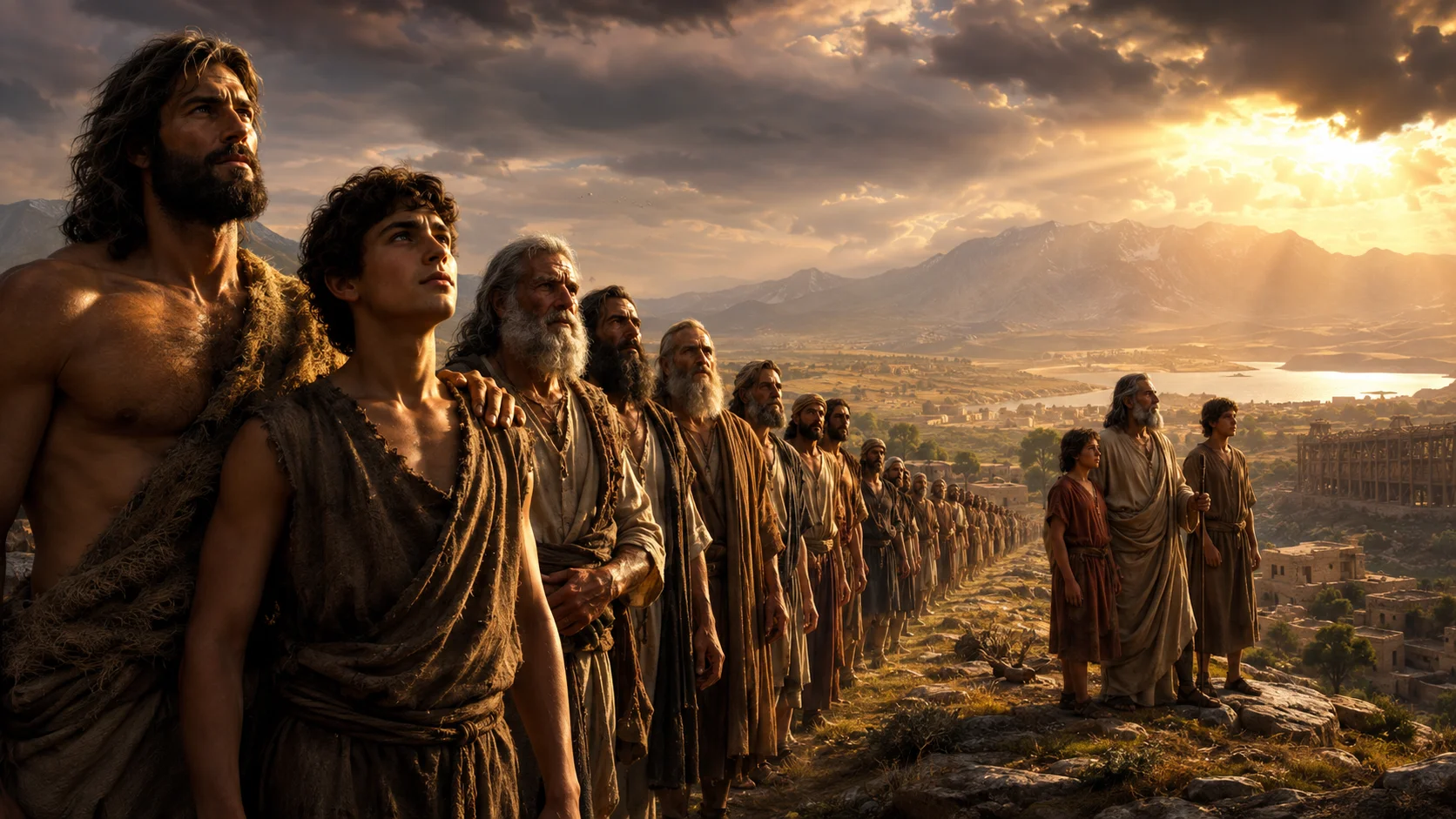
Genesis Chapter 5 traces the family line from Adam to Noah, connecting the creation of humanity with the generation that would experience the great flood. At first glance, the chapter may appear to be simply a genealogy, but it carries important themes about life, death, faith, and God’s continuing plan for humanity. The repeated phrase “and he died” reminds readers of the consequences of sin introduced in Genesis 3. Yet in the middle of this pattern appears the remarkable story of Enoch, a man who walked faithfully with God and did not experience death in the ordinary way. The chapter concludes with the birth of Noah, whose name is connected with the hope of comfort and relief from humanity’s difficult labor.
Genesis Chapter 5 Summary
Genesis 5 begins by recalling the creation of mankind. God created humanity in His likeness, male and female, and blessed them. Adam later fathered a son named Seth, who was described as being in Adam’s likeness and image.
The chapter then records the generations descending from Seth: Enosh, Kenan, Mahalalel, Jared, Enoch, Methuselah, Lamech, and finally Noah. Extraordinary lifespans are recorded throughout the genealogy, with many of these early patriarchs living for hundreds of years.
A repeated pattern dominates the chapter: each man lived, fathered children, continued living for many years, and eventually died. This repetition emphasizes the reality of mortality following humanity’s fall into sin.
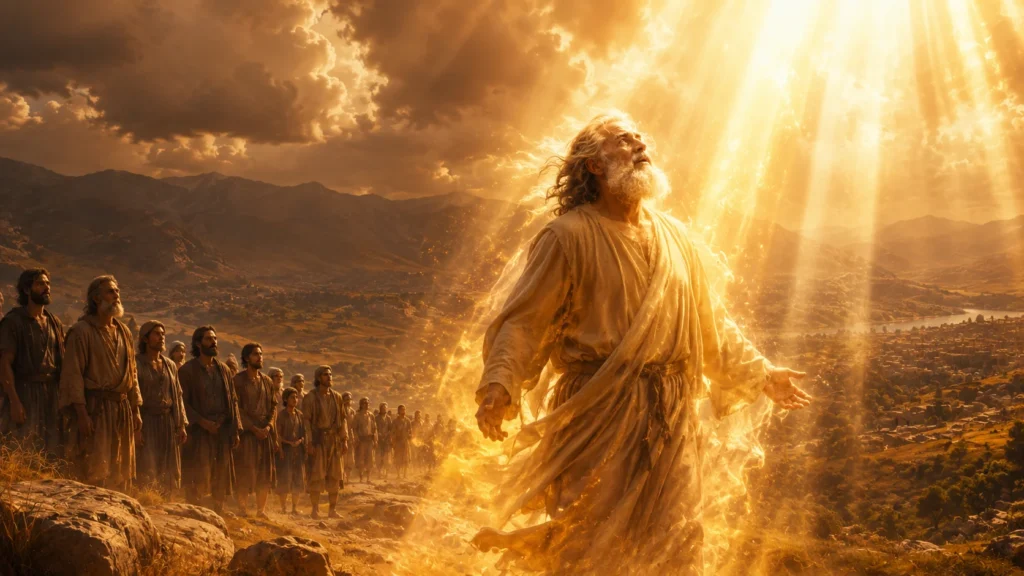
Enoch provides a dramatic exception. Genesis says that Enoch “walked with God.” After living 365 years, Enoch disappeared because God took him. His life stands out as a powerful picture of close fellowship and faithfulness to God.
Methuselah, Enoch’s son, is recorded as living 969 years, the longest lifespan specifically recorded in the Bible.
Eventually, Lamech fathered Noah. Lamech expressed hope that Noah would bring comfort concerning the painful labor caused by the ground God had cursed. Noah later became the father of Shem, Ham, and Japheth.
The chapter therefore creates an important bridge between Adam and Noah, preparing the reader for the events of the flood beginning in the following chapters.
Key Lessons
- Sin brought death into human experience. The repeated statement that each generation eventually died reinforces the consequences of humanity’s rebellion against God.
- Walking with God matters. Enoch demonstrates that genuine fellowship with God is possible even in a fallen world.
- Faithfulness can distinguish a life. While Genesis 5 contains many names and lifespans, Enoch receives special attention because of his relationship with God.
- God’s plan continues through generations. Despite human mortality, God preserved the family line that eventually led from Adam to Noah and ultimately continued His redemptive purposes.
- Noah represents approaching hope. Lamech saw Noah’s birth as a reason to hope for comfort amid humanity’s difficult existence. Noah would soon become central to one of the most significant events in Genesis.
Important Verses
- Genesis 5:1–2 — God created mankind in His likeness, creating them male and female and blessing them.
- Genesis 5:3 — Adam fathered Seth in his own likeness and image.
- Genesis 5:22 — Enoch walked faithfully with God after the birth of Methuselah.
- Genesis 5:24 — “Enoch walked with God: and he was not; for God took him.”
- Genesis 5:27 — Methuselah lived 969 years, making him the longest-lived person specifically recorded in Scripture.
- Genesis 5:29 — Lamech named his son Noah, expressing hope that he would bring comfort from humanity’s painful labor.
- Genesis 5:32 — Noah became the father of Shem, Ham, and Japheth.