Mark Chapter 6 is filled with dramatic contrasts between unbelief and faith, rejection and obedience, fear and trust, human weakness and the authority of Jesus. Jesus is rejected in His hometown of Nazareth, sends the twelve apostles out to preach and heal, and receives news of the execution of John the Baptist. He then compassionately feeds more than five thousand people with only five loaves and two fish, walks across the Sea of Galilee during a storm, and brings healing to the sick at Gennesaret. Throughout the chapter, Jesus demonstrates authority over sickness, evil spirits, nature, and human need while challenging His followers to trust Him even when circumstances appear impossible.
Mark Chapter 6 Summary
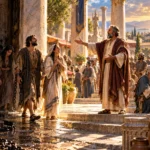
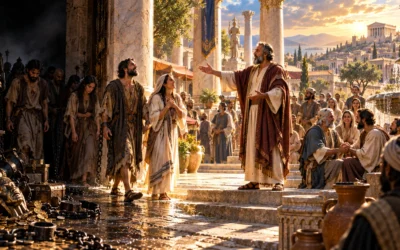
Mark Chapter 6 begins with Jesus returning to His hometown of Nazareth.
His disciples accompany Him.
On the Sabbath, Jesus begins teaching in the synagogue.
Many who hear Him are astonished.
They recognize His extraordinary wisdom and know about the mighty works performed through Him.
Yet instead of responding with faith, they begin questioning Him.
They know His family and remember Him as the carpenter.
Their familiarity becomes an obstacle to faith.
Jesus tells them:
“A prophet is not without honour, but in his own country, and among his own kin, and in his own house.”
Mark emphasizes the seriousness of their unbelief.
Jesus marvels because of it.
He then travels among the surrounding villages teaching.
Next, Jesus calls the twelve disciples and sends them out two by two.
He gives them authority over unclean spirits.
They are instructed to travel with remarkable dependence upon God.
They are not to carry excessive provisions or possessions.
Wherever a household receives them, they are to remain there until they leave that area.
If a place refuses to receive or hear them, they are to shake the dust from their feet as a testimony.
The apostles go out preaching that people should repent.
They cast out demons and anoint many sick people with oil and heal them.
The mission of Jesus is now spreading through those He has commissioned.
The chapter then turns to King Herod Antipas.
News about Jesus has become widespread.
Some people believe Jesus might be Elijah or another prophet.
Herod fears something even more disturbing.
He believes that John the Baptist has risen from the dead.
Mark then explains what happened to John.
John had confronted Herod over his marriage to Herodias, the wife of his brother Philip.
John boldly declared:
“It is not lawful for thee to have thy brother’s wife.”
Herodias resented John and wanted him killed.
Herod, however, feared John because he recognized him as a righteous and holy man.
Eventually, during Herod’s birthday celebration, Herodias’s daughter performs before Herod and his guests.
Pleased with her, Herod makes a reckless promise to grant her request.
After consulting her mother, she asks for the head of John the Baptist.
Herod is deeply distressed.
But because of his oath and concern about appearing weak before his guests, he refuses to withdraw his promise.
John is executed in prison.
His head is brought to the banquet.
John’s disciples later take his body and place it in a tomb.
The scene reveals the terrible consequences of pride, corruption, fear of people, and refusing to respond to truth.
The apostles eventually return to Jesus.
They tell Him everything they have done and taught.
Jesus recognizes their exhaustion and says:
“Come ye yourselves apart into a desert place, and rest a while.”
They leave by boat seeking a quiet place.
But the crowds recognize them.
People run from surrounding towns and arrive before them.
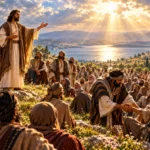
When Jesus comes ashore, He sees the enormous crowd.
Instead of reacting with frustration, Jesus is:
“Moved with compassion toward them, because they were as sheep not having a shepherd.”
He begins teaching them many things.
As the day grows late, the disciples become concerned about food.
They suggest sending the crowd away so people can purchase something to eat.
Jesus responds:
“Give ye them to eat.”
The disciples immediately recognize the enormous practical problem.
Feeding such a crowd would require a tremendous amount of money.
Jesus asks what food they already have.
They discover:
five loaves and two fish.
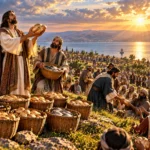
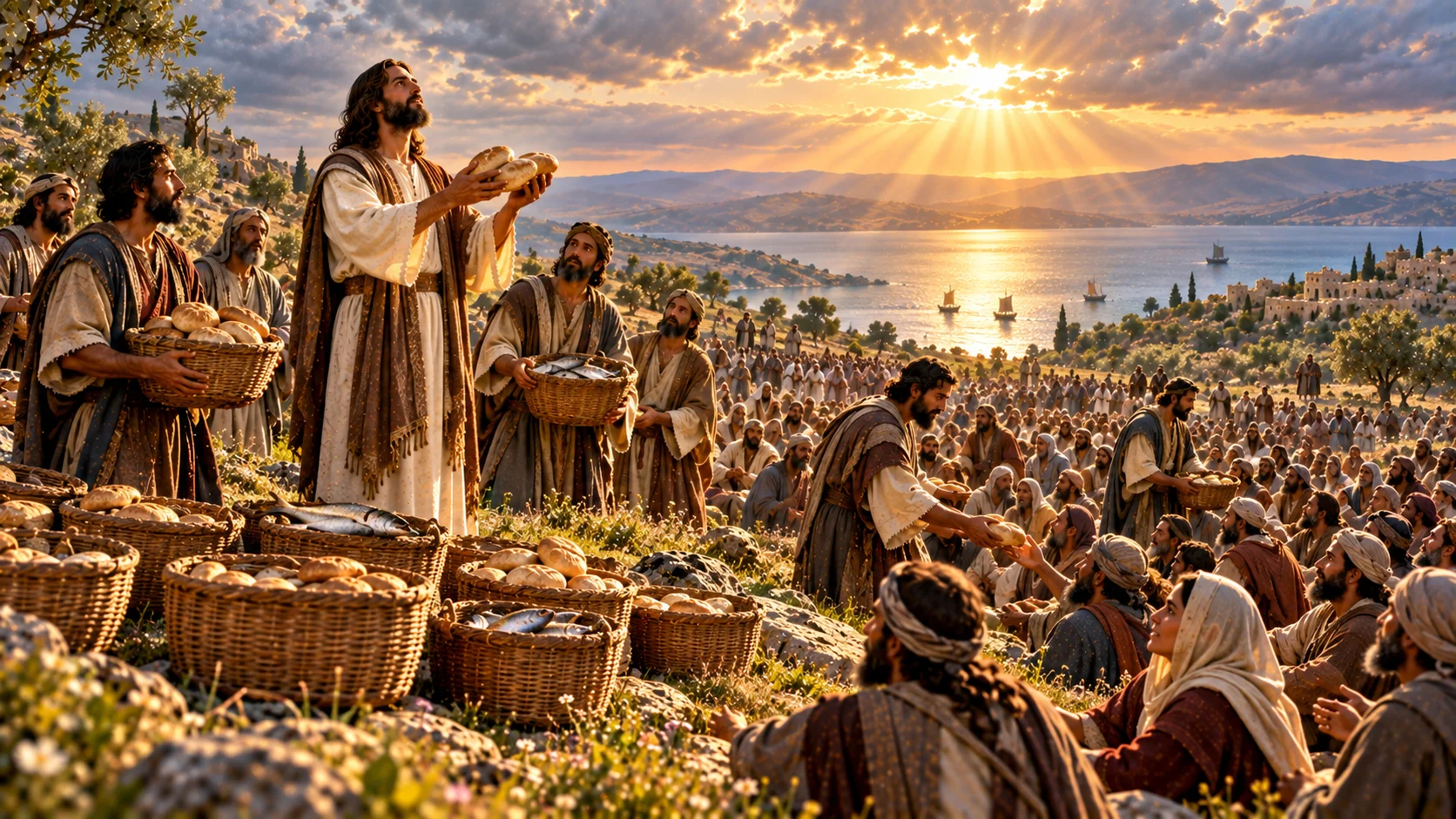
Jesus commands the people to sit down in organized groups upon the green grass.
He takes the five loaves and two fish.
Looking toward heaven, He blesses the food.
He breaks the loaves and gives them to His disciples to distribute.
The fish are also divided among the people.
Everyone eats.
Everyone is satisfied.
Then the disciples gather the leftovers.
They collect twelve baskets full.
Mark tells us that about five thousand men had eaten.
Jesus has taken what appeared completely insufficient and provided abundantly for the enormous crowd.
Immediately afterward, Jesus sends His disciples across the Sea of Galilee toward Bethsaida while He dismisses the crowd.
Jesus then goes up onto a mountain to pray.
Night falls.
The disciples are in the middle of the sea.
Jesus is alone on land.
The wind becomes strong, and the disciples struggle desperately to row against it.
During the early morning hours, Jesus sees them struggling.
Then something extraordinary happens.
Jesus walks across the water toward them.
The disciples see Him and believe they are seeing a spirit.
They cry out in terror.
Jesus immediately speaks:
“Be of good cheer: it is I; be not afraid.”
He enters the boat.
The wind stops.
The disciples are completely amazed.
Mark explains that they still had not fully understood the significance of the miracle of the loaves because their hearts were hardened.
Even after witnessing extraordinary miracles, they were still learning who Jesus truly was.
Jesus and the disciples eventually reach Gennesaret.
The people immediately recognize Him.
They run throughout the surrounding region carrying sick adults on beds to wherever they hear Jesus is located.
Villages, cities, and countryside fill with people seeking healing.
The sick beg simply to touch the border of His garment.
Mark concludes:
“As many as touched him were made whole.”
Mark Chapter 6 therefore presents a remarkable progression:
rejection at Nazareth → disciples sent out → John the Baptist killed → apostles return → Jesus feeds thousands → Jesus walks on water → the sick are healed.
Human beings repeatedly confront situations beyond their own strength.
The disciples cannot feed the crowd.
They cannot control the storm.
The sick cannot heal themselves.
But throughout the chapter, Jesus demonstrates that His authority and provision are greater than human limitations.

Key Lessons – Mark Chapter 6
- Familiarity can become an obstacle to faith. The people of Nazareth know Jesus’ earthly background but fail to recognize the extraordinary truth standing before them.
- Jesus sends His followers to participate in His mission. The twelve do not merely observe Jesus; they are commissioned to preach repentance and minister to others.
- God’s servants must sometimes depend upon Him rather than excessive preparation or possessions. The disciples are sent out with limited provisions and must trust God as they serve.
- Speaking truth can carry a tremendous cost. John the Baptist refuses to compromise God’s truth even when confronting a powerful ruler.
- Fear of people can lead to terrible decisions. Herod knows John is righteous but chooses his reputation before his guests over doing what is right.
- Jesus responds to human need with compassion. When He sees the crowd as sheep without a shepherd, He teaches and feeds them.
- God can do extraordinary things with what appears insufficient. Five loaves and two fish become enough to satisfy thousands with food remaining.
- Prayer remains essential even during demanding ministry. After feeding the multitude, Jesus withdraws alone to pray.
- Jesus is greater than the storms His followers face. He walks upon the sea, approaches the struggling disciples, and tells them not to fear.
- Jesus deserves trust even when we do not understand what He is doing. The disciples repeatedly witness His power but are still learning to recognize the full significance of who He is.
Important Verses
- Mark 6:4
- “A prophet is not without honour, but in his own country, and among his own kin, and in his own house.”
- Mark 6:7
- “And he called unto him the twelve, and began to send them forth by two and two.”
- Mark 6:12
- “And they went out, and preached that men should repent.”
- Mark 6:20
- “For Herod feared John, knowing that he was a just man and an holy.”
- Mark 6:31
- “Come ye yourselves apart into a desert place, and rest a while.”
- Mark 6:34
- “He was moved with compassion toward them, because they were as sheep not having a shepherd.”
- Mark 6:37
- “He answered and said unto them, Give ye them to eat.”
- Mark 6:41
- “He took the five loaves and the two fishes, and looked up to heaven, and blessed.”
- Mark 6:42
- “And they did all eat, and were filled.”
- Mark 6:48
- “He cometh unto them, walking upon the sea.”
- Mark 6:50
- “Be of good cheer: it is I; be not afraid.”
- Mark 6:56
- “As many as touched him were made whole.”