







Galatians Chapter 6 concludes Paul’s letter with practical instructions for what a life led by the Spirit should look like within the Christian community. Believers are called to restore those who fall into sin with gentleness, carry one another’s burdens, examine their own lives with humility, sow toward the Spirit rather than the flesh, persevere in doing good, and glory only in the cross of Jesus Christ. Paul warns that everyone eventually reaps according to what they sow and encourages Christians not to become discouraged when doing what is right. He then returns to one of Galatians’ central controversies—circumcision—and explains that external religious accomplishments cannot produce the new life God desires. What ultimately matters is “a new creature.” Paul closes by declaring that he will boast in nothing except the cross of the Lord Jesus Christ.
Galatians Chapter 6 Summary
Galatians Chapter 6 begins with Paul explaining how Christians should respond when another believer falls into sin.
He writes:
“Brethren, if a man be overtaken in a fault, ye which are spiritual, restore such an one in the spirit of meekness.”
The goal is restoration.
Paul does not tell spiritually mature believers to humiliate, publicly shame, or proudly condemn someone who has fallen.
They should seek to restore that person with gentleness.
At the same time, those helping must remain watchful.
Paul adds:
“Considering thyself, lest thou also be tempted.”
No Christian should approach another person’s failure with pride.
Everyone remains dependent upon God’s grace.
Paul then gives one of the chapter’s most important commands:
“Bear ye one another’s burdens, and so fulfil the law of Christ.”
Christian life was never intended to be lived in complete isolation.
When another believer carries a crushing burden, Christians should help.
This can involve spiritual struggles, grief, hardship, temptation, material needs, or other overwhelming difficulties.
Helping carry those burdens reflects the love Christ commands.
Paul immediately connects this with humility.
He warns:
“For if a man think himself to be something, when he is nothing, he deceiveth himself.”
Pride makes people exaggerate their own importance while minimizing their weaknesses.
Instead of constantly comparing themselves with others, believers should examine their own lives.
Paul says:
“But let every man prove his own work.”
There is an important balance in Paul’s teaching.
Christians should bear one another’s burdens, yet each person also has individual responsibility before God.
Paul writes:
“For every man shall bear his own burden.”
The wording describes a different sense of burden: each believer must ultimately carry his or her own responsibility before God.
Christian community does not eliminate personal accountability.
Paul then addresses those who receive instruction in God’s Word.
He says:
“Let him that is taught in the word communicate unto him that teacheth in all good things.”
Those who benefit from spiritual teaching should willingly share material support with faithful teachers.
Paul then introduces one of Scripture’s clearest principles of moral cause and effect:
“Be not deceived; God is not mocked.”
He continues:
“For whatsoever a man soweth, that shall he also reap.”
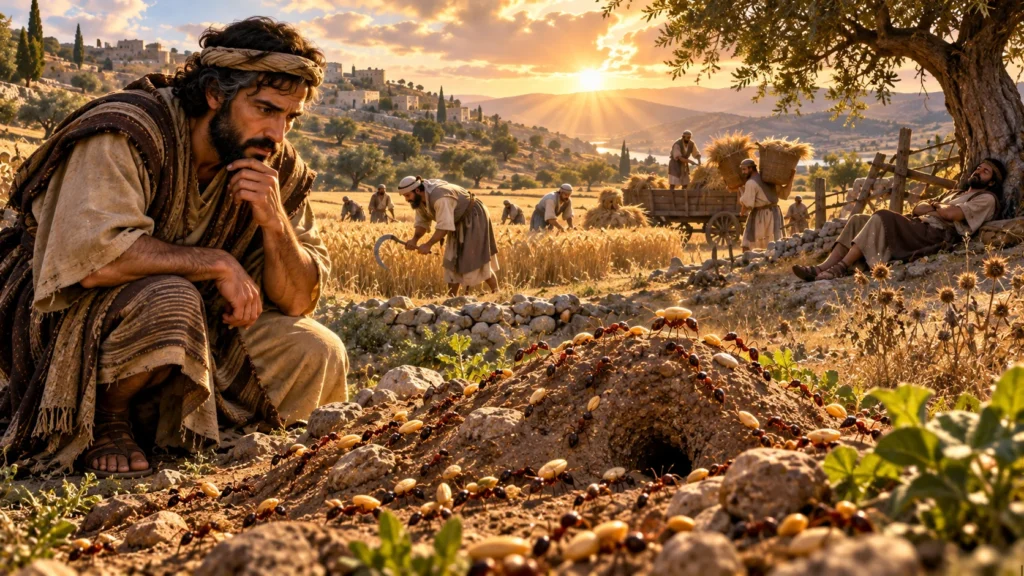
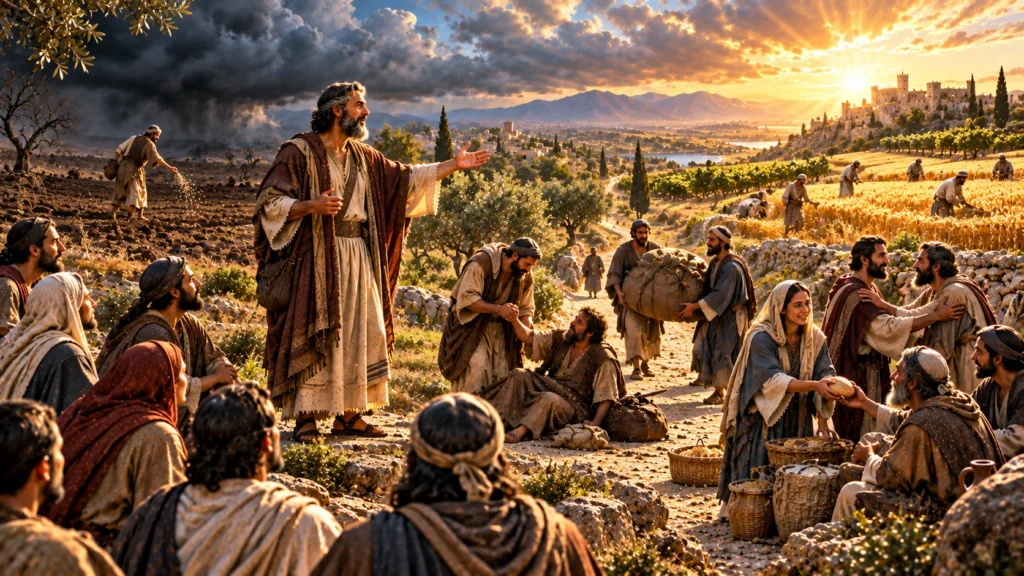
Paul uses the imagery of agriculture.
A farmer cannot plant one kind of seed and reasonably expect an entirely different crop.
In the same way, the patterns people continually cultivate in life eventually produce consequences.
Paul identifies two kinds of sowing.
The first is:
“He that soweth to his flesh.”
A life continually invested in selfish and sinful desires produces:
“Corruption.”
The second is:
“He that soweth to the Spirit.”
That person will:
“Of the Spirit reap life everlasting.”
Paul’s imagery emphasizes direction and cultivation.
Every choice is like planting a seed.
Repeated choices gradually produce a harvest.
Paul then recognizes an important difficulty.
Doing what is right can become exhausting.
Results may not appear immediately.
People may serve faithfully without seeing the fruit they hoped to see.
So Paul encourages believers:
“Let us not be weary in well doing.”
Why should they continue?
“For in due season we shall reap, if we faint not.”
The harvest has an appointed season.
Faithfulness should not depend entirely upon immediate visible results.
Paul therefore continues:
“As we have therefore opportunity, let us do good unto all men.”
Christian goodness should extend broadly.
But Paul adds:
“Especially unto them who are of the household of faith.”
Believers have a particular responsibility to care for one another as members of God’s family.
Paul then draws attention to the personal nature of his conclusion.
He says:
“Ye see how large a letter I have written unto you with mine own hand.”
Paul then returns to the controversy that has dominated much of Galatians.
Certain teachers are pressuring Gentile believers to receive circumcision.
Paul says their motivation is partly connected to appearances and avoiding persecution:
“Lest they should suffer persecution for the cross of Christ.”
They want to boast in the outward mark placed upon the Galatians.
Paul exposes the inconsistency.
Those insisting upon circumcision do not themselves perfectly keep the law.
Yet they want the Galatians circumcised so they can:
“Glory in your flesh.”
Paul completely rejects this kind of religious boasting.
He declares:
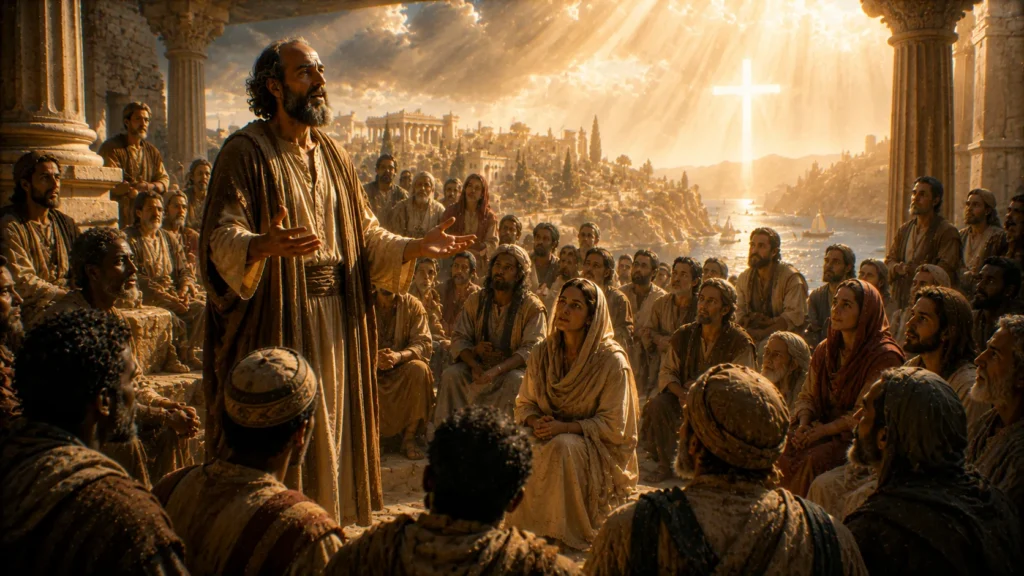
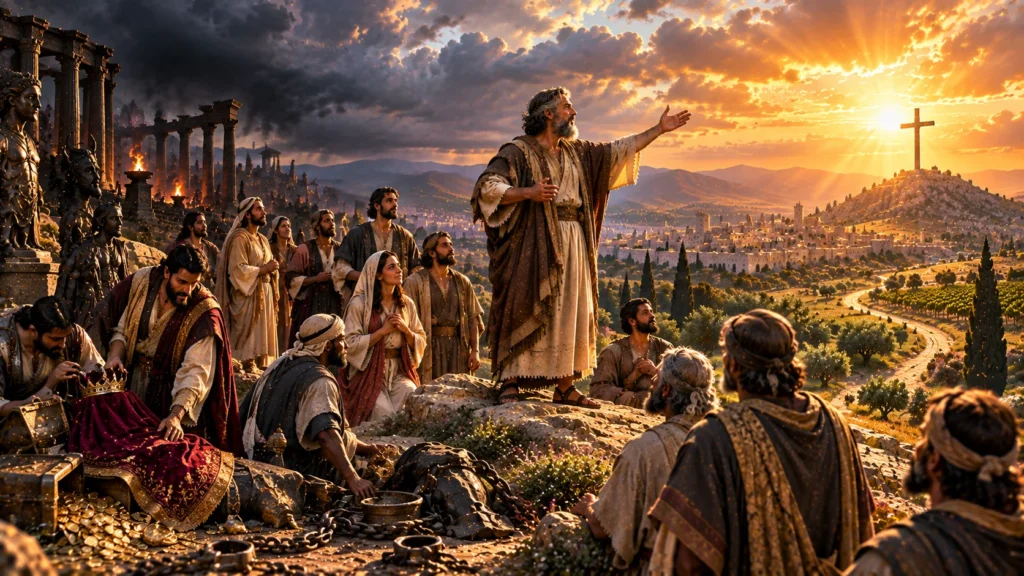
“But God forbid that I should glory, save in the cross of our Lord Jesus Christ.”
This is the great declaration near the conclusion of Galatians.
Paul will not boast in his achievements.
He will not boast in religious status.
He will not boast in external ceremonies as the basis of acceptance before God.
His boast is the cross of Jesus Christ.
Through the cross, Paul says:
“The world is crucified unto me, and I unto the world.”
The value system that once defined success, status, identity, and religious superiority has lost its controlling power.
Paul then summarizes what ultimately matters:
“For in Christ Jesus neither circumcision availeth any thing, nor uncircumcision.”
Neither possessing the external mark nor lacking it is the foundation of salvation.
What matters is:
“A new creature.”
The gospel produces a new creation.
Christianity is not merely external religious modification.
God transforms people from within through Christ.
Paul pronounces peace and mercy upon those who walk according to this truth.
Then he makes a deeply personal statement:
“From henceforth let no man trouble me.”
Why?
“For I bear in my body the marks of the Lord Jesus.”
Paul’s body bears physical evidence of the persecution and suffering he has endured while serving Christ.
Unlike those who boast in outward religious marks to avoid persecution, Paul carries scars resulting from his faithfulness to the crucified Messiah.
He ends the letter with grace:
“Brethren, the grace of our Lord Jesus Christ be with your spirit. Amen.”
That ending is appropriate for the entire book of Galatians.
The letter has repeatedly defended the truth that salvation begins with God’s grace and not human achievement.
It ends exactly where the Christian life must remain:
in the grace of Jesus Christ.
Galatians Chapter 6 therefore presents a powerful progression:
restore gently → carry one another’s burdens → walk humbly → accept personal responsibility → sow to the Spirit → persevere in doing good → care for others → reject religious boasting → glory in the cross → become a new creation → live by grace.
Paul’s final message is that genuine Christian spirituality is visible in both how believers treat other people and what they ultimately boast in.
A Spirit-led Christian restores rather than destroys, carries burdens rather than ignores them, perseveres rather than gives up, does good rather than lives selfishly, and boasts not in personal achievement but in the cross of Jesus Christ.
Key Lessons – Galatians Chapter 6
- Believers who fall should be restored with gentleness. Spiritual maturity should produce compassion and humility rather than pride and condemnation.
- Christians should remember their own vulnerability to temptation. Helping another person should never become an opportunity for spiritual superiority.
- Believers are called to carry one another’s burdens. Christian community reflects Christ when people help one another through overwhelming struggles.
- Humility requires honest self-examination. Paul warns against thinking too highly of ourselves and encourages believers to examine their own conduct.
- Community support does not eliminate personal responsibility. Each person remains accountable before God for his or her own life.
- Our choices are seeds that eventually produce a harvest. Paul warns that whatever a person sows will eventually be reaped.
- Sowing to the flesh produces corruption. Continually feeding sinful desires eventually produces destructive consequences.
- Sowing to the Spirit leads toward eternal life. A Spirit-directed life cultivates what belongs to God.
- Do not become discouraged while doing good. The harvest may not appear immediately, but Paul promises a proper season for reaping if believers do not give up.
- Christians should seek opportunities to do good. This generosity should extend to everyone, with particular care for fellow believers.
- External religious achievements cannot replace inward transformation. Paul says what ultimately matters is “a new creature.”
- The Christian’s ultimate boast is the cross of Jesus Christ. Salvation rests upon Christ’s work rather than human accomplishment.
- Following Christ can be costly. Paul’s own body carried evidence of the suffering he endured because of his ministry.
- Grace remains central from beginning to end. Paul closes Galatians by blessing the believers with the grace of the Lord Jesus Christ.
Important Verses
- Galatians 6:1
- “Restore such an one in the spirit of meekness; considering thyself, lest thou also be tempted.”
- Galatians 6:2
- “Bear ye one another’s burdens, and so fulfil the law of Christ.”
- Galatians 6:3
- “For if a man think himself to be something, when he is nothing, he deceiveth himself.”
- Galatians 6:5
- “For every man shall bear his own burden.”
- Galatians 6:7
- “Be not deceived; God is not mocked: for whatsoever a man soweth, that shall he also reap.”
- Galatians 6:8
- “He that soweth to the Spirit shall of the Spirit reap life everlasting.”
- Galatians 6:9
- “And let us not be weary in well doing: for in due season we shall reap, if we faint not.”
- Galatians 6:10
- “As we have therefore opportunity, let us do good unto all men.”
- Galatians 6:14
- “God forbid that I should glory, save in the cross of our Lord Jesus Christ.”
- Galatians 6:15
- “For in Christ Jesus neither circumcision availeth any thing, nor uncircumcision, but a new creature.”
- Galatians 6:17
- “For I bear in my body the marks of the Lord Jesus.”
- Galatians 6:18
- “Brethren, the grace of our Lord Jesus Christ be with your spirit. Amen.”