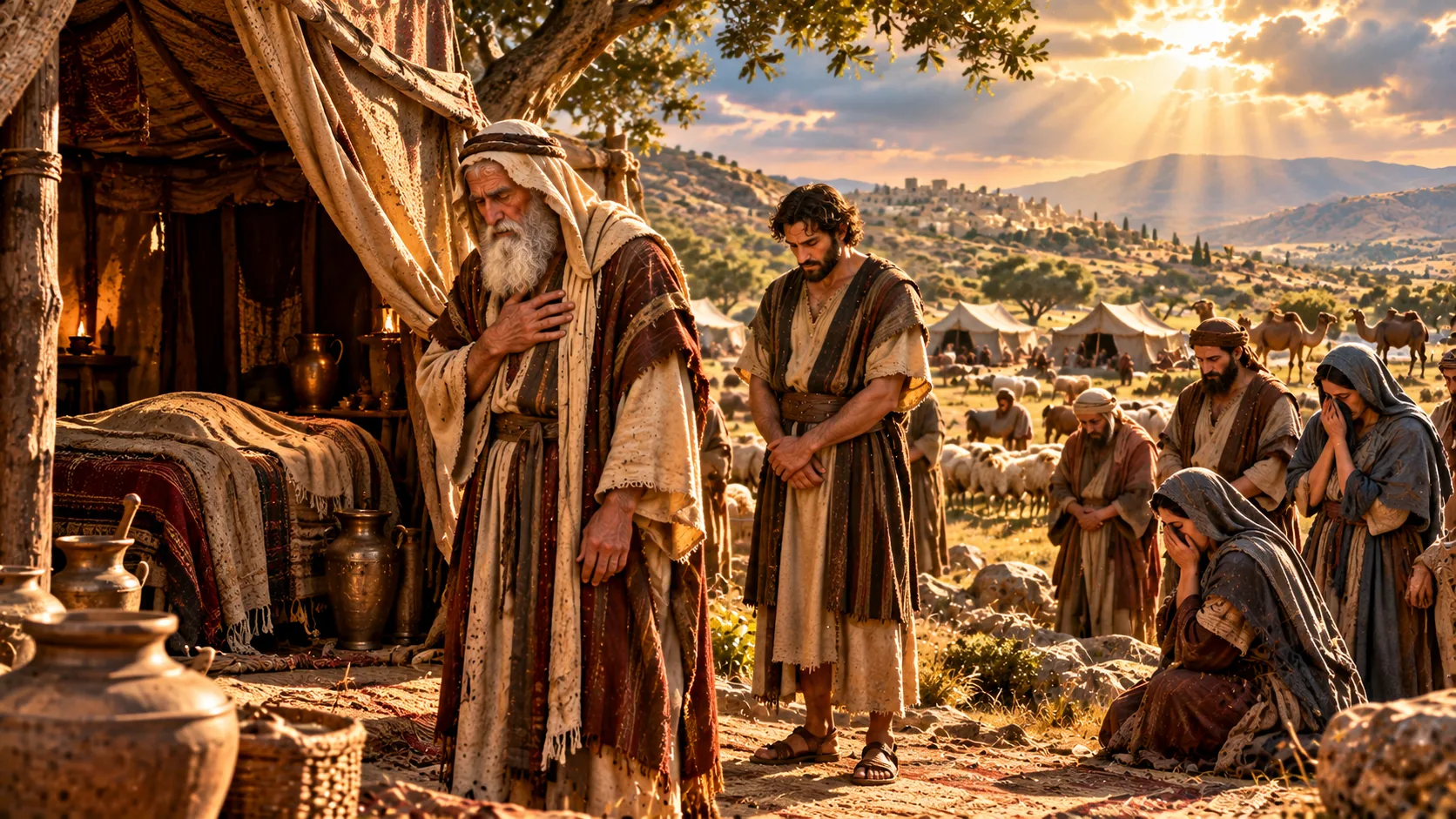












2 Corinthians Chapter 6 is Paul’s powerful appeal for believers to receive God’s grace faithfully, live with integrity through every circumstance, open their hearts to genuine Christian fellowship, and remain spiritually distinct from idolatry and unbelief. Paul describes the extraordinary hardships endured by himself and his fellow ministers—afflictions, beatings, imprisonments, sleeplessness, hunger, dishonor, and sorrow—yet explains that God’s servants continue through purity, knowledge, patience, kindness, the Holy Spirit, sincere love, truth, and the power of God. He reminds the Corinthians that “now is the day of salvation,” urges them to open their hearts to him, and concludes by calling believers to avoid spiritual partnerships that compromise their devotion to Christ. Because believers are “the temple of the living God,” they are called to belong wholeheartedly to Him.
2 Corinthians Chapter 6 Summary
2 Corinthians Chapter 6 begins with Paul continuing his explanation of the ministry of reconciliation.
Paul and his fellow workers serve alongside God in proclaiming the gospel.
He writes:
“We then, as workers together with him, beseech you also that ye receive not the grace of God in vain.”
God’s grace should produce a genuine response.
Paul does not want the Corinthians merely to hear about grace while remaining unchanged by it.
He then quotes God’s promise concerning an acceptable time and a day of salvation.
Paul applies that truth directly to his readers:
“Behold, now is the accepted time; behold, now is the day of salvation.”
The response to God should not continually be postponed.
The opportunity to respond is now.
Paul then describes the seriousness with which he approaches Christian ministry.
He does not want his conduct to create an unnecessary obstacle that would discredit the message.
He says:
“Giving no offence in any thing, that the ministry be not blamed.”
Instead, Paul and his companions seek to demonstrate that they are genuine servants of God.
But the evidence Paul provides is surprising.
He does not point primarily toward wealth, popularity, comfort, or social influence.
He points toward faithfulness under suffering.
Paul describes:
“Much patience.”
He continues with a remarkable list:
“Afflictions, necessities, distresses.”
“Stripes, imprisonments, tumults.”
“Labours, watchings, fastings.”
The ministry has brought tremendous hardship.
Paul has endured physical suffering, opposition, exhausting labor, sleeplessness, deprivation, and social unrest.
Yet suffering alone does not prove faithful ministry.
Paul then describes the spiritual qualities with which these hardships are endured:
“By pureness.”
“By knowledge.”
“By longsuffering.”
“By kindness.”
“By the Holy Ghost.”
“By love unfeigned.”
Their ministry is characterized not only by endurance but by purity, understanding, patience, kindness, dependence upon the Holy Spirit, and genuine love.
Paul continues:
“By the word of truth, by the power of God.”
He describes:
“The armour of righteousness on the right hand and on the left.”
Paul and his companions are surrounded by spiritual conflict, but righteousness equips them for the struggle.
Then Paul presents a series of striking contrasts showing how Christian ministry can appear one way to the world while possessing a completely different spiritual reality before God.
They experience:
“Honour and dishonour.”
“Evil report and good report.”
Some people honor them.
Others disgrace them.
Some speak well of them.
Others spread damaging accusations.
Paul continues:
“As deceivers, and yet true.”
They are accused of misleading people, yet they faithfully proclaim truth.
“As unknown, and yet well known.”
They may appear insignificant in the eyes of society, yet they are known by God and by those whose lives have been changed through their ministry.
“As dying, and, behold, we live.”
Their lives repeatedly approach danger, yet God continues sustaining them.
“As chastened, and not killed.”
They experience suffering without being destroyed.
Then comes another remarkable contrast:
“As sorrowful, yet alway rejoicing.”
Paul does not deny sorrow.
Christian faith does not require pretending that painful circumstances are painless.
Yet sorrow and spiritual joy can exist together.
He continues:
“As poor, yet making many rich.”
Paul may possess little material wealth, but through the gospel he brings people spiritual treasure.
Finally:
“As having nothing, and yet possessing all things.”
From a worldly perspective, Paul may appear to have very little.
From an eternal perspective, he possesses immeasurable riches in Christ.
Paul then turns directly toward the Corinthians.
His tone becomes deeply personal.
He says:
“O ye Corinthians, our mouth is open unto you, our heart is enlarged.”
Paul has spoken openly to them.
His affection for them is genuine.
The problem is not a lack of love from Paul.
He explains that they have become restricted within their own affections.
Paul therefore asks them to respond with the same openness.
He essentially tells them:
Open your hearts to us.
The chapter then moves toward one of its best-known teachings.
Paul commands:
“Be ye not unequally yoked together with unbelievers.”
The imagery comes from animals being joined together under a yoke.
Animals pulling in fundamentally different directions cannot work together properly.
Paul applies this spiritually.
His concern is not ordinary contact with unbelievers. Paul’s ministry itself constantly brings him into contact with people who do not yet believe.
Rather, the passage warns against binding spiritual partnerships and associations that compromise loyalty to God, especially in the context of idolatry and worship.
Paul asks a series of rhetorical questions.
“For what fellowship hath righteousness with unrighteousness?”
“And what communion hath light with darkness?”
He then asks:
“And what concord hath Christ with Belial?”
Christ and evil cannot be harmonized.
Paul continues:
“Or what part hath he that believeth with an infidel?”
Then he reaches the central image:
“And what agreement hath the temple of God with idols?”
The answer is clear.
There can be no spiritual compromise between devotion to the living God and idolatry.
Paul then gives the reason:
“For ye are the temple of the living God.”
This continues an important theme Paul has used elsewhere.
God’s people are sacred because God dwells among them.
Paul brings together Old Testament promises to describe God’s covenant relationship with His people:
“I will dwell in them, and walk in them; and I will be their God, and they shall be my people.”
The Christian life therefore involves belonging exclusively to God.
Paul continues with a call to separation:
“Wherefore come out from among them, and be ye separate, saith the Lord.”
Again, Paul is not commanding Christians to isolate themselves completely from everyone who does not believe.
His own missionary life would contradict such an interpretation.
The emphasis is separation from idolatrous and spiritually corrupting participation.
Believers are called to maintain holiness while living as witnesses in the world.
Paul adds:
“And touch not the unclean thing.”
Then comes a promise of relationship:
“And I will receive you.”
The chapter concludes with beautiful family language:
“And will be a Father unto you, and ye shall be my sons and daughters, saith the Lord Almighty.”
The God who calls His people away from spiritual compromise is not merely imposing restrictions.
He is calling them into belonging.
He promises to dwell among them.
He calls them His people.
He receives them.
He describes Himself as their Father.
And He calls them His sons and daughters.
2 Corinthians Chapter 6 therefore presents a powerful progression:
receive grace → respond today → live without discrediting the gospel → endure hardship faithfully → minister through the Holy Spirit and genuine love → rejoice even in sorrow → open your heart → reject spiritual compromise → remember that you are God’s temple → live as God’s sons and daughters.
Paul presents Christian faithfulness not as an easy life but as a life completely belonging to God.
The believer may experience sorrow yet rejoice, poverty yet possess spiritual riches, weakness yet experience God’s power, and rejection by people while being received by God.

Key Lessons – 2 Corinthians Chapter 6
- God’s grace should produce a genuine response. Paul warns believers not to receive the grace of God in vain.
- The proper time to respond to God is now. Paul declares, “Now is the day of salvation.”Christian ministry requires endurance. Paul’s hardships demonstrate that faithfulness to God does not guarantee an easy or comfortable life.
- Character matters as much as endurance. Paul emphasizes purity, knowledge, patience, kindness, sincere love, truth, and dependence upon the Holy Spirit.
- God’s servants may be misunderstood. Paul experienced both honor and dishonor, good reports and evil reports, yet remained committed to truth.
- Sorrow and Christian joy can exist together. Paul describes himself as “sorrowful, yet alway rejoicing.”
- True spiritual wealth is greater than material wealth. Paul could appear poor while making others spiritually rich through the gospel.
- Christian relationships should be characterized by open hearts. Paul urges the Corinthians to respond to his sincere love with genuine affection of their own.
- Believers must guard against spiritual compromise. Being unequally yoked warns against partnerships that require Christians to compromise their allegiance to God.
- Light and darkness cannot be spiritually united. Paul emphasizes the fundamental difference between devotion to Christ and participation in idolatry.
- God’s people are the temple of the living God. Their lives should reflect the holiness appropriate to God’s dwelling place.
- Separation from sin is ultimately about belonging to God. God promises, “I will be their God, and they shall be my people.”
- God receives His people as family. He promises to be their Father and calls them His sons and daughters.
Important Verses
- 2 Corinthians 6:1
- “We then, as workers together with him, beseech you also that ye receive not the grace of God in vain.”
- 2 Corinthians 6:2
- “Behold, now is the accepted time; behold, now is the day of salvation.”
- 2 Corinthians 6:4
- “But in all things approving ourselves as the ministers of God, in much patience.”
- 2 Corinthians 6:6
- “By pureness, by knowledge, by longsuffering, by kindness, by the Holy Ghost, by love unfeigned.”
- 2 Corinthians 6:7
- “By the word of truth, by the power of God, by the armour of righteousness on the right hand and on the left.”
- 2 Corinthians 6:9
- “As unknown, and yet well known; as dying, and, behold, we live.”
- 2 Corinthians 6:10
- “As sorrowful, yet alway rejoicing; as poor, yet making many rich; as having nothing, and yet possessing all things.”
- 2 Corinthians 6:11
- “O ye Corinthians, our mouth is open unto you, our heart is enlarged.”
- 2 Corinthians 6:14
- “Be ye not unequally yoked together with unbelievers: for what fellowship hath righteousness with unrighteousness?”
- 2 Corinthians 6:16
- “For ye are the temple of the living God.”
- 2 Corinthians 6:17
- “Wherefore come out from among them, and be ye separate, saith the Lord.”
- 2 Corinthians 6:18
- “And will be a Father unto you, and ye shall be my sons and daughters, saith the Lord Almighty.”