


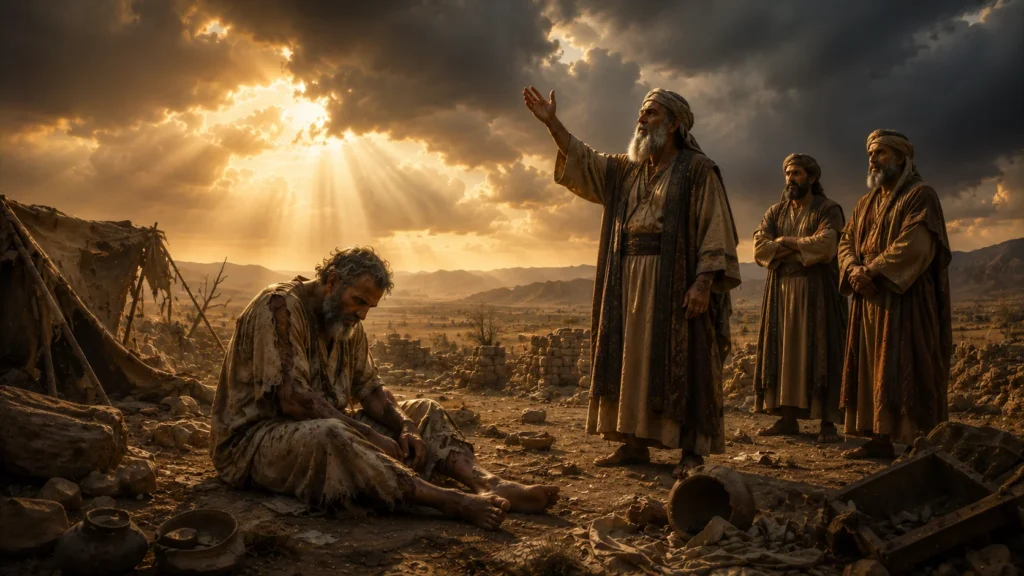
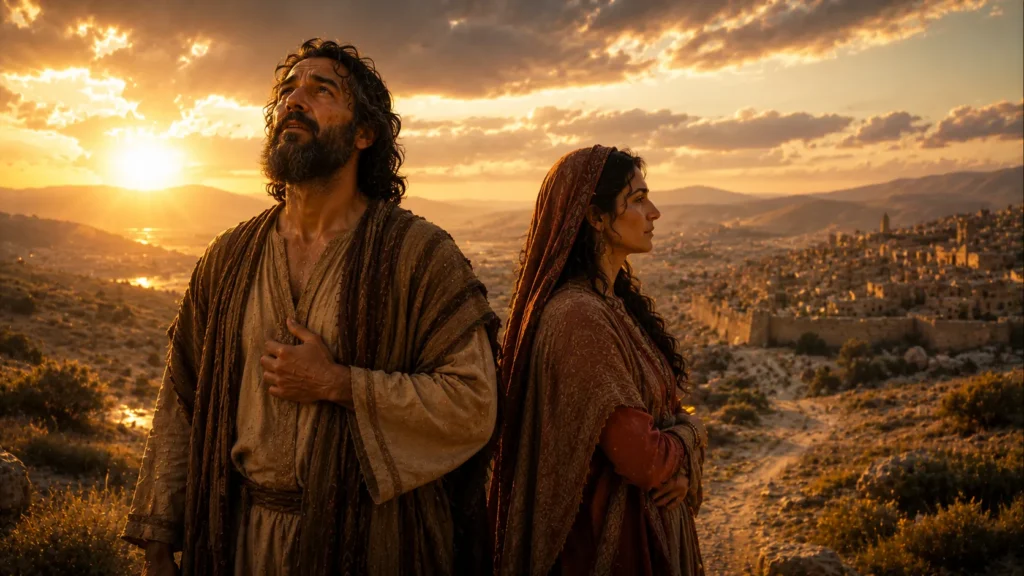


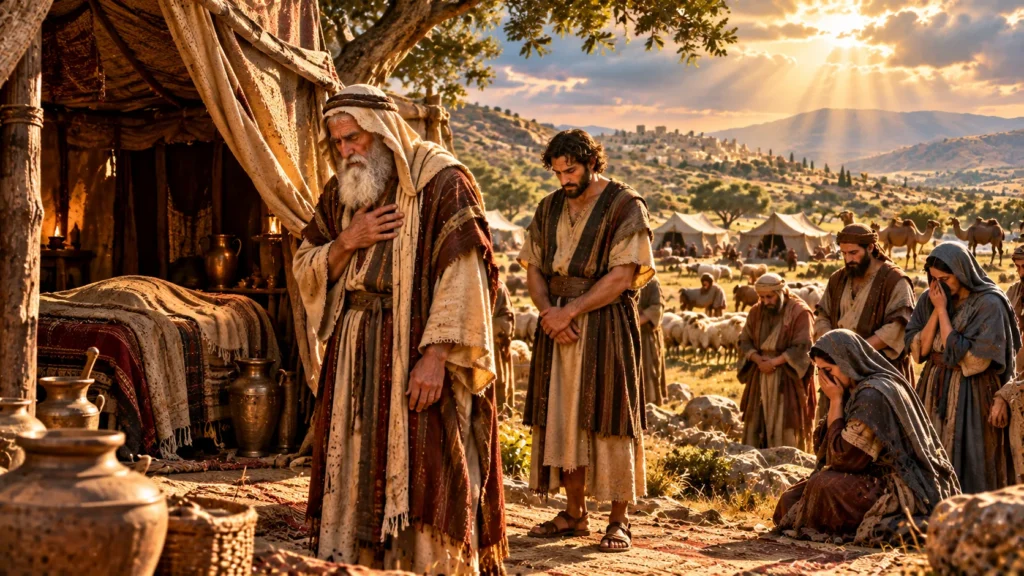
Genesis Chapter 23 records the death of Sarah, Abraham’s beloved wife, at the age of 127 and Abraham’s purchase of a permanent burial place in the land of Canaan. After decades of traveling together, trusting God’s promises, and witnessing the miraculous birth of their son Isaac, Sarah’s life comes to an end. Abraham mourns her death and negotiates with the Hittites to purchase the cave of Machpelah near Hebron. Although God has promised the entire land of Canaan to Abraham’s descendants, this burial property becomes Abraham’s first recorded legal purchase of land in the Promised Land. The chapter emphasizes love, grief, integrity, faith, and the enduring nature of God’s covenant promises.
Genesis Chapter 23 Summary
Genesis Chapter 23 begins by recording that Sarah lived 127 years, making her the only woman in the Bible whose age at death is explicitly recorded. She dies in Kiriath-arba, also known as Hebron, in the land of Canaan. Sarah had accompanied Abraham throughout his extraordinary journey of faith, leaving their homeland, traveling through unfamiliar territories, enduring years of waiting for a promised child, and finally giving birth to Isaac when she was ninety years old. Her death marks the end of a remarkable life that played a central role in God’s covenant with Abraham.
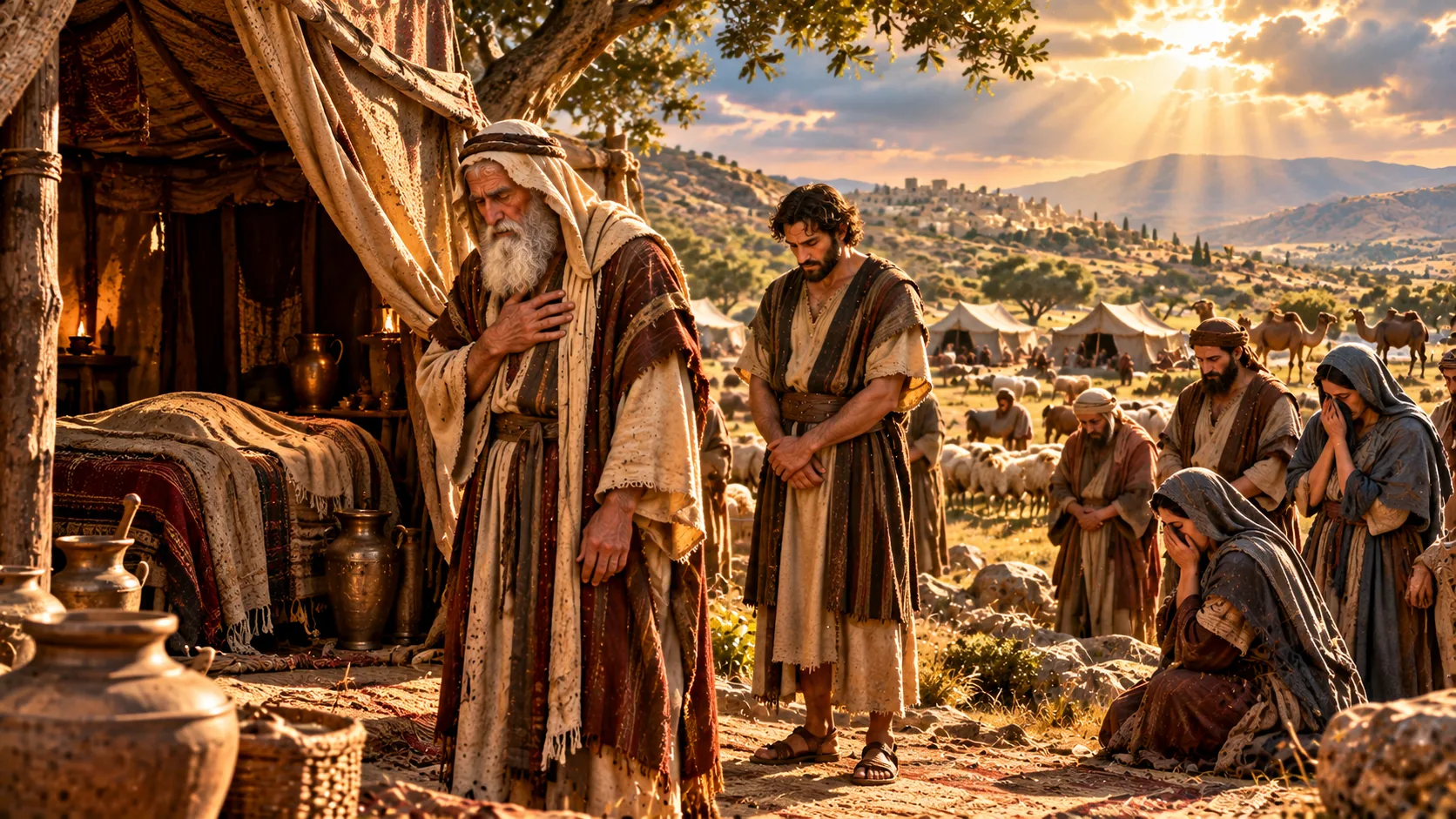
When Sarah dies, Abraham comes to mourn for her and weep over her. Despite his extraordinary faith and close relationship with God, Abraham experiences the deep sorrow of losing his wife. Their marriage had endured many challenges, including famine, uncertainty, family conflict, and the long wait for God’s promises to be fulfilled. Abraham’s grief reveals the depth of his love for Sarah and demonstrates that even faithful servants of God experience profound sadness and loss.
After mourning Sarah, Abraham rises and approaches the sons of Heth, also known as the Hittites, who inhabit the region around Hebron. Although Abraham has lived in Canaan for many years, he describes himself as a stranger and sojourner among them. He respectfully requests permission to acquire a burial property where he can lay Sarah to rest. This request is significant because, although God has promised Abraham the land of Canaan, Abraham does not yet possess the land as his inheritance.
The Hittites respond with great respect, addressing Abraham as a mighty prince among them. They offer him the use of their finest burial places, assuring him that none of them would refuse his request. Their response demonstrates Abraham’s respected standing among the inhabitants of Canaan. However, Abraham does not simply accept the use of someone else’s tomb. Instead, he desires to purchase a permanent burial place that will legally belong to his family.
Abraham bows respectfully before the people and asks them to approach Ephron, the son of Zohar, on his behalf. Ephron owns a field containing the cave of Machpelah, located near Mamre. Abraham specifically requests the cave and offers to pay its full value in silver. His determination to purchase the property rather than receive it as a temporary favor demonstrates his desire to establish an unquestionable and lasting family possession.
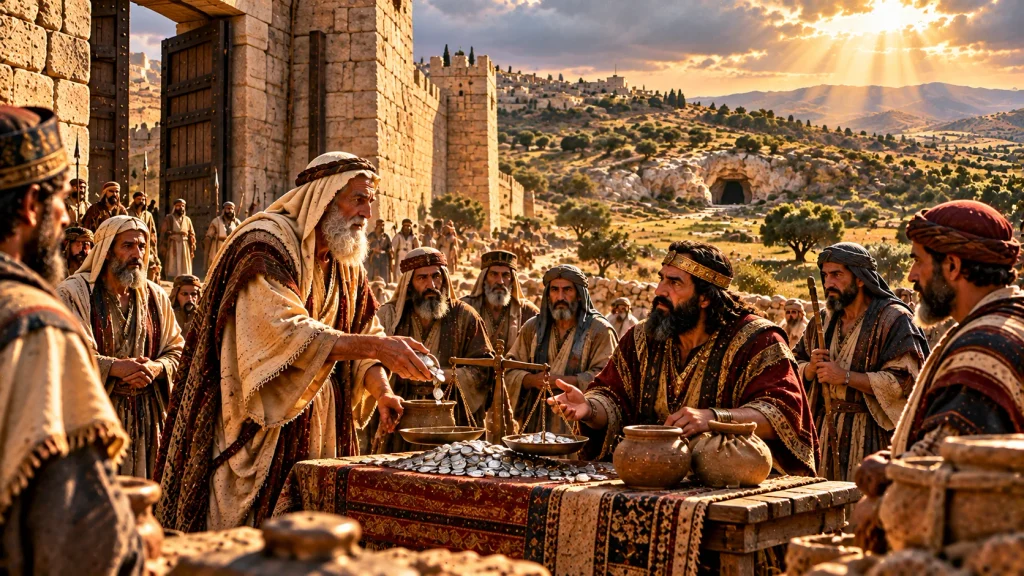
Ephron is present among the Hittites gathered at the city gate, where important legal transactions and public agreements are conducted. Speaking before the witnesses, Ephron offers Abraham both the field and the cave as a gift. However, Abraham respectfully insists on paying for the property. Ephron then names a price of 400 shekels of silver, presenting the amount as insignificant between two respected men. Abraham accepts the stated price without bargaining and weighs out the full amount according to the commercial standards of the time.
The transaction is completed publicly before the Hittites at the city gate. The field of Ephron, the cave of Machpelah, and all the trees within the boundaries of the property are formally transferred into Abraham’s possession. This detailed description emphasizes the legal certainty of the purchase. The land is not merely borrowed or temporarily granted to Abraham; it becomes his permanent property through a publicly witnessed transaction.
After completing the purchase, Abraham buries Sarah in the cave of Machpelah, located in the field near Mamre, which is Hebron, in the land of Canaan. The chapter concludes by confirming that the field and cave were legally established as Abraham’s burial possession by the Hittites. Although the burial of Sarah is a moment of deep sorrow, the purchase of this property also represents an important step in the unfolding fulfillment of God’s promise concerning the land.
The cave of Machpelah later becomes an important family burial place. According to later chapters of Genesis, Abraham himself is buried there, followed by Isaac and Rebekah, and eventually Jacob and Leah. Sarah’s burial therefore establishes a lasting connection between Abraham’s family and the land of Canaan, demonstrating how God’s covenant promises continue across generations.
Genesis Chapter 23 ultimately reveals that God’s promises endure even through death and sorrow. Sarah does not live to see the full inheritance of the Promised Land, and Abraham owns only a burial property rather than the entire territory promised to his descendants. Nevertheless, Abraham continues to act in faith, establishing a permanent family resting place in the land God has promised. The chapter reminds readers that God’s purposes extend beyond individual lifetimes and that His faithfulness continues through future generations.
Key Lessons – Genesis Chapter 23
- Faith does not remove grief: Abraham’s mourning for Sarah demonstrates that sorrow and tears are natural expressions of love, even for those who trust God deeply.
- God’s promises extend beyond our lifetimes: Abraham and Sarah did not witness the complete fulfillment of the land promise, but God’s covenant continued through their descendants.
- Love and faithfulness leave a lasting legacy: Sarah’s life of faith and her role in God’s covenant remained significant long after her death.
- Integrity matters in every transaction: Abraham insisted on paying the full price for the burial property, ensuring that the purchase was honest and legally recognized.
- Respectful conduct honors God: Abraham treated the Hittites with humility and courtesy, even while negotiating an important personal matter.
- Faith requires patience: Abraham continued trusting God’s promise despite possessing only a small portion of the land that had been promised to him.
- Earthly life is temporary: Sarah’s death reminds us that every human life has an appointed end and that earthly possessions and circumstances do not last forever.
- God’s plans continue through generations: The burial place Abraham purchased became a lasting connection between his descendants and the Promised Land.
- Wise decisions can have lasting consequences: Abraham’s careful purchase established a permanent family possession that would remain important for generations.
- Hope can endure through sorrow: Even while mourning Sarah, Abraham continued making decisions that reflected his confidence in God’s future promises.
Important Verses
- Genesis 23:1 (KJV)
“And Sarah was an hundred and seven and twenty years old: these were the years of the life of Sarah.” - Genesis 23:2 (KJV)
“And Sarah died in Kirjatharba; the same is Hebron in the land of Canaan: and Abraham came to mourn for Sarah, and to weep for her.” - Genesis 23:4 (KJV)
“I am a stranger and a sojourner with you: give me a possession of a buryingplace with you, that I may bury my dead out of my sight.” - Genesis 23:6 (KJV)
“Hear us, my lord: thou art a mighty prince among us: in the choice of our sepulchres bury thy dead; none of us shall withhold from thee his sepulchre, but that thou mayest bury thy dead.” - Genesis 23:9 (KJV)
“That he may give me the cave of Machpelah, which he hath, which is in the end of his field; for as much money as it is worth he shall give it me for a possession of a buryingplace amongst you.” - Genesis 23:16 (KJV)
“And Abraham hearkened unto Ephron; and Abraham weighed to Ephron the silver, which he had named in the audience of the sons of Heth, four hundred shekels of silver, current money with the merchant.” - Genesis 23:19 (KJV)
“And after this, Abraham buried Sarah his wife in the cave of the field of Machpelah before Mamre: the same is Hebron in the land of Canaan.” - Genesis 23:20 (KJV)
“And the field, and the cave that is therein, were made sure unto Abraham for a possession of a buryingplace by the sons of Heth.”