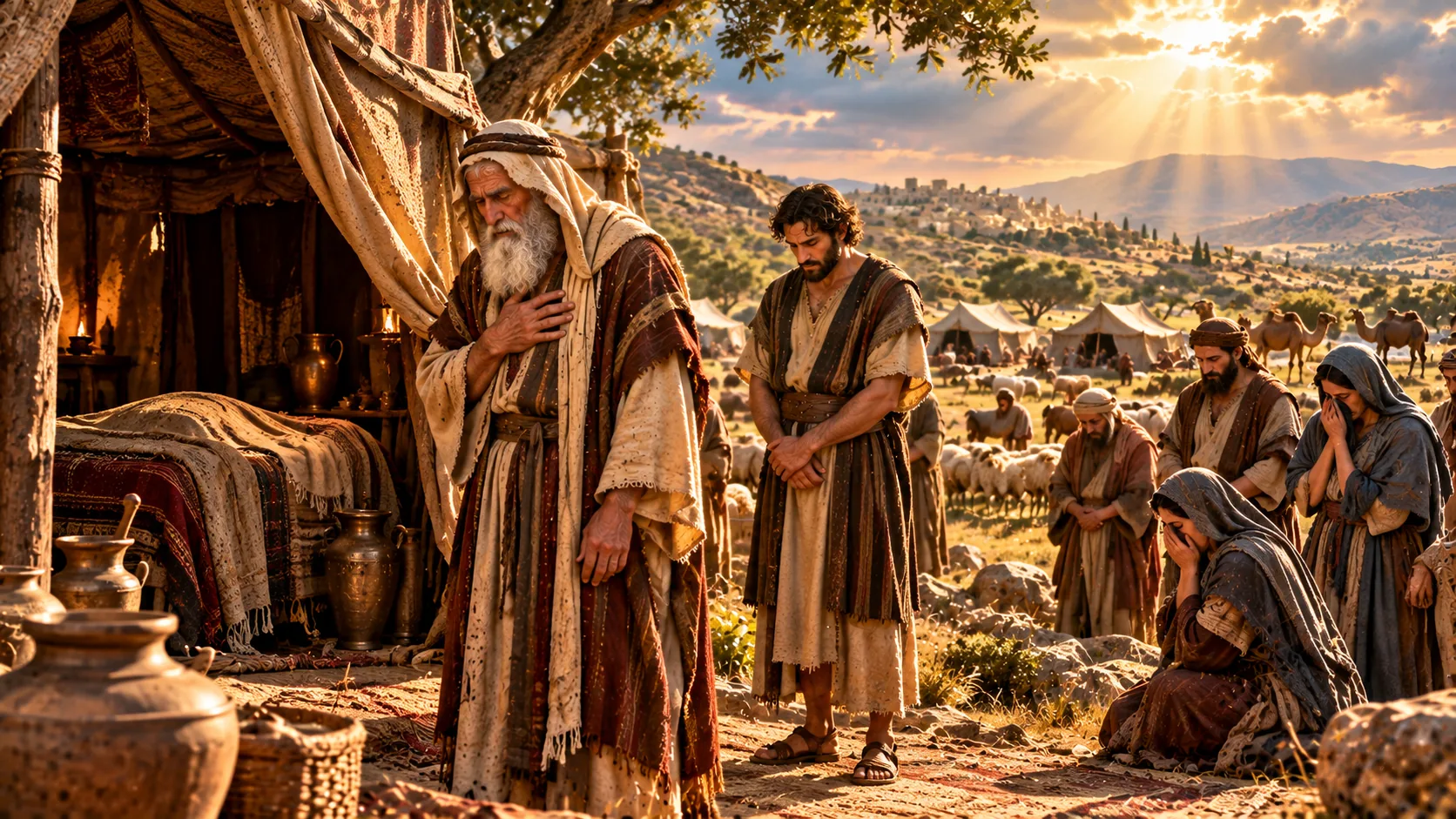












Job Chapter 4 begins the first round of speeches between Job and his three friends. Eliphaz the Temanite is the first to respond to Job’s sorrow and questions. While he begins gently by acknowledging Job’s past wisdom and encouragement of others, Eliphaz soon argues that suffering is generally the result of sin. He recounts a mysterious vision that emphasizes God’s holiness and humanity’s inability to claim righteousness before Him. Although Eliphaz speaks many truths about God’s greatness, his assumption that Job’s suffering must be the consequence of personal sin proves to be mistaken. The chapter reminds readers to exercise humility and compassion when trying to explain another person’s suffering.
Job Chapter 4 Summary
After listening to Job’s heartfelt lament, Eliphaz the Temanite begins to speak. He asks Job to be patient as he offers his perspective, reminding him that Job had previously instructed and strengthened many who were struggling. Job had encouraged the weak, comforted the discouraged, and supported those who were falling.
Eliphaz then observes that now suffering has come upon Job himself, and he appears overwhelmed. He questions why the man who once encouraged others now struggles to endure his own affliction.
Eliphaz presents the belief that innocent and upright people do not ultimately perish without cause. Drawing upon his own observations, he argues that those who sow trouble and wickedness eventually reap suffering in return. He suggests that God brings judgment upon those who live in sin.
To support his reasoning, Eliphaz describes a mysterious vision that came to him during the night. In the frightening encounter, a spirit passes before him, causing him to tremble with fear. A voice asks whether a mortal person can truly be more righteous than God or purer than his Creator.
The vision emphasizes God’s absolute holiness and the frailty of human beings. Even God’s angels are not completely trusted before Him, and human life is compared to fragile houses made of clay that are easily crushed and quickly forgotten.
Eliphaz concludes by implying that human beings should humbly accept God’s justice because no one is perfectly righteous before Him. Although many of his observations about God’s greatness are true, his assumption that Job’s suffering must be punishment for personal sin will later prove to be incorrect.

Key Lessons From Job Chapter 4
- Compassion should come before assumptions when comforting those who suffer.
- God’s holiness far exceeds human righteousness.
- Human understanding of suffering is often incomplete.
- Wise counsel can contain truth while still reaching the wrong conclusion.
- Believers should remain humble when explaining God’s purposes.
- God’s greatness reminds us of our dependence upon Him.
Important Verses
- Job 4:3-4 – “Surely you have instructed many, and you have strengthened weak hands. Your words have upheld him who was stumbling, and you have strengthened the feeble knees.”
- Job 4:7 – “Remember now, who ever perished being innocent? Or where were the upright ever cut off?”
- Job 4:17 – “Can a mortal be more righteous than God? Can a man be more pure than his Maker?”
- Job 4:19 – “How much more those who dwell in houses of clay, whose foundation is in the dust, who are crushed before a moth?”