








Deuteronomy Chapter 5 records Moses repeating the Ten Commandments to the new generation of Israelites preparing to enter the Promised Land. Many of those who originally stood at Mount Sinai had died during Israel’s forty years in the wilderness, so Moses reminds their descendants of the covenant God established with His people.
The chapter emphasizes obedience, reverence, covenant faithfulness, and wholehearted devotion to God. Moses reminds Israel that the commandments are not merely historical instructions given to their ancestors—they are the foundation for how this generation must live. Israel’s future blessing in the Promised Land will depend upon remaining faithful to the Lord and walking in the way He has commanded.
Deuteronomy Chapter 5 Summary
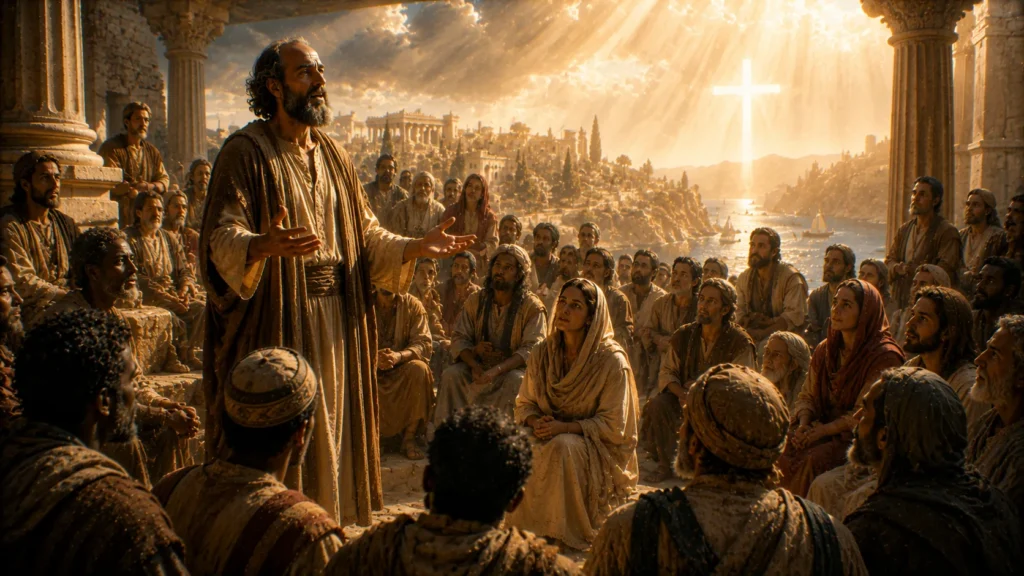
Deuteronomy 5 begins with Moses gathering all Israel and calling the people to hear the statutes and judgments of the Lord. They are not only to hear God’s commands but also to learn and carefully obey them.
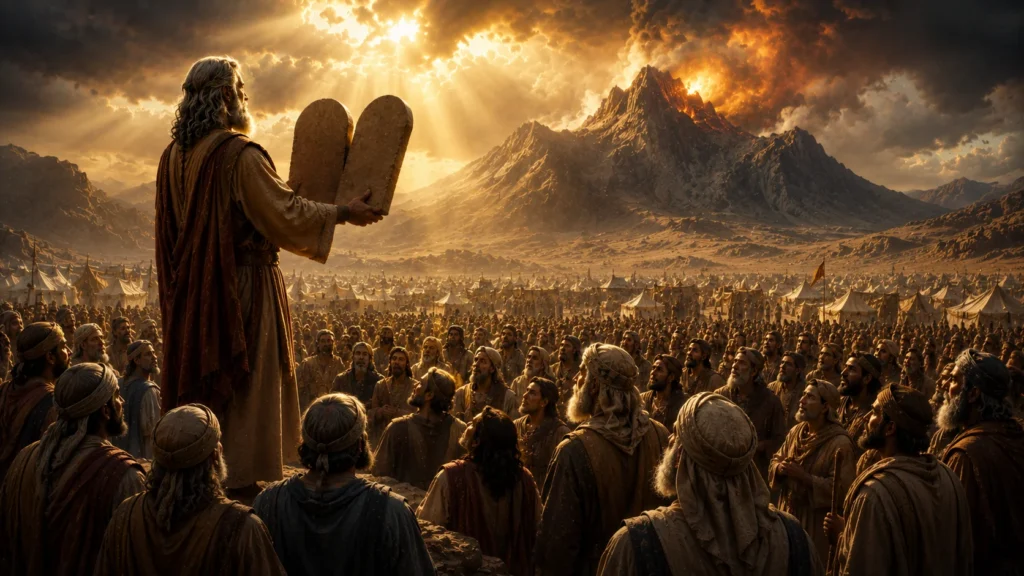
Moses reminds the Israelites that God established a covenant with them at Horeb, another name for Mount Sinai. The Lord spoke to the people from the mountain out of the fire while Moses stood between God and Israel to communicate His word.
Moses then repeats the Ten Commandments.
The first commandment declares that Israel must have no other gods before the Lord. God had personally rescued them from slavery in Egypt, and He alone was worthy of their worship.
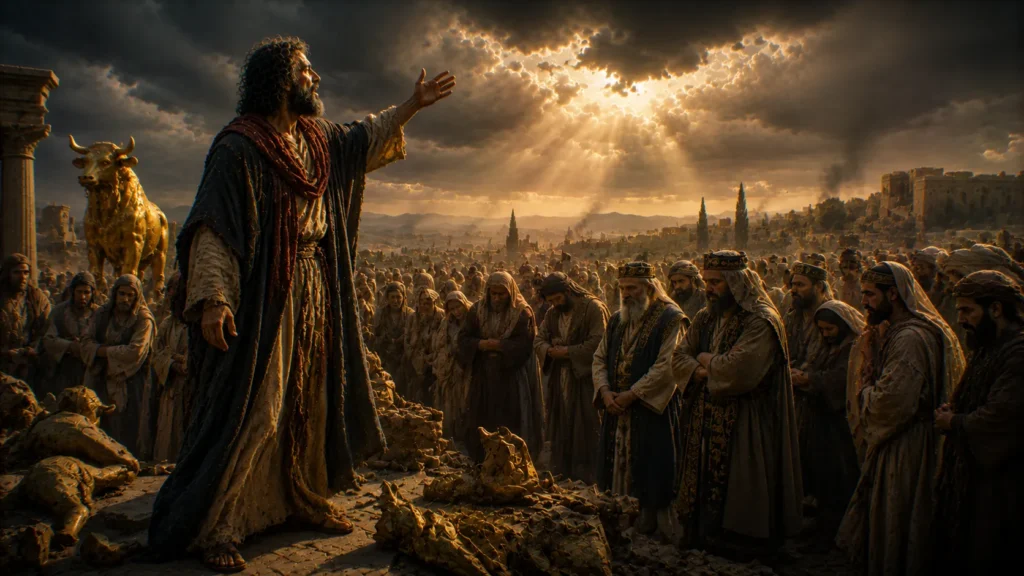
The people were forbidden from making idols and bowing down to them. God demanded exclusive devotion and warned Israel about the consequences of rejecting Him while promising steadfast love to those who loved Him and kept His commandments.
Israel was commanded not to misuse the name of the Lord.
The people were also instructed to observe the Sabbath and keep it holy. Six days were provided for work, but the seventh belonged to the Lord. Servants, foreigners, and even animals were to share in the Sabbath rest. Moses connects this command with Israel’s deliverance from slavery, reminding them that God had rescued them from a life of relentless labor in Egypt.
The commandments then address relationships between people.
Children were commanded to honor their fathers and mothers. Murder, adultery, theft, false testimony, and coveting what belonged to another person were forbidden.
Moses reminds Israel that God spoke these commandments from the mountain with a powerful voice while fire, clouds, and deep darkness surrounded it. God then wrote the commandments upon two stone tablets.
The Israelites were terrified by the overwhelming manifestation of God’s presence. They recognized that they had heard the voice of the living God and survived, but they feared that continued exposure to His glory might result in their death.
The leaders therefore approached Moses and asked him to serve as their mediator. They wanted Moses to hear God’s words and then communicate them to the people, promising that they would listen and obey.
God acknowledged that their response was appropriate but expressed a profound desire concerning their hearts: that they would always fear Him and keep His commandments so that things would go well for them and their descendants.
Moses concludes the chapter by urging Israel not to turn aside from God’s commands. They must walk in the way the Lord has commanded so that they may live, prosper, and remain long in the land they are about to possess.

Key Lessons – Deuteronomy Chapter 5
- God’s Word must be heard, learned, and obeyed. Moses does not call Israel merely to listen to God’s commandments. The people are expected to understand them and put them into practice.
- God alone deserves worship. The first commandments establish exclusive loyalty to the Lord. Israel must reject idols and worship the God who delivered them from Egypt.
- God’s commandments shape every part of life. The Ten Commandments address worship, speech, rest, family relationships, human life, marriage, possessions, truthfulness, and even the desires of the heart.
- Remembering God’s deliverance encourages obedience. Before demanding Israel’s loyalty, God reminds them that He brought them out of slavery. Their obedience should flow from remembering what God has done for them.
- God cares about the condition of the heart. The command against coveting demonstrates that God’s concern extends beyond outward actions to inward desires.
- Reverence for God should lead to obedience. Israel experienced the awesome presence of God at the mountain. Their fear was meant to produce lasting faithfulness rather than temporary emotion.
- God desires lasting faithfulness from His people. God expresses His desire that Israel would maintain hearts that fear Him and obey His commandments throughout their generations.
- Walking in God’s ways leads to blessing. Moses urges Israel not to turn to the right or left but to remain on the path God has commanded as they enter the Promised Land.
Important Verses
Deuteronomy 5:1 — Moses calls Israel to hear, learn, and carefully obey the statutes and judgments of the Lord.
Deuteronomy 5:6–7 — God reminds Israel that He delivered them from Egypt and commands them to have no other gods before Him.
Deuteronomy 5:8–10 — Israel is forbidden from making and worshiping idols and is called to exclusive devotion to God.
Deuteronomy 5:12 — God commands Israel to observe the Sabbath day and keep it holy.
Deuteronomy 5:16 — Children are commanded to honor their fathers and mothers.
Deuteronomy 5:17–21 — God forbids murder, adultery, theft, false testimony, and coveting.
Deuteronomy 5:29 — God expresses His desire that His people would always have hearts that fear Him and keep His commandments.
Deuteronomy 5:32–33 — Israel is commanded to carefully walk in God’s ways without turning aside so that they may live and prosper in the land.