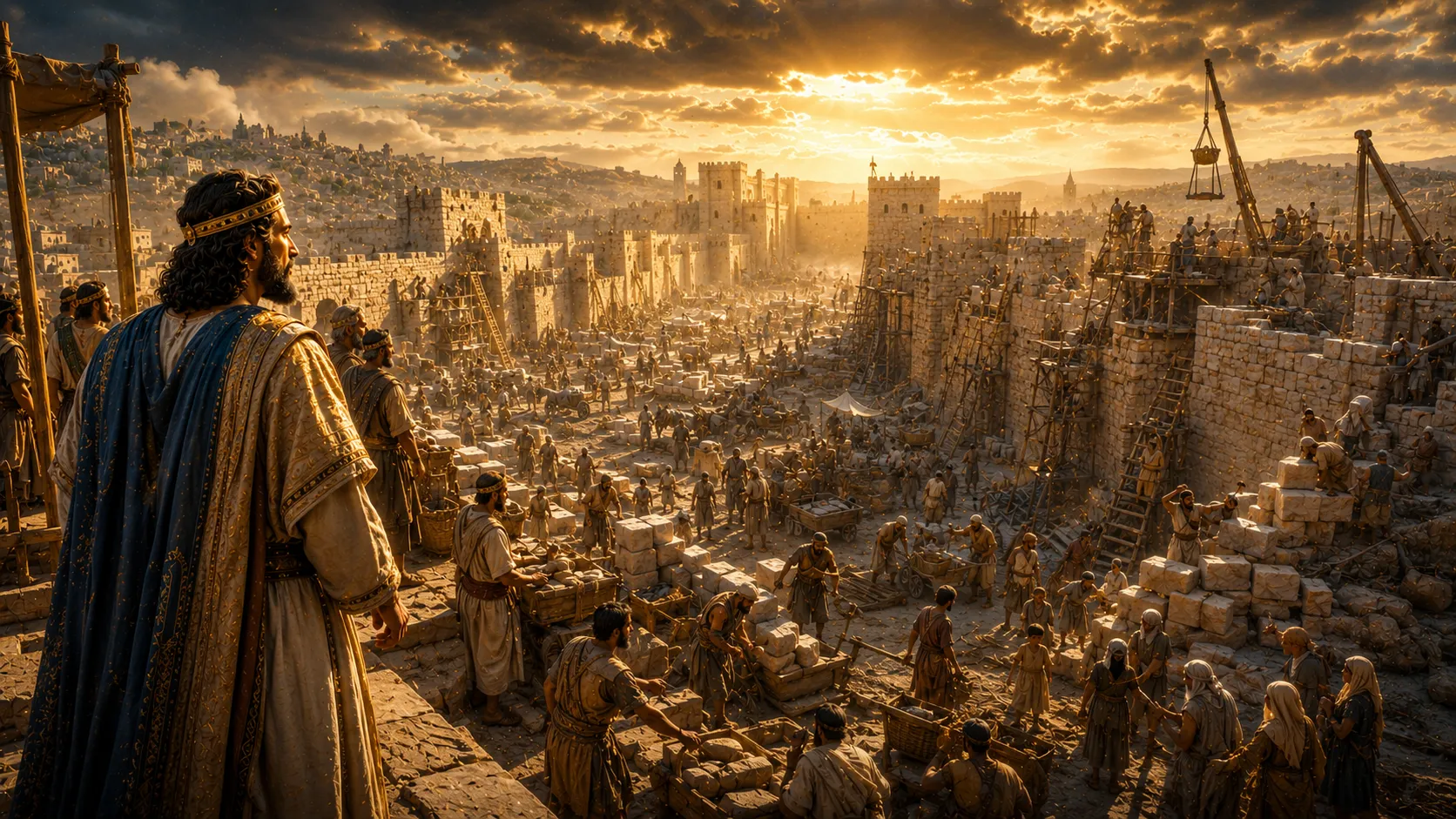
Nehemiah Chapter 3 provides a detailed record of the rebuilding of Jerusalem’s walls, highlighting the unity and dedication of God’s people. Rather than focusing on a single individual, this chapter celebrates families, priests, rulers, craftsmen, merchants, and ordinary citizens who worked side by side to restore the city’s defenses. Every section of the wall and every gate was entrusted to willing workers, demonstrating that God’s work is accomplished when His people faithfully serve together. This chapter reminds believers that every act of service, no matter how small, contributes to God’s greater purpose.
Nehemiah Chapter 3 Summary
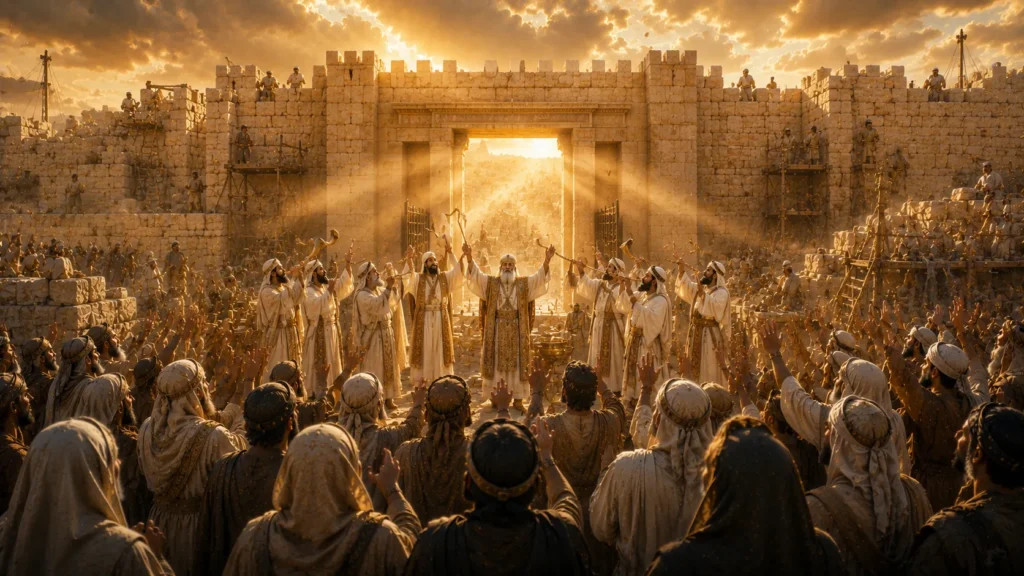
Nehemiah Chapter 3 begins with Eliashib the high priest and his fellow priests taking the lead in rebuilding Jerusalem’s walls. They repair and dedicate the Sheep Gate, setting an example of spiritual leadership through action. Their work emphasizes that worship and faithful service go hand in hand.
The chapter then carefully records the many groups assigned to repair different portions of the city wall. Families work alongside one another, often repairing the section nearest their own homes. Goldsmiths, perfume makers, merchants, Levites, temple servants, rulers, and citizens all contribute according to their abilities. This remarkable cooperation transforms the rebuilding effort into a citywide movement united by a common purpose.
Several important gates are restored during the project, including the Fish Gate, Old Gate, Valley Gate, Dung Gate, Fountain Gate, Water Gate, Horse Gate, East Gate, and Inspection Gate. Each gate held strategic, commercial, or spiritual significance for Jerusalem’s daily life and security. Their restoration symbolizes the renewal of both the city’s physical protection and its covenant identity as God’s chosen people.
The chapter also notes individuals who displayed extraordinary devotion. Baruch son of Zabbai is specifically commended for working with exceptional zeal. Shallum, one of the district rulers, repairs part of the wall alongside his daughters, illustrating that both men and women faithfully participated in God’s work.
Not everyone responds faithfully. The nobles of Tekoa refuse to submit to the leadership of their supervisors and decline to participate in the rebuilding effort. In contrast, the ordinary people of Tekoa complete two separate sections of the wall, demonstrating that humble obedience is more valuable than social status.
By the end of the chapter, every assigned section of Jerusalem’s wall is under construction. The detailed record of names and responsibilities highlights God’s appreciation for faithful service. Although many of these individuals remain largely unknown outside this chapter, Scripture permanently records their contributions because every act of obedience matters to God.
Nehemiah Chapter 3 teaches that God’s work flourishes when His people unite in faith, humility, and service. Every believer has a place in building God’s kingdom, and no task performed for His glory is ever insignificant.
Key Lessons From Nehemiah Chapter 3
- God accomplishes great work through united people.
- Every believer has a valuable role in God’s kingdom.
- Faithful service honors God regardless of recognition.
- Spiritual leaders should lead by example.
- Unity strengthens God’s people during difficult work.
- God remembers every act of faithful obedience.
Important Verses
- Nehemiah 3:1 – “Eliashib the high priest and his fellow priests went to work and rebuilt the Sheep Gate.”
- Nehemiah 3:5 – “The next section was repaired by the men of Tekoa, but their nobles would not put their shoulders to the work.”
- Nehemiah 3:20 – “Next to him, Baruch son of Zabbai zealously repaired another section.”
- Nehemiah 3:28 – “Above the Horse Gate, the priests made repairs, each in front of his own house.”