




Joel Chapter 1 opens with a devastating crisis in the land of Judah. A massive locust invasion has stripped the fields, destroyed the vineyards, and left the people facing widespread loss. Through the prophet Joel, the nation is called to recognize the seriousness of what has happened, gather together in prayer and fasting, and cry out to the Lord. The devastation also points toward a greater warning—the approaching Day of the Lord. Joel Chapter 1 is a powerful reminder that in times of disaster and uncertainty, God’s people are called to humble themselves, seek Him, and remember that their ultimate dependence is upon the Lord.
Joel Chapter 1 Summary
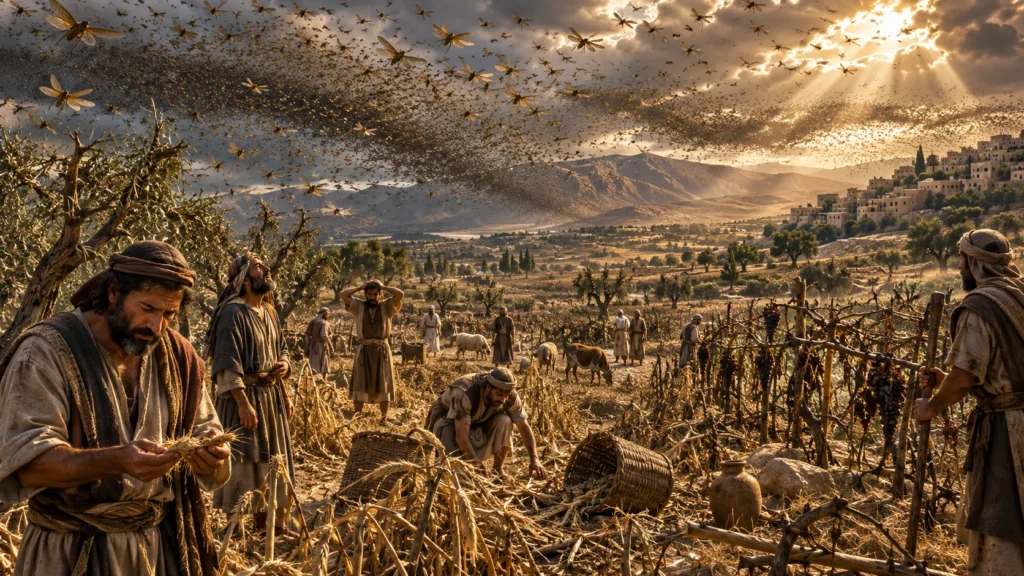
Joel Chapter 1 describes a devastating disaster that has struck the land of Judah. An overwhelming locust invasion has destroyed the crops and vegetation, leaving the nation facing severe agricultural and economic devastation. Joel calls the people to recognize the seriousness of what has happened and to remember it for generations to come.
Joel begins by addressing the elders and all who live in the land. The destruction is so extraordinary that he asks whether anything like it has happened in their lifetime or in the days of their ancestors. He tells them to pass the story down from one generation to the next, ensuring that the disaster and its lesson will not be forgotten.
The destruction comes in waves. What one swarm of locusts leaves behind, another consumes. Vineyards are ruined, fig trees are stripped bare, and the fields are devastated. Grain, wine, and oil—the staples of the land—are severely affected.
Joel calls different groups to mourn. Those who drink wine are told to grieve because the vineyards have been destroyed. Farmers and vineyard workers are told to despair because wheat, barley, grapes, figs, pomegranates, dates, apples, and other crops have withered. The devastation has taken away not only food but also much of the people’s joy and prosperity.
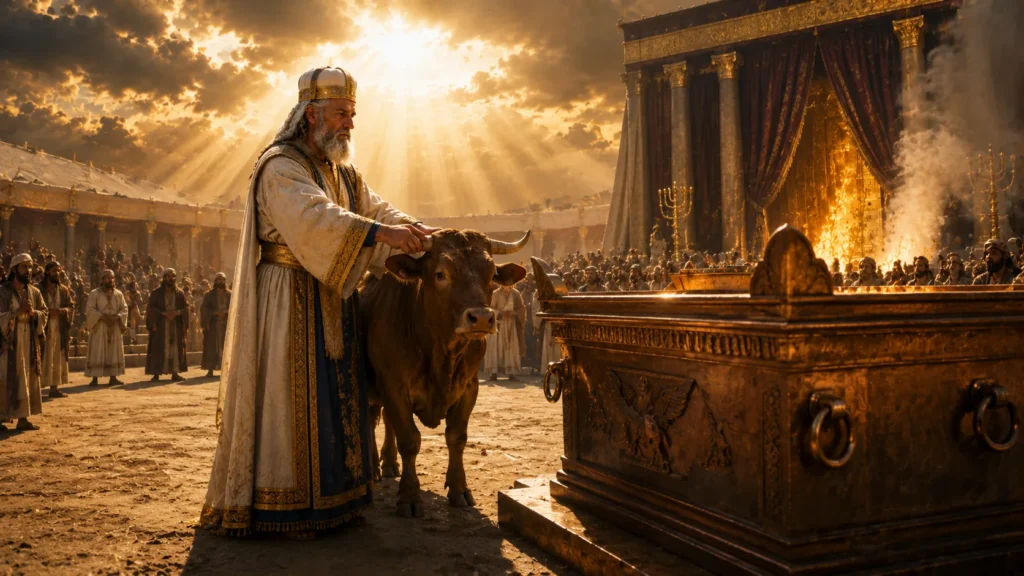
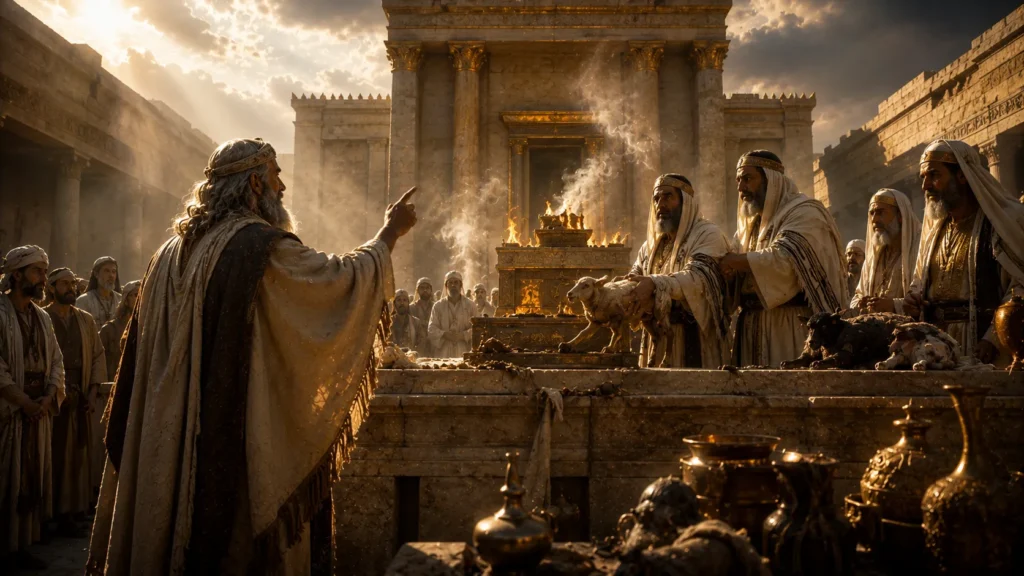
The disaster also affects worship at the temple. With grain and wine in short supply, the grain offerings and drink offerings have been interrupted. Joel tells the priests and ministers of the Lord to mourn because the normal offerings can no longer be brought as before.
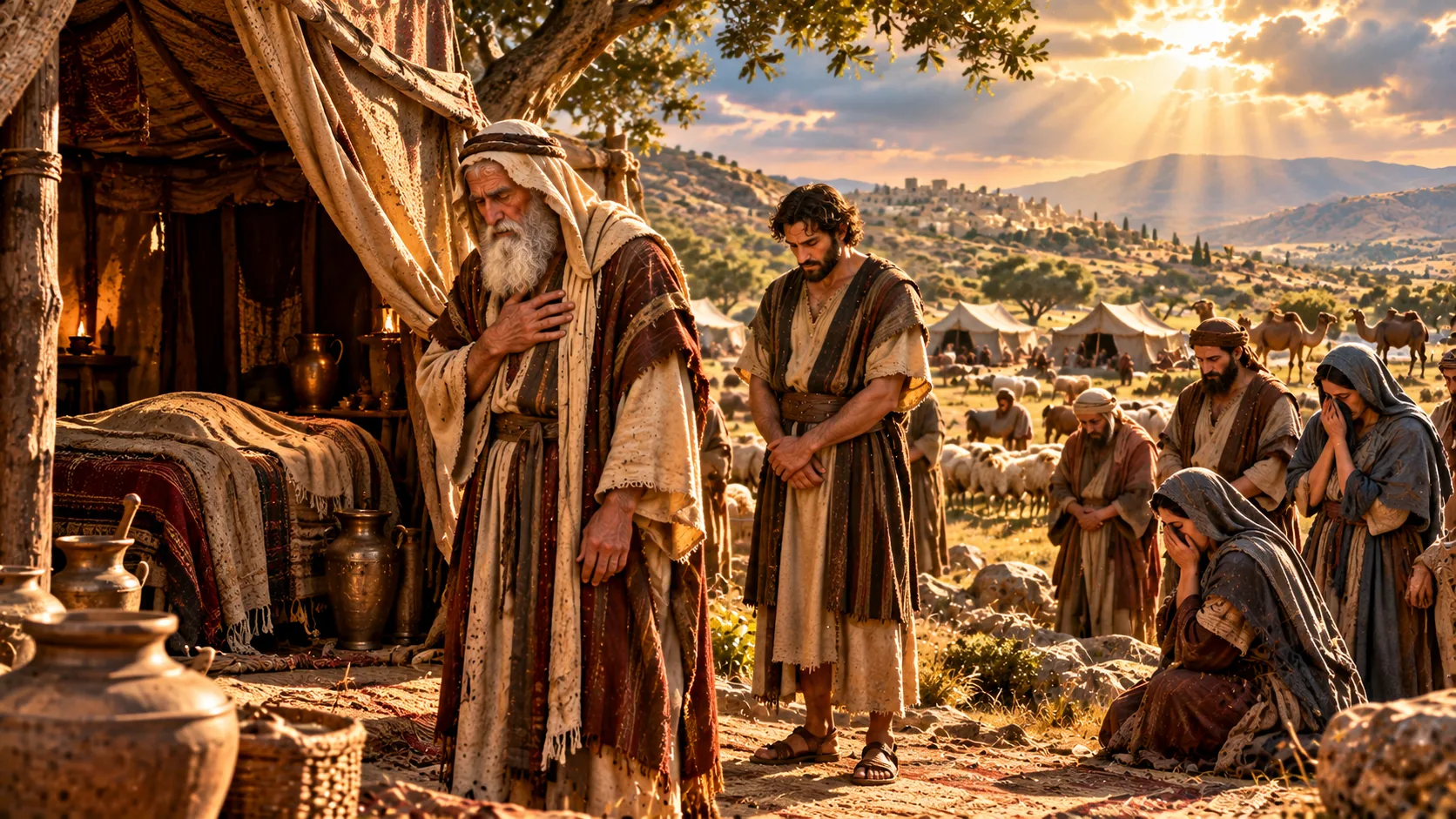
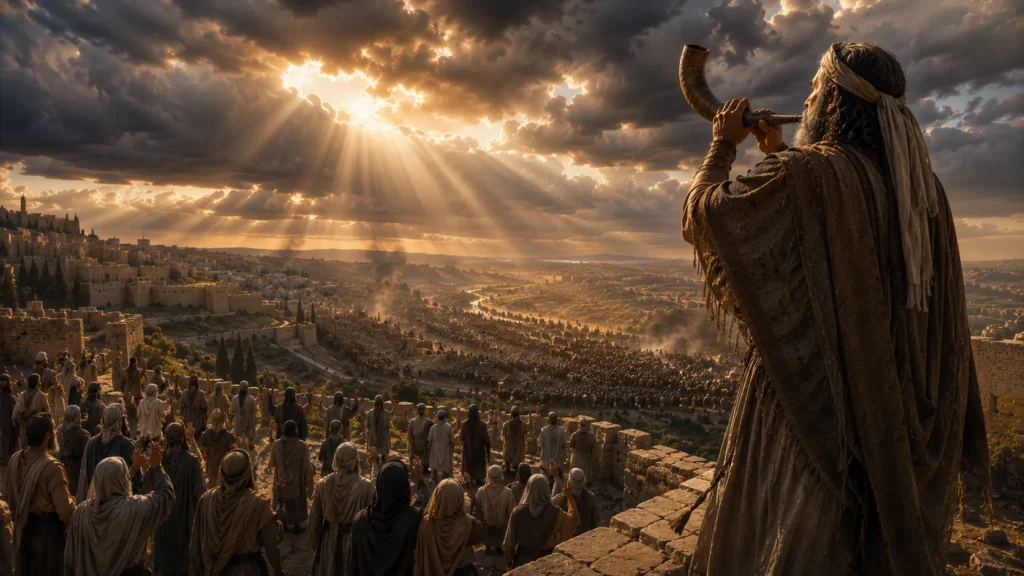
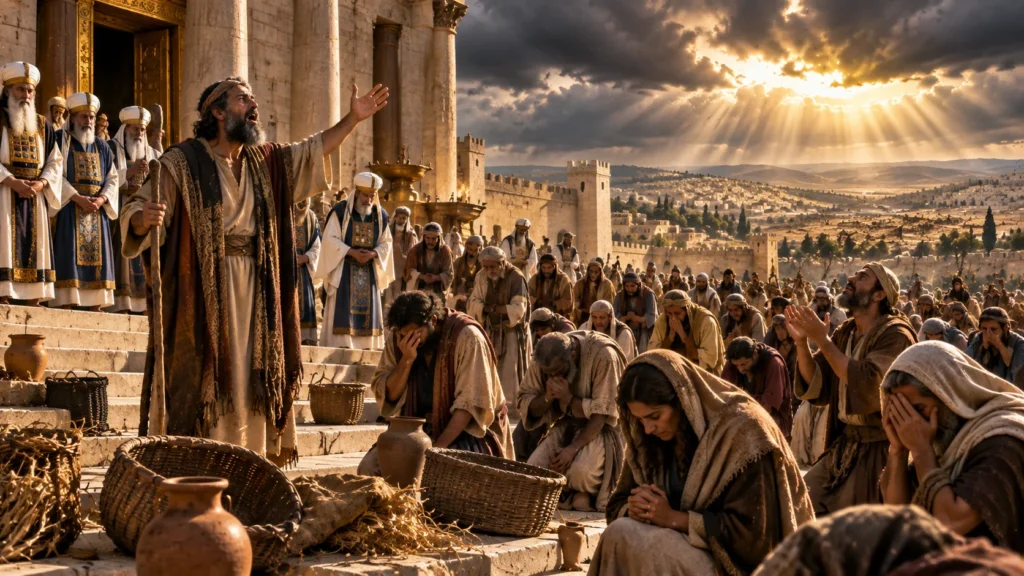
Joel then calls for a sacred fast and solemn assembly. The elders and everyone living in the land are to gather at the house of the Lord and cry out to God. Rather than treating the disaster merely as an agricultural crisis, Joel directs the people toward repentance, prayer, and dependence upon God.
The chapter introduces one of the central themes of the Book of Joel: “the day of the Lord.” Joel warns that this day is near and describes it as a time of destruction associated with God’s judgment. The present devastation serves as an urgent warning that the people should turn toward God.
The chapter closes with a bleak picture of the land. Food has disappeared, storehouses are empty, barns have fallen into ruin, and even the animals suffer because there is little pasture. Fire and drought have devastated the countryside and dried up streams.
In the middle of this catastrophe, Joel himself cries out to the Lord. The chapter therefore moves from describing disaster to demonstrating the proper response: recognize the seriousness of the situation, gather together, humble yourselves, and call upon God.
Key Lessons – Joel Chapter 1
- Disaster should lead people to examine their spiritual condition. Joel does not allow Judah to view the locust invasion simply as an unfortunate natural event. He calls the nation to recognize its spiritual significance and turn toward God.
- God’s lessons should be remembered across generations. Joel commands the people to tell their children what happened so future generations will understand what God taught through these events.
- Material prosperity can disappear quickly. Judah’s vineyards, fields, grain, fruit, and other resources are devastated, demonstrating how temporary earthly abundance can be.
- Worship should involve genuine repentance. Joel calls for fasting, mourning, prayer, and a solemn gathering rather than merely outward religious activity.
- The day of the Lord demands preparation. Joel uses the present devastation to point toward the greater reality of God’s judgment and the need to seek Him.
- Everyone is affected by the condition of the nation. Priests, farmers, elders, workers, and ordinary people are all called to respond. The crisis is not presented as someone else’s problem.
- God should be sought in times of desperation. Joel’s own response is to cry out to the Lord, showing that devastation should drive people toward God rather than away from Him.
Important Verses
- Joel 1:2–3 — Joel tells the elders and people to recognize the extraordinary events happening in their land and to pass the account down through future generations.
- Joel 1:4 — The devastating scale of the locust invasion is described: what one swarm leaves behind, another swarm consumes.
- Joel 1:10 — The fields are ruined and the land mourns because the grain, new wine, and oil have been devastated.
- Joel 1:13–14 — Joel calls the priests and ministers to mourn, fast, gather the elders and people, and cry out to the Lord.
- Joel 1:15 — One of the chapter’s most important verses introduces a major theme of the entire book: the Day of the Lord is near, bringing a warning of coming judgment.
- Joel 1:19 — Faced with overwhelming devastation, Joel personally demonstrates the response he is asking of the nation: he cries out to the Lord.
- Joel 1:20 — Even the animals suffer as the streams dry up and the land is consumed, emphasizing how completely the disaster has affected creation.
- Joel 1:15 is the central verse of the chapter because it connects the immediate disaster in Judah with the larger biblical theme of the Day of the Lord—a theme that becomes even more important as the Book of Joel continues.