







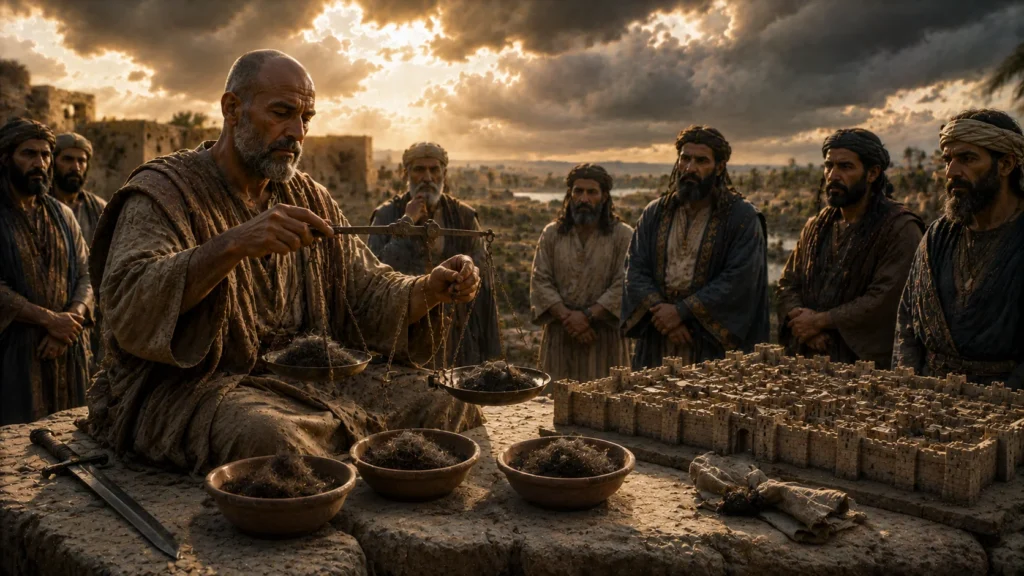





Numbers Chapter 5 focuses on maintaining holiness, purity, justice, and faithfulness within the camp of Israel. Because God dwelled among His people, the Israelites were commanded to remove ceremonial uncleanness from the camp, make restitution when they wronged others, and deal seriously with accusations of marital unfaithfulness.
The chapter demonstrates that holiness was not limited to worship at the Tabernacle. It affected community life, relationships, personal responsibility, and marriage. God desired His people to live differently because His presence was among them.
Numbers Chapter 5 Summary
Numbers 5 begins with God commanding Moses to remove ceremonially unclean individuals from the Israelite camp. Those suffering from certain skin diseases, bodily discharges, or uncleanness caused by contact with a dead body were temporarily sent outside the camp.
This command applied to both men and women. The purpose was to prevent ceremonial uncleanness from defiling the camp because God Himself dwelled among His people.
The chapter then turns to sins committed against other people. When someone wronged another person, that offense was also considered an act of unfaithfulness against the Lord.
The guilty person was required to confess the wrongdoing and make full restitution. In addition to repaying what had been taken or lost, the offender had to add one-fifth—twenty percent—to its value.
If the person who had been wronged had died and there was no close relative to receive the restitution, the payment belonged to the Lord and was given to the priest. This emphasized that wrongdoing could not simply be ignored because repayment seemed difficult.
The final and largest section of Numbers 5 addresses a situation involving suspected marital unfaithfulness.
If a husband became jealous and suspected that his wife had committed adultery but there were no witnesses or sufficient evidence, he was instructed to bring her before the priest rather than taking judgment into his own hands.
The priest brought the woman before the Lord at the Tabernacle and followed a prescribed ritual involving holy water, dust from the Tabernacle floor, an offering of barley flour, and a solemn oath.
The woman was required to swear that she had not been unfaithful. The priest wrote the words of the curse and washed them into the bitter water, which the woman then drank.
If she was guilty, the prescribed judgment would come upon her. If she was innocent, she would be cleared of the accusation and freed from its consequences.
Although this ritual can seem unusual to modern readers, within the chapter it places judgment in God’s hands rather than allowing a suspicious husband to determine guilt himself. The accusation was brought before the Lord, who alone knew the truth.
Numbers Chapter 5 therefore emphasizes the holiness of God’s presence, responsibility for wrongdoing, restitution, marital faithfulness, and the importance of allowing God to judge what human beings cannot determine with certainty.

Key Lessons – Numbers Chapter 5
- God’s presence calls His people to holiness. Israel’s camp was to remain ceremonially clean because God dwelled among them. His presence required His people to respect His holiness.
- Wrongdoing against others is also an offense against God. Numbers 5 connects sins committed against another person with unfaithfulness toward the Lord. How people treat one another matters deeply to God.
- Confession should be accompanied by responsibility. The guilty person was required not only to confess but also to repay what was owed and add additional compensation.
- Making things right is an important part of repentance. Restitution demonstrates that genuine repentance involves addressing the damage caused by wrongdoing whenever possible.
- Marriage is meant to be treated as a sacred covenant. The chapter takes accusations of marital unfaithfulness seriously, showing the importance God places upon faithfulness between husband and wife.
- Judgment ultimately belongs to God. When human evidence could not determine whether adultery had occurred, the matter was brought before the Lord rather than allowing suspicion alone to establish guilt.
- God knows the truth even when people do not. Human beings may struggle to know what happened in secret, but nothing is hidden from God.
Important Verses
- Numbers 5:3 — God commands that ceremonially unclean individuals be placed outside the camp so they do not defile the place where He dwells among His people.
- Numbers 5:6–7 — Those who wrong another person are instructed to confess their sin, make full restitution, and add one-fifth to what is owed.
- Numbers 5:8 — If there is no relative to receive restitution, it belongs to the Lord and is given to the priest.
- Numbers 5:9–10 — Sacred contributions brought by the Israelites belong to the priest to whom they are presented.
- Numbers 5:16 — In a case involving suspected adultery, the priest brings the woman before the Lord.
- Numbers 5:19 — The woman is placed under oath concerning whether she has been unfaithful to her husband.
- Numbers 5:28 — If the woman is innocent of the accusation, she is cleared and freed from the prescribed judgment.