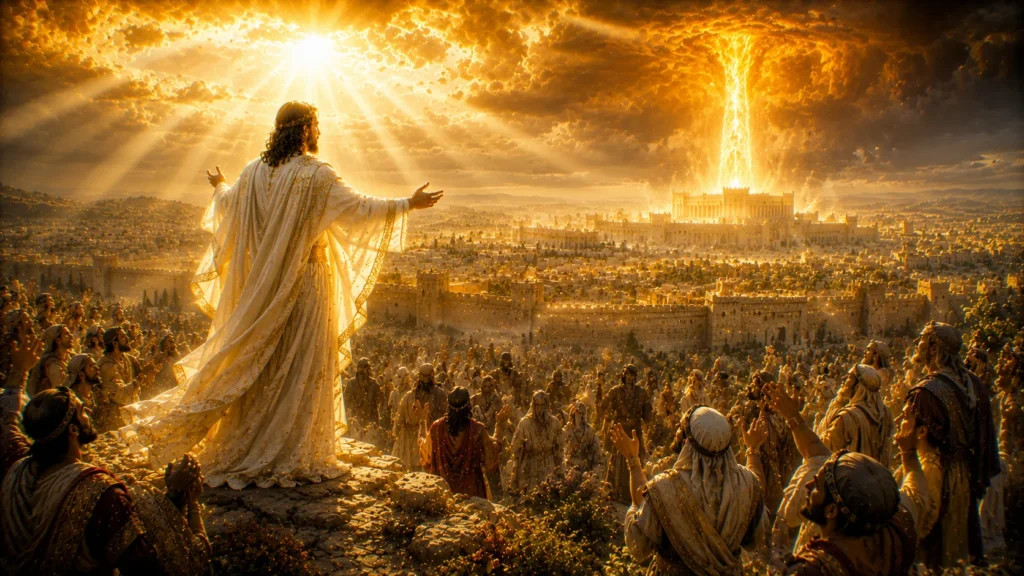









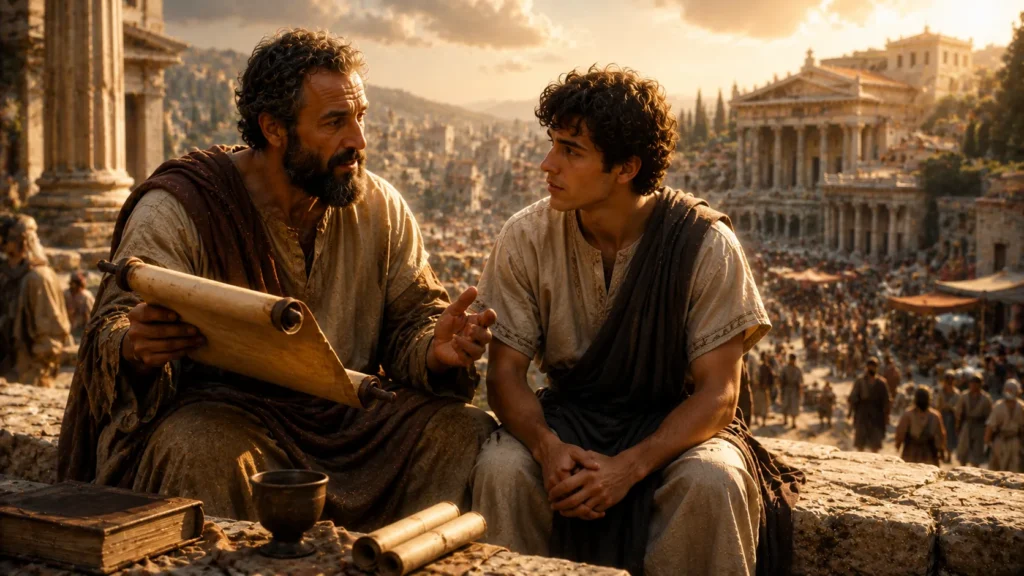

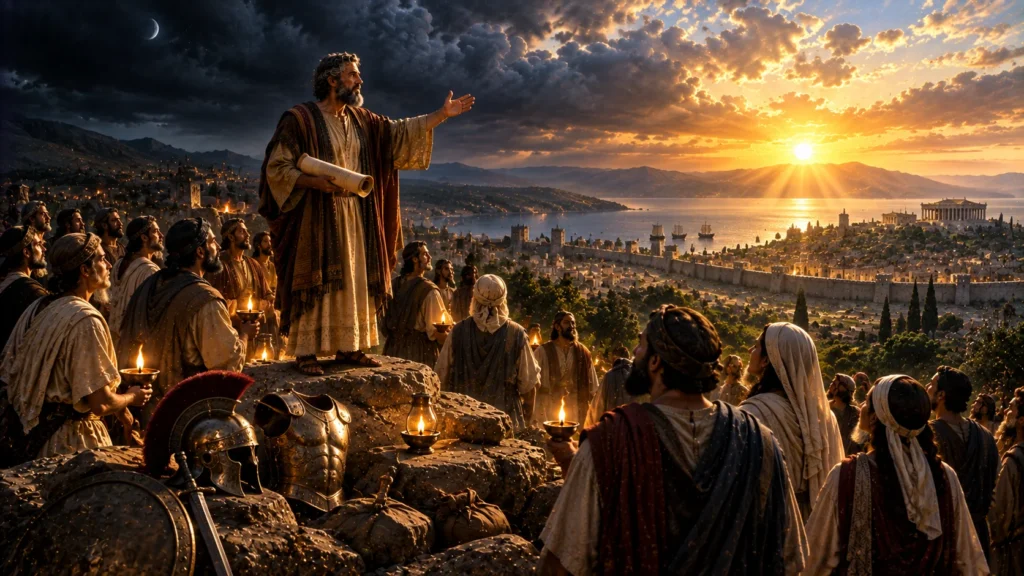
1 Thessalonians Chapter 5 continues Paul’s teaching about the return of Jesus Christ and explains how believers should live while awaiting that day. Paul describes the Day of the Lord as arriving unexpectedly, like a thief in the night, but reminds Christians that they are children of light and should therefore remain spiritually awake, sober, faithful, and prepared.
Paul then gives a rapid series of practical instructions for Christian living: respect spiritual leaders, encourage the discouraged, support the weak, be patient, pursue what is good, rejoice continually, pray without ceasing, give thanks in every circumstance, remain receptive to the Holy Spirit, test everything carefully, hold firmly to what is good, and avoid evil. The chapter closes with a beautiful prayer that the God of peace would sanctify believers completely and preserve them faithfully until the coming of Jesus Christ.
1 Thessalonians Chapter 5 Summary
1 Thessalonians 5 begins by continuing the subject of Christ’s return from the previous chapter.
Paul tells the Thessalonian believers that they already understand that the Day of the Lord will come unexpectedly:
“For yourselves know perfectly that the day of the Lord so cometh as a thief in the night.”
While people are confidently saying “Peace and safety,” sudden destruction will come upon them unexpectedly.
However, Paul tells believers that they are not living in spiritual darkness so that the day should overtake them like a thief.
Instead:
“Ye are all the children of light, and the children of the day.”
Because believers belong to the light, they should not spiritually sleep as others do.
They must watch and be sober.
Paul then uses the imagery of spiritual armor.
Believers should put on the breastplate of faith and love and wear the hope of salvation as a helmet.
Faith, love, and hope therefore prepare Christians to remain spiritually alert while awaiting Christ.
Paul reassures them that God has not appointed believers to wrath but to obtain salvation through Jesus Christ, who died for them so that whether they are awake or asleep, they may live together with Him.
Because of this hope, Christians should encourage and build one another up.
Paul then turns toward relationships within the church.
He asks believers to recognize and respect those who labor among them and provide spiritual leadership. They should esteem such leaders highly in love because of their work.
The congregation should also live at peace with one another.
Paul gives further practical instructions for caring for people within the Christian community.
Those who are disorderly should be warned.
The discouraged should be encouraged.
The weak should be supported.
And believers should be patient with everyone.
Christians must also resist retaliation.
Paul commands them not to repay evil with evil but continually pursue what is good both among believers and toward everyone else.
Then comes one of the most memorable sequences of commands in the New Testament:
“Rejoice evermore.”
“Pray without ceasing.”
“In every thing give thanks.”
These commands reveal a life continually oriented toward God.
Rejoicing does not mean believers never experience sorrow. Praying without ceasing does not necessarily mean speaking prayers every second. Instead, Paul describes a life characterized by joy in God, continual dependence upon Him, and gratitude in every circumstance.
Paul explains that giving thanks in every situation is God’s will for believers in Christ Jesus.
He then warns:
“Quench not the Spirit.”
Believers should not resist or suppress the Holy Spirit’s work.
Paul also tells them not to despise prophecies.
At the same time, spiritual claims should not simply be accepted without discernment.
Paul commands:
“Prove all things; hold fast that which is good.”
Christians should carefully test what they hear, retain what is genuinely good, and reject evil.
The chapter then moves into Paul’s closing prayer.
He prays that the God of peace would sanctify the Thessalonian believers completely and preserve their whole being blameless until the coming of Jesus Christ.
Their confidence ultimately rests not in their own strength but in God’s faithfulness:
“Faithful is he that calleth you, who also will do it.”
Paul asks the believers to pray for him and his companions, instructs them to greet the brothers and sisters warmly, and solemnly charges that his letter be read to all the believers.
He concludes with a blessing:
“The grace of our Lord Jesus Christ be with you.”
1 Thessalonians Chapter 5 therefore connects the future return of Christ with everyday Christian living.
Believers waiting for Jesus are not called to fear, speculation, or inactivity. They are called to remain awake, faithful, loving, prayerful, thankful, discerning, holy, encouraging, and confident in the faithfulness of God.

Key Lessons – 1 Thessalonians Chapter 5
- The Day of the Lord will come unexpectedly.
- Paul compares its arrival to a thief in the night, emphasizing the importance of spiritual readiness.
- Believers are children of light.
- Christians should live differently because they no longer belong to spiritual darkness.
- Waiting for Christ requires spiritual alertness.
- Paul repeatedly calls believers to watch, remain sober, and live prepared for Christ’s return.
- Faith, love, and hope provide spiritual protection.
- Paul pictures these qualities as armor that prepares Christians for faithful living.
- Christians should encourage one another.
- Hope in Christ’s return should strengthen Christian community rather than produce fear.
- Believers should support those who are struggling.
- Paul specifically calls Christians to encourage the discouraged, help the weak, and practice patience.
- Christians should not repay evil with evil.
- Followers of Jesus should actively pursue what is good toward everyone.
- Joy should characterize Christian life.
- “Rejoice evermore” points toward a deep joy rooted in God rather than changing circumstances.
- Prayer should become an ongoing way of life.
- “Pray without ceasing” calls believers toward continual dependence and communication with God.
- Gratitude is possible in every circumstance.
- Paul does not say everything that happens is good; he calls believers to remain thankful to God within every situation.
- Believers should remain receptive to the Holy Spirit.
- Christians must not quench the Spirit’s work in their lives and communities.
- Spiritual discernment is essential.
- Paul commands believers to test everything rather than blindly accepting every spiritual claim.
- God Himself is working to sanctify His people.
- The chapter closes with confidence in God’s power and faithfulness to complete His work in believers.
Important Verses
1 Thessalonians 5:2 — “For yourselves know perfectly that the day of the Lord so cometh as a thief in the night.”
1 Thessalonians 5:5 — “Ye are all the children of light, and the children of the day.”
1 Thessalonians 5:6 — Paul calls believers not to spiritually sleep but to watch and remain sober.
1 Thessalonians 5:8 — Believers are told to put on the breastplate of faith and love and the hope of salvation as a helmet.
1 Thessalonians 5:9–10 — God has appointed believers to obtain salvation through Jesus Christ, who died so that they might live together with Him.
1 Thessalonians 5:11 — Christians should comfort and build one another up.
1 Thessalonians 5:15 — Believers must not repay evil with evil but should pursue what is good.
1 Thessalonians 5:16 — “Rejoice evermore.”
1 Thessalonians 5:17 — “Pray without ceasing.”
1 Thessalonians 5:18 — “In every thing give thanks: for this is the will of God in Christ Jesus concerning you.”
1 Thessalonians 5:19 — “Quench not the Spirit.”
1 Thessalonians 5:21–22 — “Prove all things; hold fast that which is good. Abstain from all appearance of evil.”
1 Thessalonians 5:23 — Paul prays that the God of peace would completely sanctify and preserve believers until the coming of Jesus Christ.
1 Thessalonians 5:24 — “Faithful is he that calleth you, who also will do it.”