

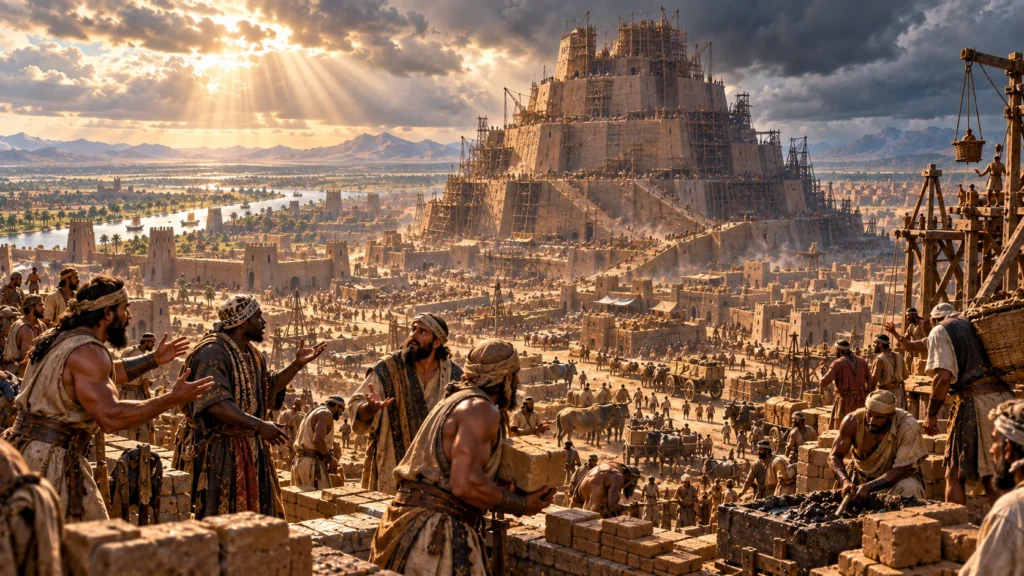
Genesis Chapter 11 marks another major turning point in the early history recorded in Genesis. Humanity has multiplied after the Flood, but instead of spreading throughout the earth as God commanded, people gather together in the land of Shinar and begin building a great city and tower.
The Tower of Babel becomes a powerful picture of human unity directed toward pride, self-exaltation, and resistance to God’s command to fill the earth. The people desire to make a name for themselves and prevent themselves from being scattered.
God responds by confusing their language so they can no longer understand one another. Construction stops, and the people are scattered throughout the earth.
The second half of Genesis 11 shifts dramatically from the nations to one particular family line—the descendants of Shem. That genealogy eventually introduces Terah and his son Abram, preparing the way for the story of Abraham beginning in Genesis Chapter 12.
Genesis Chapter 11 Summary
Genesis Chapter 11 begins by explaining that the whole earth has one language and common speech.
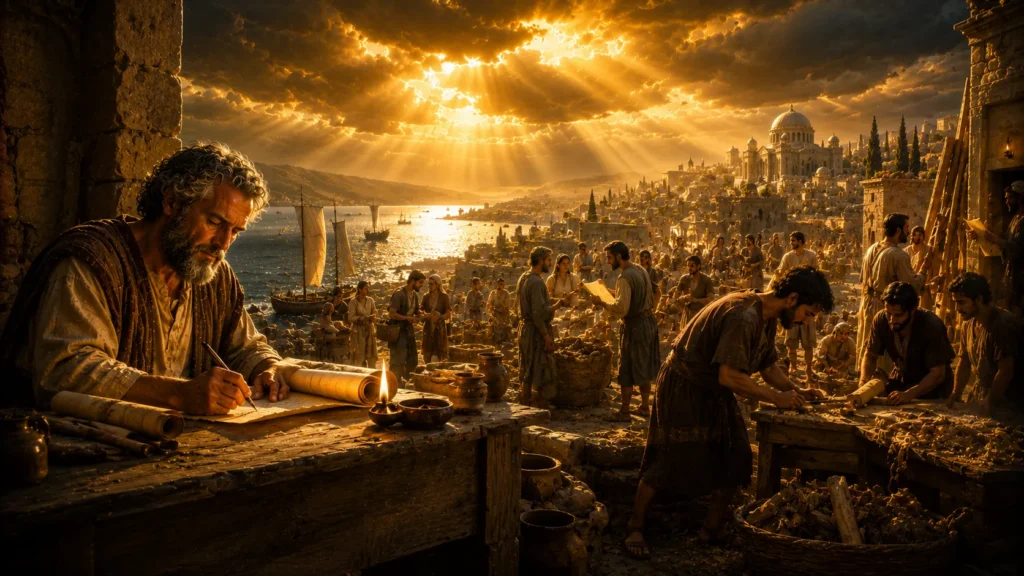
As people migrate, they discover a plain in the land of Shinar and settle there. Instead of continuing to spread across the earth, they decide to establish a permanent civilization.
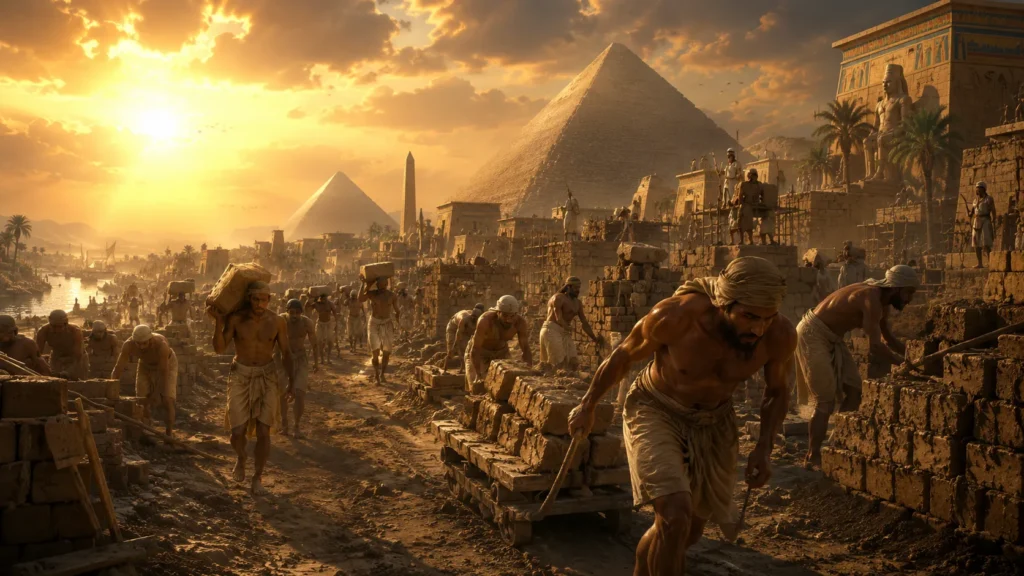
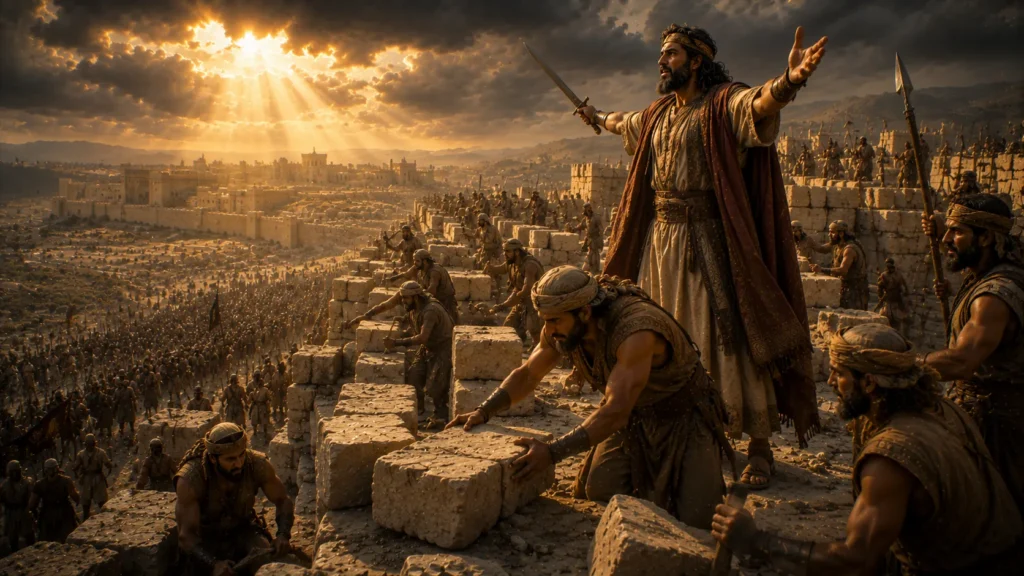
Because suitable building stone is not readily available, the people manufacture bricks and use bitumen for mortar. Their technological ability allows them to undertake an enormous construction project.
They say to one another that they will build a city and a tower whose top reaches toward heaven. Their stated motivation reveals the deeper problem: they want to make a name for themselves and avoid being scattered across the earth.
The Lord observes the city and tower the people are building. Their shared language has allowed them to cooperate effectively, but their unity is being directed toward a purpose contrary to God’s intention for humanity.
God therefore confuses their language.
Suddenly, people who had previously communicated freely can no longer understand one another. The cooperation necessary for their enormous construction project collapses.
The building of the city stops, and the people are scattered across the face of the earth.
The place becomes known as Babel, associated in the biblical account with the confusion of human language and the scattering of humanity.
Genesis 11 then changes focus.
The chapter records the generations of Shem, Noah’s son. The genealogy continues through Arphaxad, Salah, Eber, Peleg, Reu, Serug, Nahor, and eventually Terah.
Terah becomes the father of Abram, Nahor, and Haran.
Haran becomes the father of Lot but dies in Ur of the Chaldees while his father Terah is still living.
Abram marries Sarai, while Nahor marries Milcah. The chapter specifically notes that Sarai is unable to have children at this point in the story—an important detail because God’s later promise that Abram will become the father of a great nation will appear humanly impossible.
Terah eventually leaves Ur of the Chaldees with Abram, Sarai, and Lot. Their intention is to travel toward the land of Canaan.
However, when they reach Haran, they settle there.
Genesis Chapter 11 concludes with the death of Terah in Haran.
The stage is now set for Genesis Chapter 12, where God will call Abram to leave his country and journey toward the land God will show him.

Key Lessons – Genesis Chapter 11
- Human unity is not automatically righteous. The people at Babel cooperate remarkably well, but their unity is directed toward human pride and resistance to God’s purposes.
- Pride seeks to glorify humanity rather than God. The builders explicitly desire to “make us a name,” revealing the self-exalting motivation behind their project.
- Human plans cannot override God’s purposes. The people intend to prevent themselves from being scattered, yet their actions ultimately result in exactly that—their scattering throughout the earth.
- God’s command to fill the earth continues to be fulfilled. Humanity had gathered together in Shinar, but after the confusion of languages, different groups spread into different regions.
- Babel explains a major transition in the Genesis narrative. The story connects the unified post-Flood population with the different peoples, languages, and nations encountered later in Scripture.
- Genesis moves from all humanity toward one family. After describing the nations and Babel, the biblical narrative narrows its focus to Shem’s descendants and eventually Abram.
- God’s purposes can begin in seemingly impossible circumstances. Sarai’s inability to have children is introduced before God’s promise that Abram’s descendants will become a great nation, setting up one of Genesis’s central themes of trusting God’s promises.
Important Verses
- Genesis 11:1 — “And the whole earth was of one language, and of one speech.”
- Genesis 11:4 — “And they said, Go to, let us build us a city and a tower, whose top may reach unto heaven; and let us make us a name, lest we be scattered abroad upon the face of the whole earth.”
- Genesis 11:7 — “Go to, let us go down, and there confound their language, that they may not understand one another’s speech.”
- Genesis 11:8 — “So the LORD scattered them abroad from thence upon the face of all the earth: and they left off to build the city.”
- Genesis 11:9 — “Therefore is the name of it called Babel; because the LORD did there confound the language of all the earth.”
- Genesis 11:31 — “And Terah took Abram his son, and Lot the son of Haran his son’s son, and Sarai his daughter in law, his son Abram’s wife; and they went forth with them from Ur of the Chaldees, to go into the land of Canaan.”