
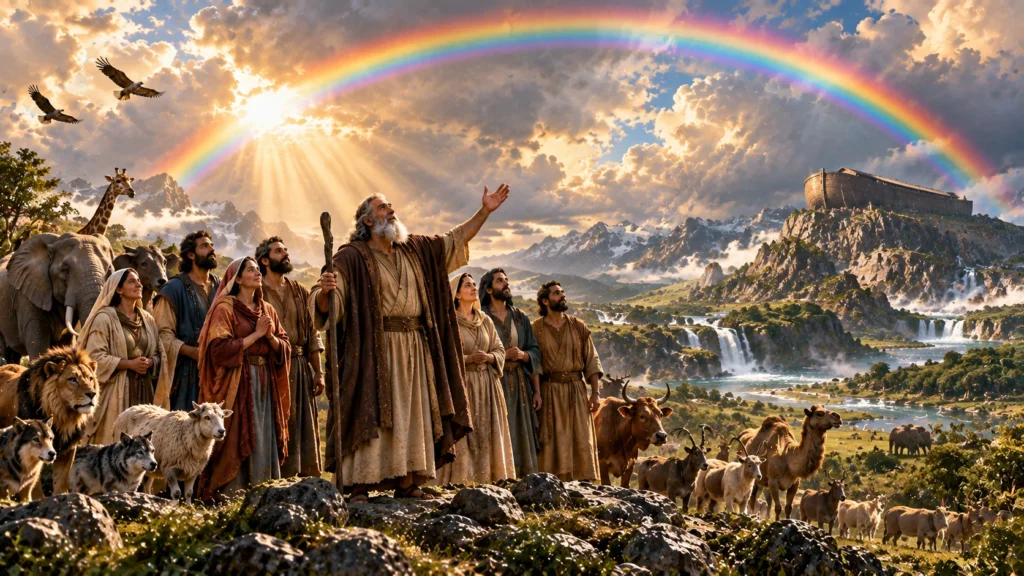

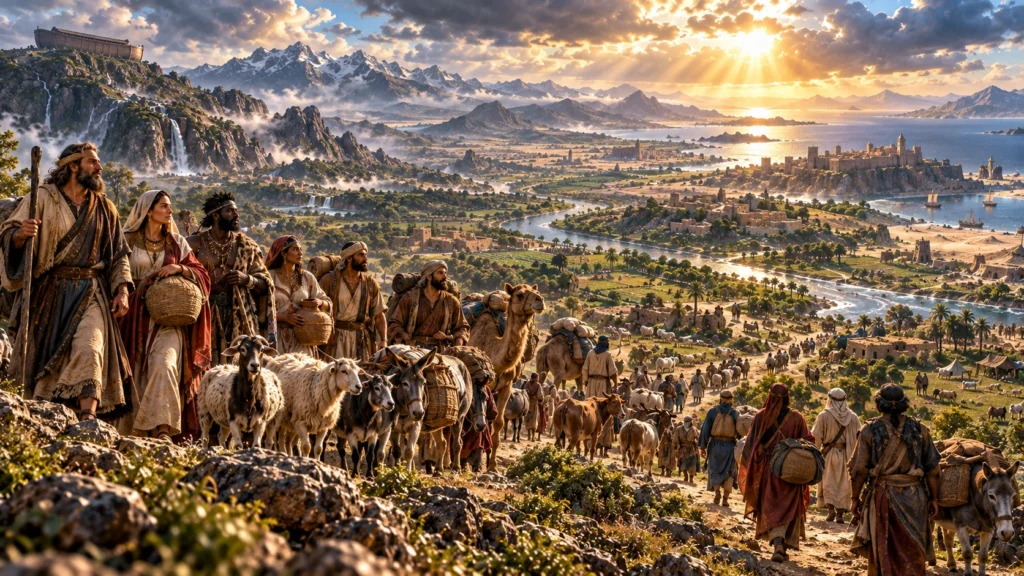
Genesis Chapter 10 is often called the Table of Nations because it records the descendants of Noah’s three sons—Shem, Ham, and Japheth—and describes how their families developed into nations and spread across the earth after the Flood.
While Genesis Chapter 9 focuses on God’s covenant with Noah and his family, Genesis 10 shows the fulfillment of God’s command for humanity to multiply and fill the earth. The chapter traces family lines that become associated with different lands, peoples, languages, and nations of the ancient world.
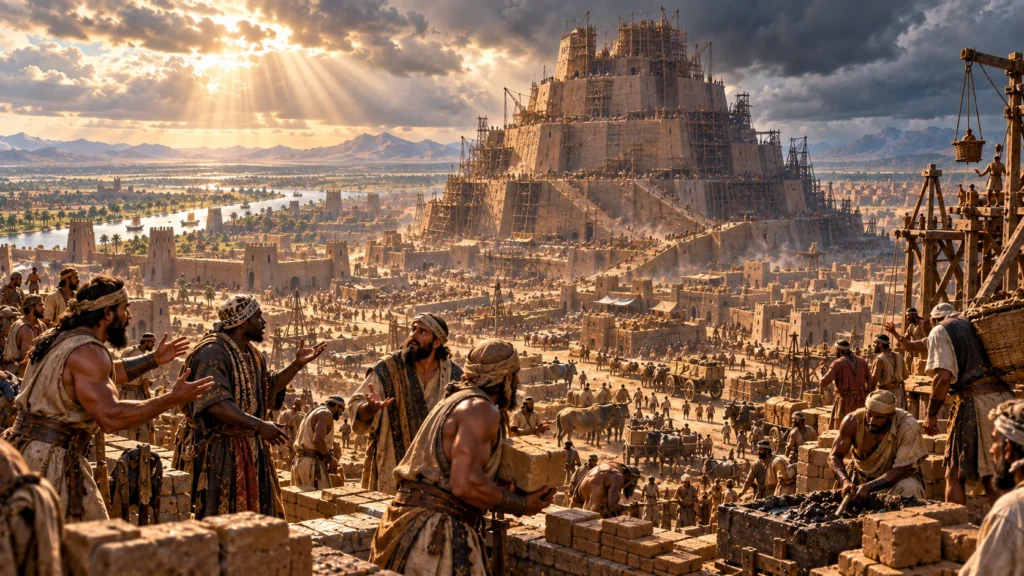
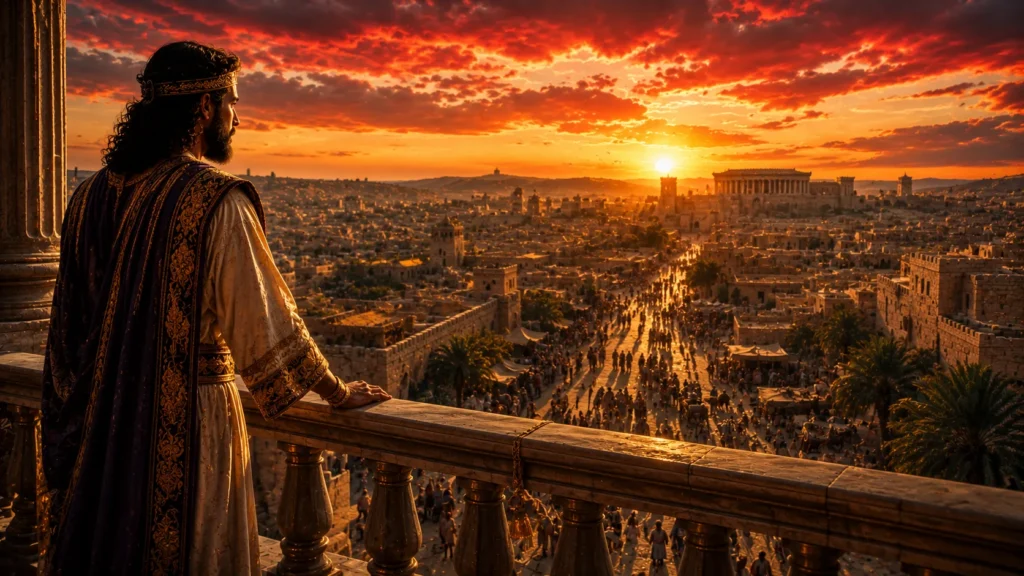
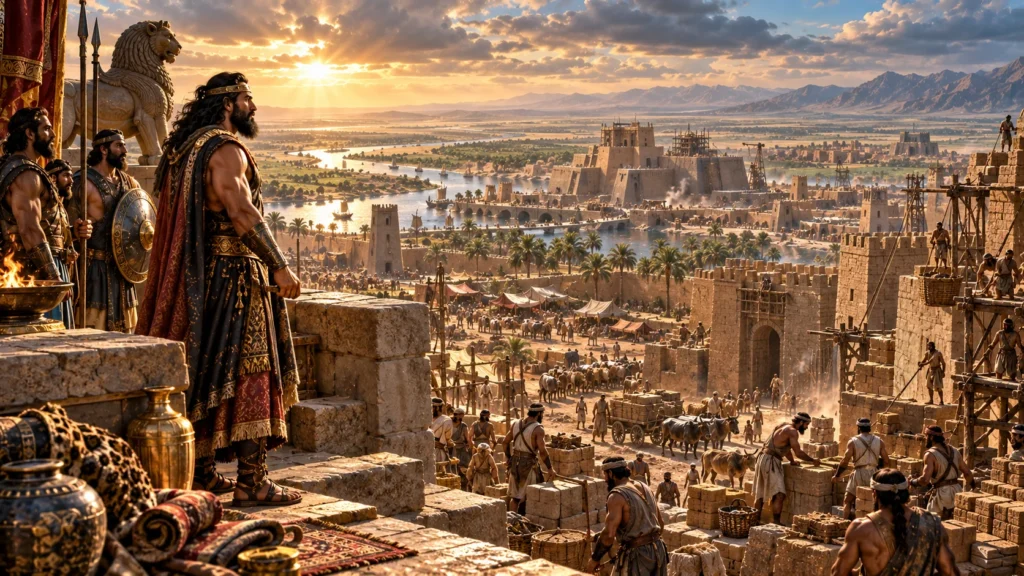
Genesis 10 also introduces Nimrod, a mighty ruler and builder of a kingdom associated with Babel, Erech, Accad, and the land of Shinar. His appearance prepares the reader for the events surrounding the Tower of Babel in Genesis Chapter 11.
Genesis Chapter 10 Summary
Genesis Chapter 10 begins by identifying the sons of Noah: Shem, Ham, and Japheth. After the Flood, sons are born to them, and their descendants begin spreading into different regions.
The descendants of Japheth include Gomer, Magog, Madai, Javan, Tubal, Meshech, and Tiras. Their descendants spread into different territories and develop into separate peoples according to their lands, languages, families, and nations.
The chapter then records the descendants of Ham, whose sons are Cush, Mizraim, Phut, and Canaan.
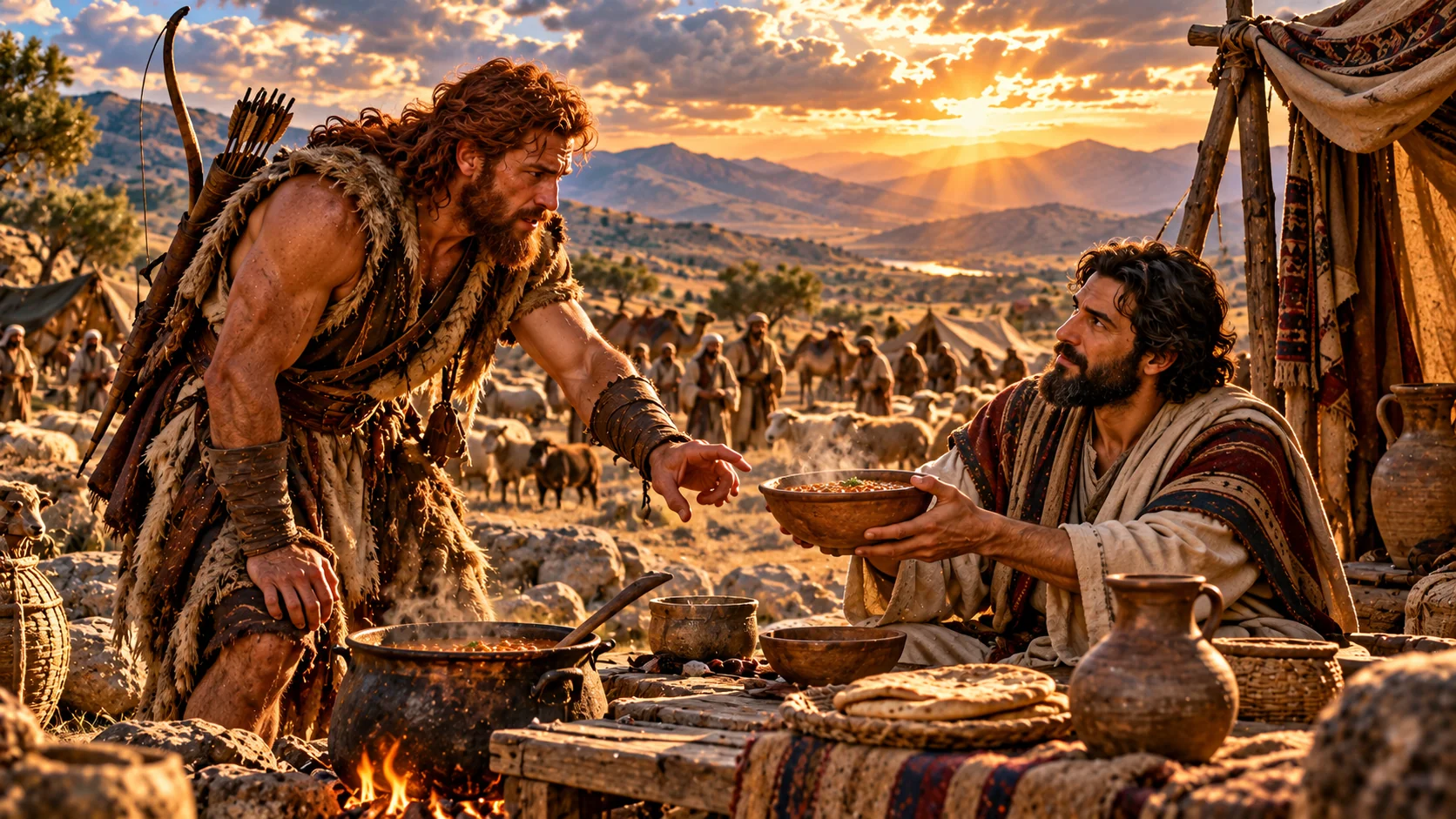
Among the descendants of Cush appears an especially important figure named Nimrod. Genesis describes him as a mighty one upon the earth and a mighty hunter before the Lord.
Nimrod establishes a kingdom whose beginning includes Babel, Erech, Accad, and Calneh in the land of Shinar. His connection with Babel becomes especially significant because Genesis Chapter 11 will describe humanity’s attempt to build a city and tower there.
The descendants of Ham also include peoples associated with Egypt and Canaan. The chapter names several Canaanite peoples and describes the boundaries of their territory.
Genesis then turns to the descendants of Shem. His family line includes Elam, Asshur, Arphaxad, Lud, and Aram.
Through Arphaxad comes the line leading to Eber, whose descendants include Peleg and Joktan. Peleg receives his name because “in his days was the earth divided.” Joktan becomes the ancestor of numerous peoples whose settlements extend through portions of the ancient Near Eastern world.
Shem’s genealogy is particularly important to the continuing story of Genesis because his family line will eventually lead to Abram, later called Abraham, through whom the biblical narrative will focus on God’s covenant promises.
The chapter concludes by emphasizing that these are the families descending from Noah’s sons. From these families came the nations that spread throughout the earth after the Flood.
Genesis Chapter 10 therefore provides the transition between Noah’s family emerging from the ark and the development of the nations that will populate the world described throughout the remainder of Scripture.
Key Lessons – Genesis Chapter 10
- Humanity spreads from one family after the Flood. Genesis presents the nations of the post-Flood world as developing through the descendants of Noah’s sons—Shem, Ham, and Japheth.
- God’s command to multiply and fill the earth begins to be fulfilled. Noah’s descendants grow into families, peoples, and nations occupying different regions.
- Genesis connects individuals with the development of nations. The genealogy is not merely a list of names; it establishes relationships among peoples who will appear later in the biblical story.
- Nimrod becomes an important early ruler. His kingdom includes Babel in the land of Shinar, directly connecting Genesis Chapter 10 with the events that follow in Genesis Chapter 11.
- Shem’s family line becomes especially important to the biblical narrative. His descendants eventually lead to Abraham, whose story becomes central beginning in Genesis Chapter 12.
- The chapter prepares the reader for the Tower of Babel. Genesis 10 describes nations and languages, while Genesis 11 explains the dramatic event associated with humanity’s scattering and the diversification of languages.
- God’s plan continues through generations. Even though many names in Genesis 10 receive little additional explanation, these generations form the historical framework for the people and nations encountered later in Scripture.
Important Verses
Genesis 10:1 — “Now these are the generations of the sons of Noah, Shem, Ham, and Japheth: and unto them were sons born after the flood.”
Genesis 10:5 — “By these were the isles of the Gentiles divided in their lands; every one after his tongue, after their families, in their nations.”
Genesis 10:8 — “And Cush begat Nimrod: he began to be a mighty one in the earth.”
Genesis 10:9 — “He was a mighty hunter before the LORD: wherefore it is said, Even as Nimrod the mighty hunter before the LORD.”
Genesis 10:10 — “And the beginning of his kingdom was Babel, and Erech, and Accad, and Calneh, in the land of Shinar.”
Genesis 10:32 — “These are the families of the sons of Noah, after their generations, in their nations: and by these were the nations divided in the earth after the flood.”